This post is sponsored by CareNatal. As always, all opinions are my own.
Choosing a prenatal vitamin can feel overwhelming, especially when you’re a first-time mom trying to do everything right. As a PCOS dietitian, I’ve looked into and reviewed countless prenatal vitamin options over the years. Most prenatal vitamins are lacking some key nutrients…or they require you to take an absurd amount of huge pills to get all the nutrients you need.
When I came across CareNatal prenatal vitamin powder last year, I was intrigued by its impressive nutrition profile and the fact that it was a powder. In this blog post, I’m going to give you a full CareNatal prenatal vitamin powder review. I’ll dive into the pros and cons of CareNatal and what sets it apart from other prenatals.

What is CareNatal?
CareNatal Prenatal Vitamin Powder is a powdered prenatal supplement designed to support women’s nutritional needs during preconception, pregnancy, and the postpartum period. It delivers a wide range of vitamins and minerals in a single packet that you mix with any liquid to consume.
What I Like About CareNatal Prenatal Vitamin Powder
Let’s first dive into the things I like about CareNatal.
Impressive Nutrition Profile
As a dietitian, the nutritional profile of CareNatal is one of the biggest reasons it stands out to me. It’s always surprising how many prenatal vitamins fall short on nutrients that research consistently shows are important for supporting both a mom and baby’s nutritional needs.
Some nutrients in CareNatal that stood out to me in particular are:
- Iron: Your iron needs during pregnancy increase significantly and many women find themselves iron deficient during pregnancy. CareNatal provides 100% of your daily iron needs for pregnancy.
- Choline: A standout nutrient that many prenatals leave out entirely, even though it plays an important role in fetal brain development and maternal health. Pregnant women in the US consume about 319mg of choline per day on average (1). CareNatal provides just the right amount of choline supplementation to ensure you hit the recommended 550mg of choline daily.
- Iodine: Necessary for fetal brain development and usually found in iodized salt or animal products. CareNatal provides 100% of your iodine needs for pregnancy, while most other brands provide significantly less.
- Omega-3 fatty acids: Carenatal comes with the choice of their omega mini-capsule or the liquid omega – both of which are vegan, algae-based omega 3 fatty acid supplements. Omega 3s, particularly DHA, is necessary for fetal growth and brain development.
- Methylated folate and vitamin B12: These methylated forms may be easier for some individuals to absorb and utilize. In addition to the methylated folate, CareNatal also includes folic acid, which is recommended to lower the risk of neural tube defects.
- Vitamin D3 paired with vitamin K2: These nutrients work synergistically to support normal bone and immune function and are best taken together. Most prenatals use a different form of vitamin K or omit it entirely.
Overall, this is a prenatal formula that clearly goes beyond the basics. Instead of simply checking boxes, CareNatal delivers a thoughtfully designed nutrient profile that supports women through one of the most nutritionally demanding stages of life.
Powder Form
The first thing that caught my eye about the CareNatal Prenatal Vitamin Powder is the fact that it’s a powder. As someone who experienced significant nausea during my second pregnancy, taking traditional prenatal vitamins (often the size of large horse pills or left a gross aftertaste) just was not realistic for me. I seriously wish I had access to a powder prenatal supplement that I could have mixed with a liquid and sipped on slowly throughout the day.
Actually Tastes Good
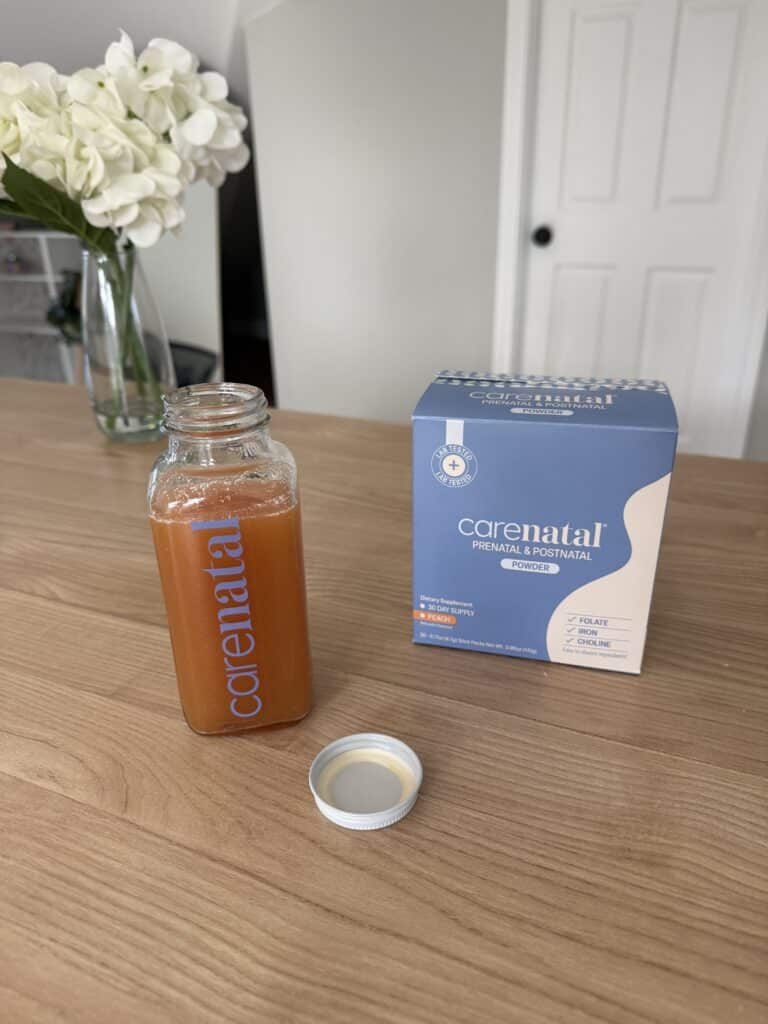
That leads me to my next point: it actually tastes good. As a dietitian, I’ve tried my fair share of supplements and vitamins over the years. I got CareNatal’s peach flavor and I’m not typically a huge peach girl so I was hesitant but optimistic as I tried CareNatal. I was surprised by how good it actually tasted! It’s sweet, but not overly sweet. It doesn’t leave a significant vitamin aftertaste or have you wincing with each sip, if you know what I mean.
I mix CareNatal with water and keep it cold while I’m drinking it. If I know I’m not going to finish it all in one sitting, I’ll put it back into the fridge for later. When I go back to it, I simply shake and drink.
If you’re not a fan of it mixed in water, it works really well mixed into juice, smoothies, or flavored waters too!
Third Party Testing
If you’re not familiar with the supplement industry, it’s like the wild west. It’s not regulated like the food industry is. The Food and Drug Administration (FDA) does not regulate or approve of any dietary supplements, their labeling, or health claims. It’s not uncommon to find supplements on the market that don’t actually have what they’re advertising inside their supplements.
Thankfully, CareNatal prioritizes transparency by undergoing third-party testing for purity and quality. They take it a step further by making their testing results publicly available, allowing you to see exactly what’s been tested and verified. This level of transparency helps provide confidence that what CareNatal lists on the label is truly what’s in the prenatal vitamin powder.
Fits Many Dietary Requirements
Both the CareNatal prenatal vitamin powder and the liquid omega 3 boost are all vegan, gluten-free, non-GMO, sugar-free, and meet halal requirements. They’re also free from artificial colors, flavors, and preservatives.
The Cons
Like any dietary supplement, there’s a few potential cons that come with CareNatal prenatal vitamin powder.
Low in DHA Omega 3s
DHA is a type of omega-3 fatty acid that is particularly important for fetal brain development. Most professional organizations recommend getting at least 200–300 mg of DHA per day during pregnancy. CareNatal provides either 160 mg DHA in the mini-capsule omega or 190 mg DHA in the liquid omega option. While these amounts contribute significantly toward daily DHA needs, they don’t cover 100% of the recommended intake on their own.
I mention this because DHA is primarily found in fatty fish such as salmon, herring, trout, and sardines. Meeting DHA needs through diet alone would typically require 2–3 servings of these fish per week. In my experience as a nutrition professional, most people don’t regularly eat fatty fish in amounts that would provide adequate DHA, which is why supplementing with a prenatal that includes DHA can be an important part of supporting maternal and fetal health.
If you’re someone who does not eat fatty fish regularly or at all, you may want to double your serving of the omega 3 boost. Alternatively, you can pair your CareNatal prenatal vitamin powder with a different omega 3/DHA supplement to help support your daily needs during pregnancy.
No Calcium in Formulation
Calcium needs during pregnancy increase to 1300 mg per day, which is just over about 4 servings of dairy per day. CareNatal does not contain any calcium, however, this may not actually be a con.
While calcium is important for pregnancy, it’s a nutrient that competes with iron for absorption. In many prenatal supplements, you’ll see both iron and calcium added in – which can negate some of the iron benefits. Since iron deficiency anemia is so prevalent during pregnancy, omitting calcium from your prenatal vitamin can actually allow your body to absorb iron better.
It’s just important to ensure that you’re getting enough calcium through your diet or consider a calcium supplement – just don’t take it at the same time as your CareNatal prenatal vitamin powder!
Vitamin D Levels
The vitamin D dose in CareNatal is solid for meeting general pregnancy needs. However, for those with PCOS, I still recommend having your vitamin D levels checked. Vitamin D deficiency is particularly common among those with PCOS so you may still need additional vitamin D supplementation.
Cost
The last potential downside is the cost. A one-month supply will cost you anywhere between $49 to $66 depending on if you do a one-time purchase or opt into the subscribe-and-save feature.
This may seem like a high investment at first glance but let’s break it down. A higher quality prenatal gummy will cost $30 per month, however, these gummies still aren’t nutritionally complete. You’ll then have to add one or more additional supplements to get even just the bare minimum amount of nutrients that a healthy pregnancy needs. This will usually cost somewhere around $30 to $40 per month. Add that cost on top of the prenatal gummy and you’re looking at $60 to $70 per month to piecemeal your prenatal supplements together.
When you consider that CareNatal prenatal vitamin powder is a nutritionally complete prenatal option, and it’s a powder form that actually tastes good, the $49 to $66 price point makes sense.

Final Thoughts
Pregnancy and postpartum are some of the most nutritionally demanding times in a woman’s life. While there’s so much about the journey to motherhood we can’t control, nutrition is one powerful area where we can be proactive.
With research showing that up to 95% of women in the perinatal stage have nutrient deficiencies, women deserve more than just “good enough.”
CareNatal offers a thoughtfully designed, best prenatal vitamin powder option that supports women from conception through pregnancy and the postpartum period. It’s one I feel confident recommending both personally and professionally.
Disclaimer: this is for informational purposes only. It does not substitute for or replace professional medical advice. Always consult with your healthcare provider before starting or stopping any dietary supplements.