If you love the cozy flavors of carrot cake but want something more nourishing for breakfast, these high-protein carrot cake baked oats are the perfect choice. They’re packed with wholesome ingredients like oats, carrots, bananas, and flaxseed, plus a boost of protein powder and a creamy yogurt frosting.
There are a few reasons these High Protein Carrot Cake Baked Oats will quickly become a staple breakfast: they’re easy, balanced, and feel like a treat while still being nourishing.
High in protein: Between the protein powder, eggs, and yogurt frosting, each serving delivers a solid protein boost to keep you full and energized.
Great source of fiber: Oats, carrots, and flaxseed add plenty of fiber to support digestion and steady blood sugar.
Naturally sweetened: Bananas and a touch of maple syrup give just the right amount of sweetness without overpowering the carrot cake flavor or adding refined sugars.
Perfect for meal prep: Makes six servings that store well in the fridge for quick grab-and-go meals throughout the week.
Warm + cozy flavors: Cinnamon, nutmeg, ginger, and allspice recreate that classic carrot cake taste in a lighter, everyday form.
PCOS-friendly: A balanced mix of protein, fiber, and healthy fats helps support satiety, blood sugar balance, and hormone health.
Ingredients
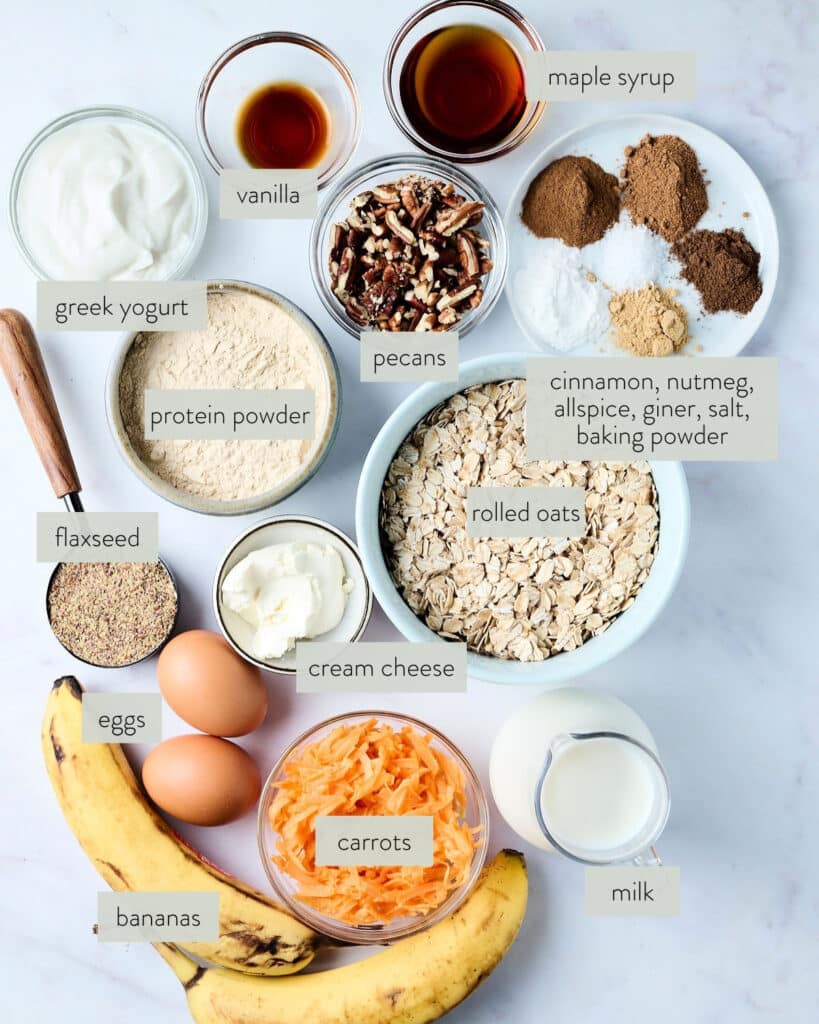
These high-protein baked oats require basic ingredients you likely have on hand. Together, they create that delicious carrot cake flavor with a boost of fiber and protein.
Baked Oats Ingredients
Bananas: Add natural sweetness and moisture to the baked oats. Make sure they’re ripe for the best flavor and texture.
Grated carrots: Freshly grated carrots give the baked oats their classic carrot cake taste while adding fiber, color, and extra nutrients.
Milk of choice: Any milk works here, dairy or dairy-free milk, so choose what you prefer.
Eggs: Provide structure, protein, and help the baked oats rise.
Maple syrup: Adds a touch of sweetness and pairs perfectly with the carrot cake spices.
Vanilla extract: Enhances flavor and balances the spices. Use pure vanilla extract for the best flavor.
Oats: Use a mix of blended oats for a smoother base and whole oats for texture. Oats provide steady energy and help keep you full. You can choose rolled oats or quick oats. I would recommend not using steel cut oats here as they have a grittier texture.
Vanilla protein powder: Boosts the protein content and helps create a soft, cake-like texture. You can use either whey or plant-based protein, but they may alter the taste slightly.
Ground flaxseed: Adds fiber, healthy fats, and helps bind the mixture. Great for hormone and digestive health.
Cinnamon, nutmeg, allspice, ginger: The warm spice blend that gives these oats their cozy carrot cake flavor.
Baking powder: Helps the baked oats rise and stay fluffy.
Salt: Balances sweetness and enhances all the warm spices.
Pecans or walnuts: Add crunch and healthy fats. Use whichever you like best, or another nut of choice.
Raisins (optional): A classic carrot cake add-in for extra sweetness and chewiness.
Protein Frosting
Greek yogurt: Creates a creamy, high-protein base for the frosting. I prefer to use 2% or full-fat yogurt here.
Cream cheese or Neufchâtel: Adds richness and that classic carrot cake tang.
Maple syrup: Lightly sweetens the frosting without making it too sugary.
How to Make It
Step One: Mix the Base.
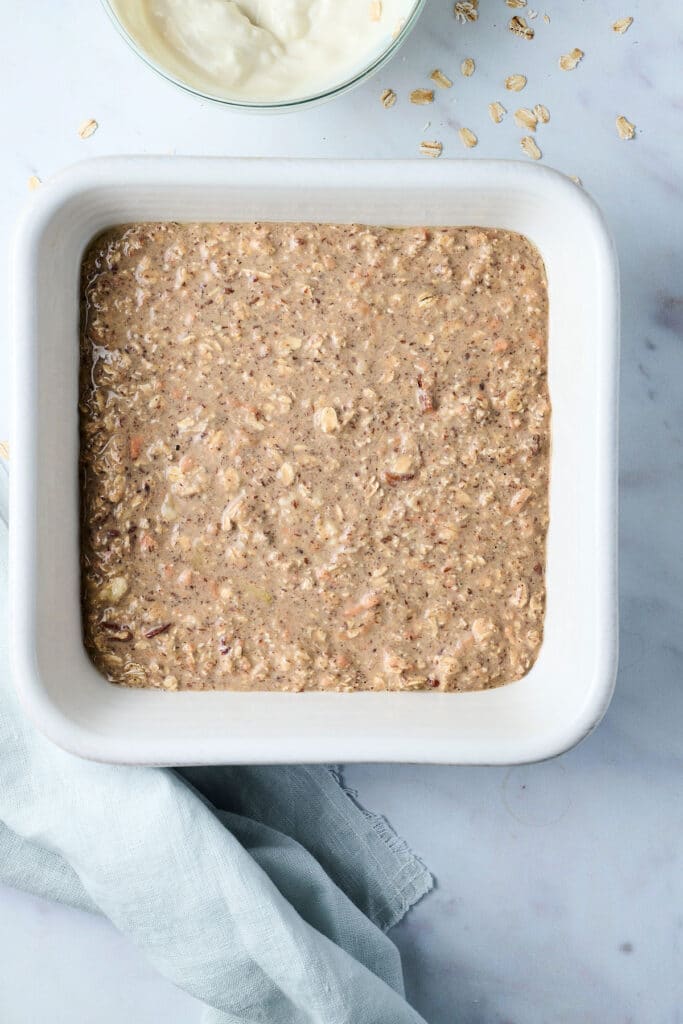
In a large bowl, mash the bananas until smooth. Add the grated carrots, blended oats, protein powder, ground flaxseed, milk, eggs, maple syrup, vanilla, cinnamon, nutmeg, allspice, ginger, baking powder, and salt. Stir until fully combined.
Step Two: Blend (Optional).
For a smoother texture, use an immersion blender or pour the mixture into a high-speed blender. Pulse until mostly smooth, leaving some small lumps for texture.
Step Three: Add Texture + Bake.
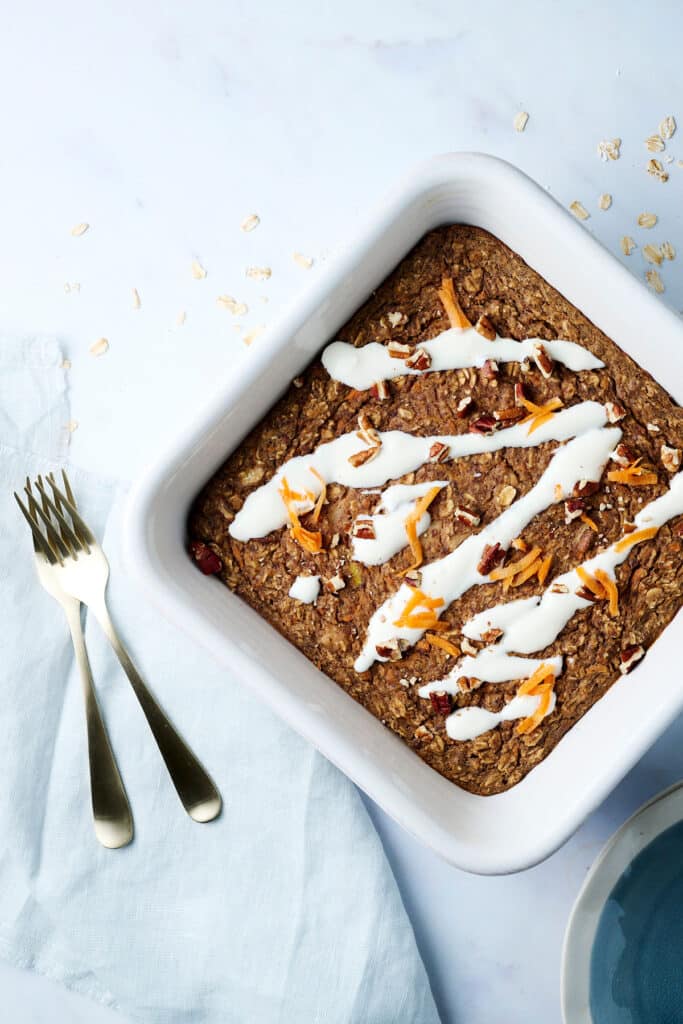
Pour the batter into an 8×8 baking dish. Add the remaining ¼ cup oats, chopped nuts, and raisins (if using), and gently stir to distribute. Bake at 350°F for 30–35 minutes or until the top is slightly golden and the center is set.
Step Four: Make the Frosting.
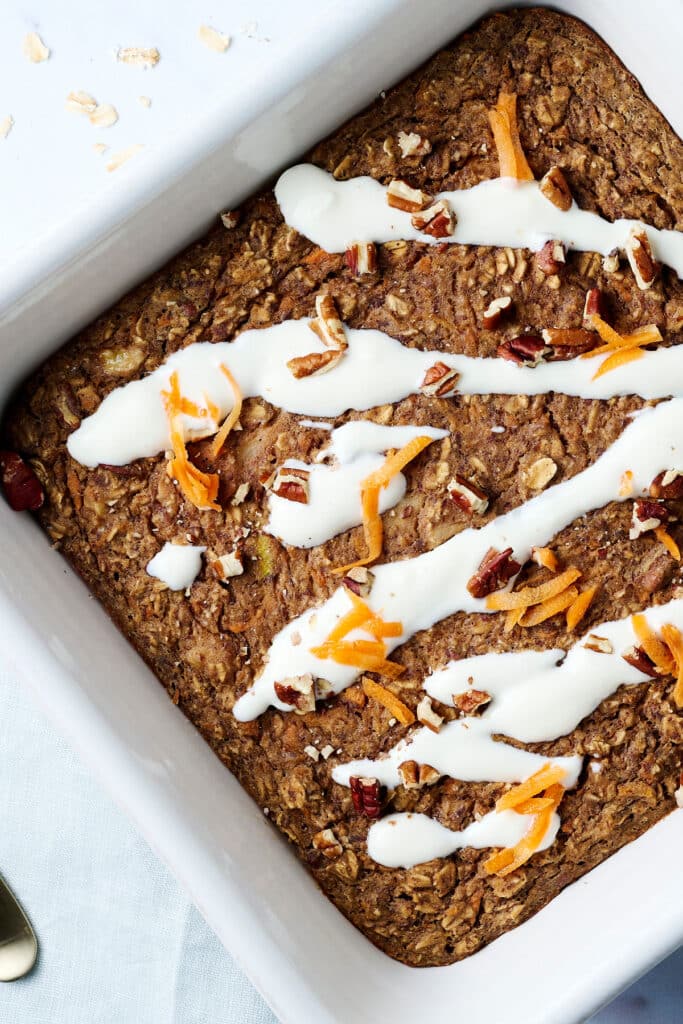
While the oats bake, whisk together Greek yogurt, softened cream cheese (or Neufchâtel), and maple syrup until smooth and creamy.
Step Five: Cool + Serve.
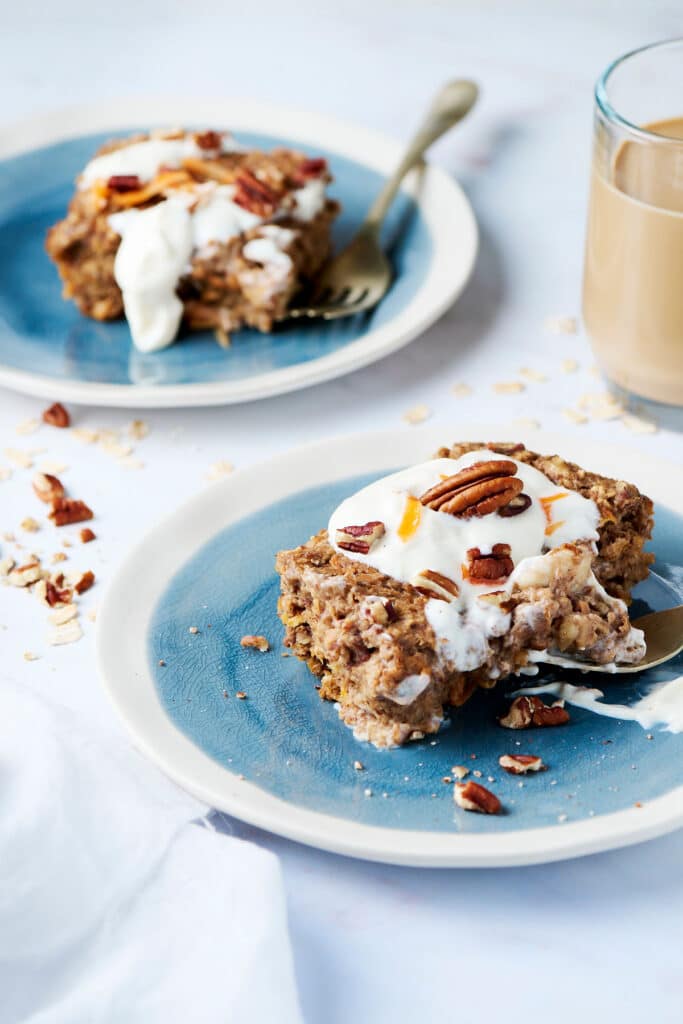
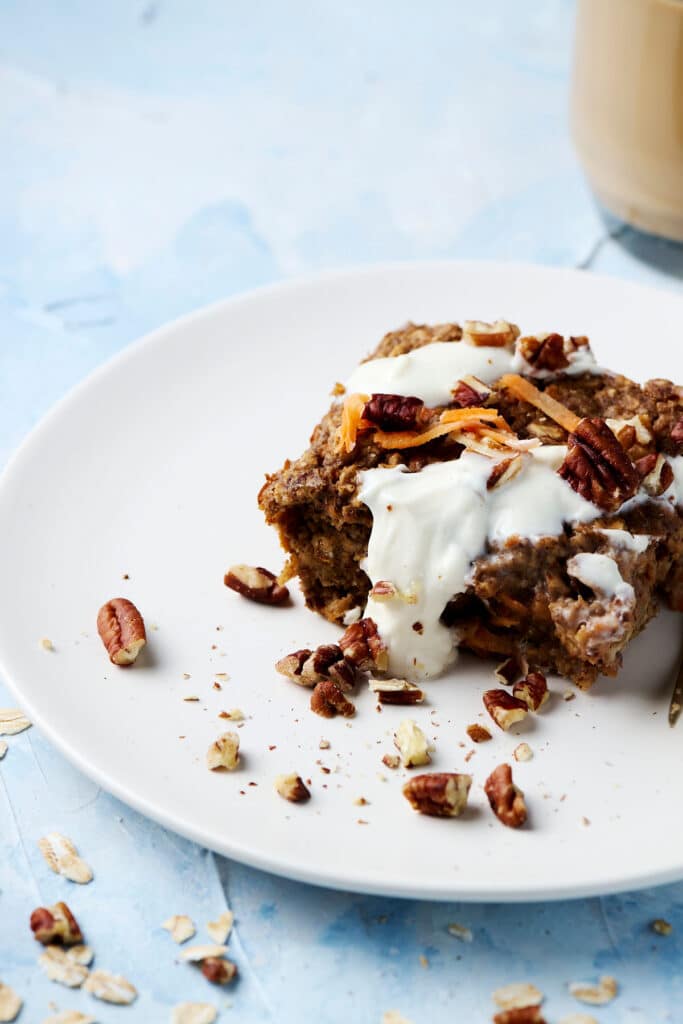
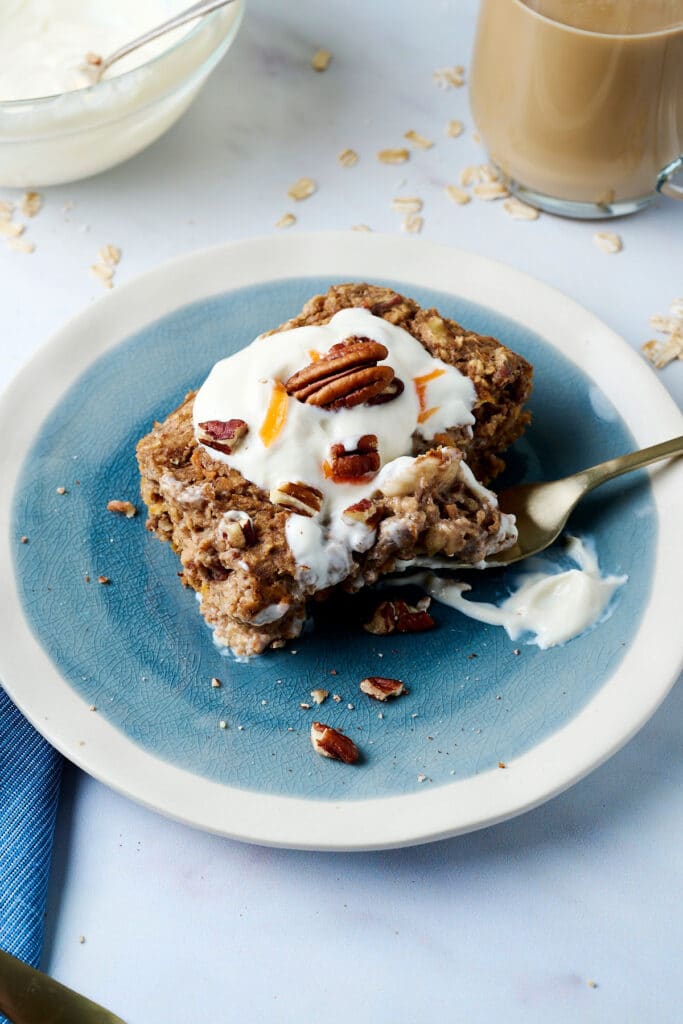
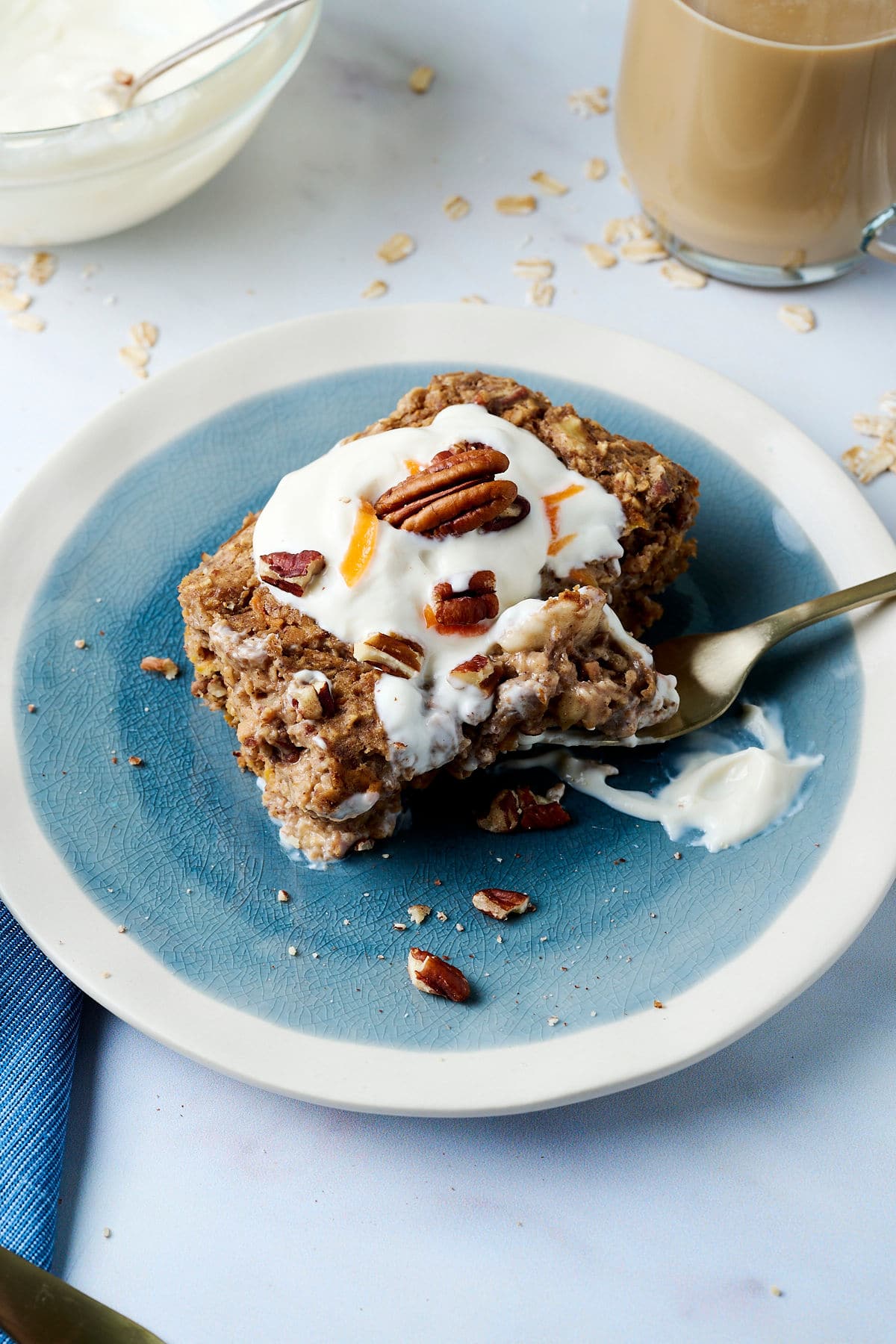
Let the baked oats cool for about 10 minutes. Spread the protein frosting over the top, slice into 6 servings, and enjoy warm or cold.
Tips, Variations, + Substitutions
Short on time? Use pre-shredded carrots to skip the grating step.
Add extra texture by sprinkling more nuts or oats on top before baking for a light crunch.
Swap your nuts! Pecans, walnuts, and almonds are great options too. Use pumpkin seeds for a nut-free version.
Make this recipe gluten-free by using certified gluten-free oats and other ingredients.
If you prefer it sweeter, add a few extra raisins or an extra tablespoon of maple syrup.
Make it dairy-free by using a dairy-free yogurt and a plant-based cream cheese for the frosting.
For a smoother cake-like texture, blend the batter fully instead of leaving small lumps.
Swap out the maple syrup for another sweetener, such as honey, agave, or unsweetened applesauce. Note that the taste and texture may change.
Want a more indulgent treat? Swap the protein frosting for regular frosting, or do half regular, half protein.
Make protein muffins by adding your ingredients to muffin tins for an easy, healthy breakfast.
How to Store It
Store baked oats in an airtight container in the refrigerator for up to 4 days. They reheat well in the microwave in 20–30 second intervals, or you can enjoy them cold straight from the fridge.
If you’re meal prepping, keep the frosting in a separate container and spread it on right before eating for the best texture.
Freezing is an option: freeze individual slices in freezer-safe bags or containers for up to 3 months. Thaw overnight in the refrigerator before reheating.
How to Serve It
These Healthy Carrot Cake Baked Oats can be enjoyed warm or chilled, making them a versatile breakfast or snack.
Warm breakfast: Heat a slice in the microwave and top with extra yogurt, nuts, or a drizzle of maple syrup.
Cold grab-and-go: Slice and store in the fridge for an easy, ready-to-eat option.
As a snack: Pair with a latte, cup of tea, or a side of fresh fruit.
For extra staying power: Add a scoop of Greek yogurt or pair with a protein-rich side for a more balanced meal.
Entertaining idea: Cut into smaller squares and serve like a snack cake or breakfast bars for brunch.
If you make this High Protein Carrot Cake Baked Oats recipe, please consider leaving a star rating and review at the end of this blog post. This is incredibly helpful to me and it helps other readers to know what to expect!
Carrot Cake Protein Baked Oats
These high-protein carrot cake baked oats are the perfect choice if you want cozy carrot cake flavors but also want something healthy. They use wholesome ingredients like oats, carrots, bananas, and flaxseed, plus a boost of protein powder and a creamy yogurt frosting – making them perfect for a make-ahead breakfast or snack!
In a large bowl, mash the bananas until smooth. Add the grated carrots, 1½ cups of rolled oats, vanilla protein powder, ground flaxseed, milk, eggs, maple syrup, vanilla extract, cinnamon, nutmeg, allspice, ginger, baking powder, and salt. Stir until fully combined.
Optional but recommended: use an immersion blender, or pour the mixture into a high speed blender, and pulse until the mixture is almost smooth with just a few small lumps remaining.
Pour the mixture into an 8×8" baking dish. Add remaining ¼ cup of rolled oats, nuts, and raisins (if using). Stir to combine.
Bake for 30 to 35 minutes or until slightly golden.
While your oats are baking, make your protein frosting: in a small bowl, stir together Greek yogurt, cream cheese, and maple syrup.
Allow baked oats to cool slightly (for about 10 minutes) out of the oven. Top with protein frosting*. Cut into 6 servings and serve.
Notes
*If you’re meal prepping, keep the frosting in a separate container and spread it on right before eating for the best texture. Store baked oats in an airtight container in the refrigerator for up to 4 days. They reheat well in the microwave in 20–30 second intervals, or you can enjoy them cold straight from the fridge.For a smoother cake-like texture, blend the batter fully instead of leaving small lumps.For more variations, substitutions, and tips, see full blog post above.