


Is protein powder for PCOS a necessary inclusion or just a waste of money?
Protein is an essential part of a healthy PCOS diet. It can help keep blood sugar levels stable, curb cravings, increase energy levels, and help with weight loss. Protein powders are a popular and easy way to add protein into your diet but do you really need a protein powder for PCOS? Or with the endless options available, you may be wondering what is the best type of protein powder for PCOS?
As a registered dietitian who specializes in PCOS, I’m going to help you cut through the noise. In this blog post, I’ll dive into why protein is important, how much you really need, and the best types of protein powder for PCOS. I’ll also discuss some downsides of protein powder and provide you with some of my favorite protein powder brands.
Why Is Protein Important For PCOS?
Protein is the building blocks of every aspect of our bodies. It’s involved in the creation and maintenance of every cell in your body. So making sure you’re getting enough protein is essential for maintaining overall health.
Here’s a few ways that protein can benefit your PCOS symptoms though.
Regulates Blood Sugar Levels
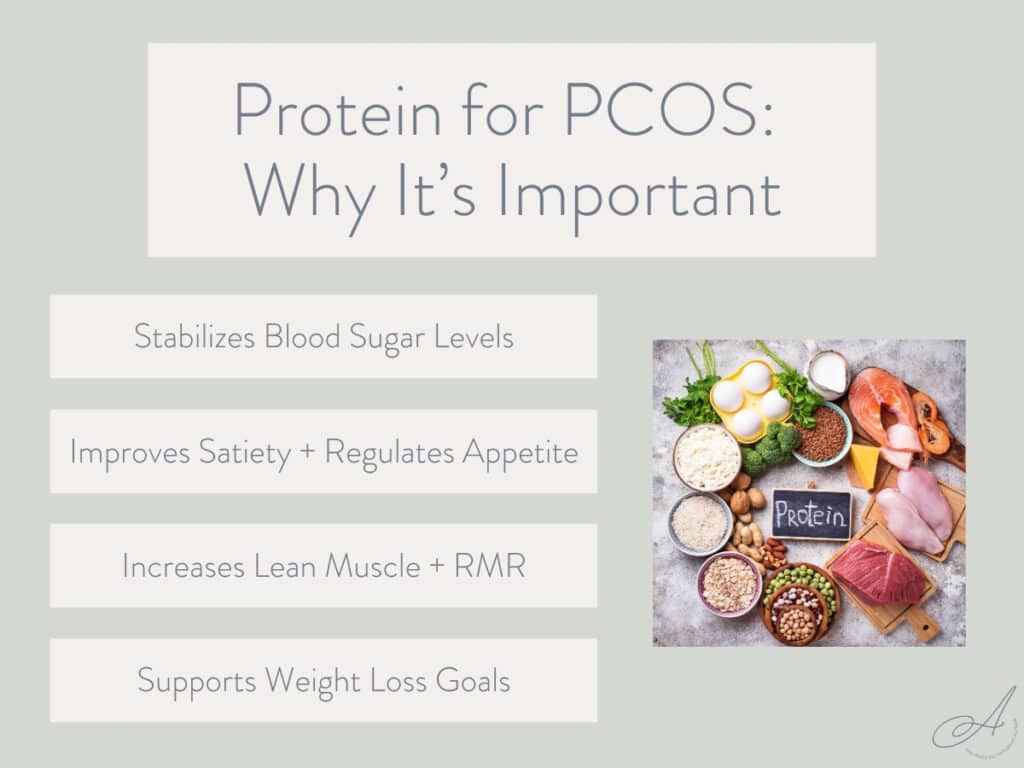
Protein helps stabilize your blood sugar levels and mitigate blood sugar spikes. Over time, stable blood sugar levels help to improve insulin sensitivity and lower insulin resistance.
Insulin resistance is present in up to 80% of those of us with PCOS and is a common root cause of PCOS symptoms.
Improves Satiety and Appetite Regulation
Since protein helps to keep blood sugar levels more stable, you’ll also feel more full and satiated for a longer period of time. You’ll likely also notice less cravings when you’re including enough protein at your meals.
Studies show that protein can actually decrease ghrelin, our hunger hormone; while increasing peptide YY, a hormone that reduces appetite (1, 2). So essentially, protein can make you less hungry.
Supports Weight Loss Goals
Many people with PCOS struggle with weight gain, especially in the abdominal area. Since protein can have a profound effect on reducing appetite and promoting satiety, research shows that it can be instrumental in promoting weight loss (3).
Increases Lean Muscle and Metabolism
Muscle is metabolically active tissue and is extremely responsive to insulin. The more muscle you have, the more efficiently insulin moves glucose into your cells and the higher your resting metabolic rate will be. Essentially, more muscle can lower glucose and insulin levels while increasing your metabolism and improving metabolic health over time.
How Much Protein Do You Need for PCOS?
There isn’t a magic amount of protein that everyone with PCOS needs, although most people tend to feel their best with a moderate to higher amount of protein.
To keep blood sugar levels stable throughout the entire day, it’s best to divide your protein intake out between your meals. Most people feel their best getting at least 25-30 grams of protein per meal. If you eat snacks, you may want to aim for 10-20 grams of protein. You can experiment with different amounts of protein to see how you feel.
Sources Of Protein
Before we dive into protein powder supplements, it’s important to understand that protein is naturally found in food, in both animal and plant foods.

- Animal Protein Sources: beef, pork, lamb, chicken, turkey, fish, shellfish, eggs, dairy
- Plant-Based Proteins: tofu, tempeh, edamame, beans, lentils, quinoa, nuts, nut butters, seeds
Make sure you download your copy of my Protein Cheat Sheet. This provides common sources of protein and how many grams of protein are in a typical serving size.
I always recommend trying to meet your dietary protein needs with food first, whenever possible. When you choose whole foods, you can get a good source of protein, but you usually get a lot of additional benefits from other essential nutrients that are also in that protein food.
Do I Need Protein Powder for PCOS?
No, protein powder is not necessary for PCOS. You do not need protein powder to be able to manage your symptoms.
If you’re able to consistently eat enough protein from whole food sources, you may not need protein powder at all. Ultimately, the goal is to include a variety of whole food protein sources like those listed above as part of a healthy diet.
Of course, there’s also situations where protein powder can make life easier. It can be a convenient way to boost your daily protein intake or hit your protein goal at a specific meal. In those situations, a quality protein powder can be a great addition to your diet.
If you feel like you can benefit from using protein powder at certain times, the next question is: what’s the best type of protein powder for PCOS?
Types Of Protein Powder for PCOS
With the popularity of using protein powders exploding over the past couple decades, there are several different protein powders on the market, including animal based protein powders (dairy, egg, collagen) and plant-based protein powders (soy, pea protein, hemp, brown rice).
Lets talk about some pros and cons of several types of protein powders for PCOS.
Whey Protein Powder
This is the OG of protein powders and is one of the most well-studied protein powders.
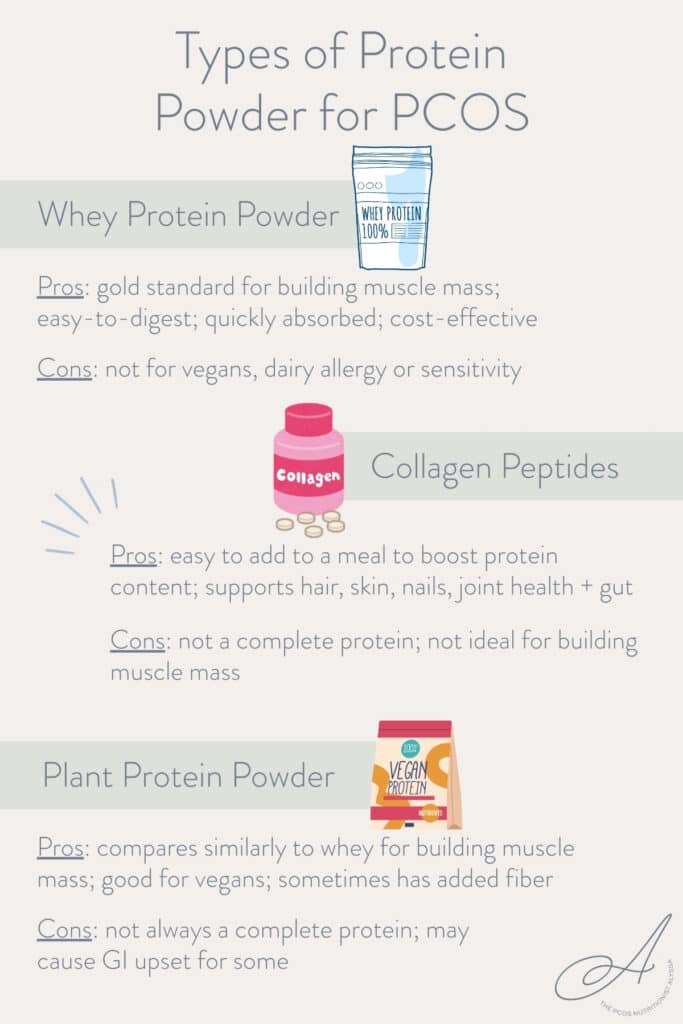
Whey protein is derived from cow’s milk and it’s known for being quickly digested and absorbed. It’s a complete protein, meaning it has all of the essential amino acids that our body cannot make on its own. It also contains high amounts of branch chain amino acids (BCAAs), which are important for muscle growth.
For those with PCOS, whey protein isolates can improve blood sugar levels and insulin sensitivity. It may also lower the risk for non-alcoholic fatty liver disease (4).
Whey protein isolate is about 90% protein and generally has less lactose and fat than other types of whey protein powders. Most research studies on muscle growth have used whey protein isolate, so it is considered the gold standard when it comes to building muscle.
Whey protein may be a good option for you if:
- You are looking for a cost-effective, easy-to-digest and absorb protein powder
- Your goal is to build muscle mass
Whey protein may not be a good option for you if:
- You’re vegan or primarily plant-based
- Have a dairy allergy or sensitivity
Note: There’s no research to support that everyone needs to (or should be) dairy-free just because they have PCOS. There’s a lot of nuance to this topic. You can read more about dairy and PCOS here: Best Milk For PCOS: Should You Go Dairy Free?
Collagen Peptides
Collagen peptides are small pieces of protein from animal collagen – most frequently from cows, chickens, or fish.
Unlike whey protein, collagen peptides are not a complete protein source since they lack the amino acid tryptophan. Research has shown they’re not as effective at building muscle mass as other protein sources, however, they do appear to have health benefits for joints, skin, hair, nails, and the gut lining (5, 6).
Collagen peptides may be a good option for you if:
- You just need to add some protein to a meal, such as oatmeal or a smoothie
- You want to support and improve your joint health, hair, nails, skin, or gut lining
Collagen peptides may not be a good option for you if:
- Gaining muscle mass is your main goal
- You’re relying on this as your only protein source
Plant-Based Protein Powders
There are many different types of plant-based protein powders that have reached the market in recent years. They’re a great choice for those who are vegan or have a dairy intolerance, but not all plant protein powders are created equal.
Here’s a quick glance at some of the more common plant based protein powder options:
- Pea protein: a complete protein source but lower in the amino acid methionine. Performs similarly to whey protein for building muscle mass (7, 8). Usually has an added bonus of containing some iron and fiber.
- Soy protein: another complete protein source. Moderate soy intake can improve glucose, insulin, BMI, cholesterol levels, and the gut microbiome for PCOS (9, 10). Research has been done with whole soy foods (like tofu or tempeh) rather than soy protein powder so it’s typically not my first recommendation for PCOS protein powders.
- Hemp protein: a complete protein but lower in leucine, which is essential for building muscle mass. Usually a good source of fiber and omega 3 fatty acids.
- Brown rice protein: not a complete protein source but higher in methionine. When combined with pea protein, it can create a more complete amino acid profile.
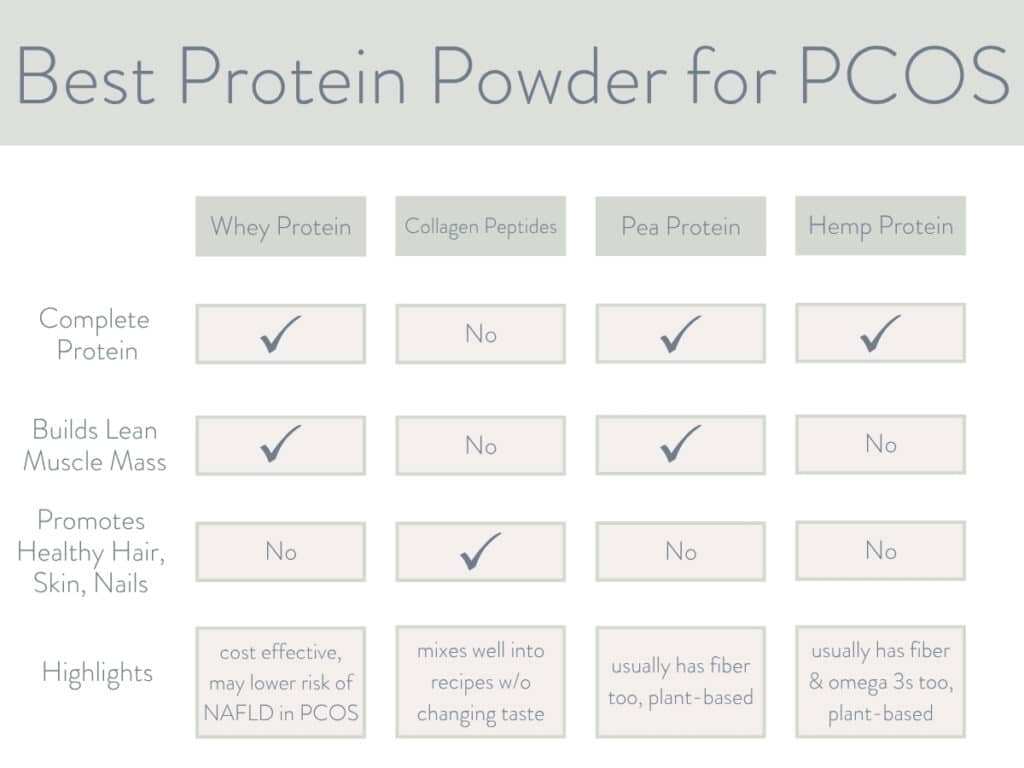
If you’re looking for a plant-based protein powder for PCOS, pea protein is my top recommendation. It’s a complete protein that can build muscle mass really effectively. There’s also usually some added fiber, which can be beneficial for gut health and blood sugar stability.
While pea protein alone can be beneficial, it may be even more effective when it’s combined with a complementary type of protein powder such as brown rice protein.
Now that you probably know which type of protein powder you might want to choose, how do you actually choose a particular brand of protein powder? Let’s dive into what you should look for.
Choosing The Best Protein Powder Brand for PCOS
There are many protein powders that are made with natural ingredients, however, many have a lot of artificial ingredients you may want to be cautious of.
In general, when searching for a protein powder supplement, I recommend looking for a few different things.
Adequate Protein Content
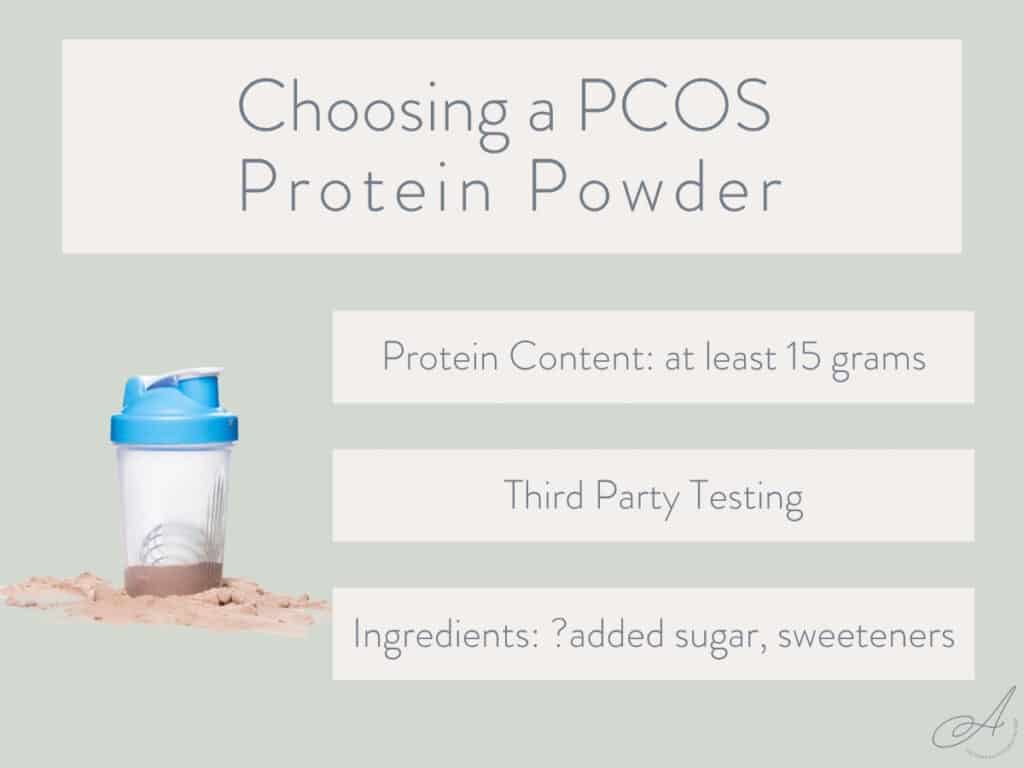
If you’re using a protein powder, make sure it is giving you a decent amount of protein! Look for a protein powder that has at least 15 grams of protein per serving.
Third Party Testing
The FDA doesn’t regulate protein powders the same way that food and drugs are regulated.
I recommend looking for a supplement brand that utilizes third party testing (done by an independent lab such as NSF or USP) to ensure quality and appropriate health claims.
High Quality Ingredients
When it comes to a protein powder, shorter ingredient lists are usually better – not always, but usually. There can be several fillers or additives that may cause digestive problems for some people, such as carrageenan or sugar alcohols.
Low Added Sugar or Artificial Sweeteners
Many protein powders contain high amounts of added sugars, which can impact blood sugar balance in PCOS. I recommend choosing a protein powder that has little to no added sugar.
Artificial sweeteners are a common ingredient in protein powders to add a sweet flavor without adding sugar. While research is still emerging, some studies have found a link between artificial sweeteners (such as sucralose and acesulfame potassium) and gut dysbiosis.
If you’re choosing a protein powder that is flavored or sweetened, look for those sweetened with monk fruit, stevia, or allulose if possible.
I know that may seem like a laundry list of things to focus on – but let me show you some examples of PCOS protein powders that I recommend.
Best Brands of Protein Powder for PCOS
The best type of protein powder for PCOS is going to depend on you as an individual, your goals, and your diet pattern.
Generally speaking, these are a few of the PCOS-friendly protein powders I tend to recommend (in no particular order):
- Whey protein powder: Opportuniteas Whey Protein Isolate, Naked Whey Iso, or Garden of Life Whey.
- Collagen peptides: Vital Proteins or Truvani
- Plant based protein powder:
- Pea protein + brown rice blends: Orgain Simple, Orgain, or Garden of Life Plant Based.
- Wellious is a blend of chickpea and almond protein powders that have a good amino acid profile.
- Anthony’s hemp protein powder is a good option to add some protein, omega 3 fatty acids, fiber to a meal.

Ways To Include Protein Powder With PCOS
There are endless ways to include protein powder into your PCOS friendly diet.
Some of my favorite ways are to incorporate it into recipes like these:
- Oats: add a scoop of unflavored collagen peptides or protein powder into your hot oatmeal, baked oats, or overnight oats
- Baked goods like these Peanut Butter Banana Baked Oat Cups
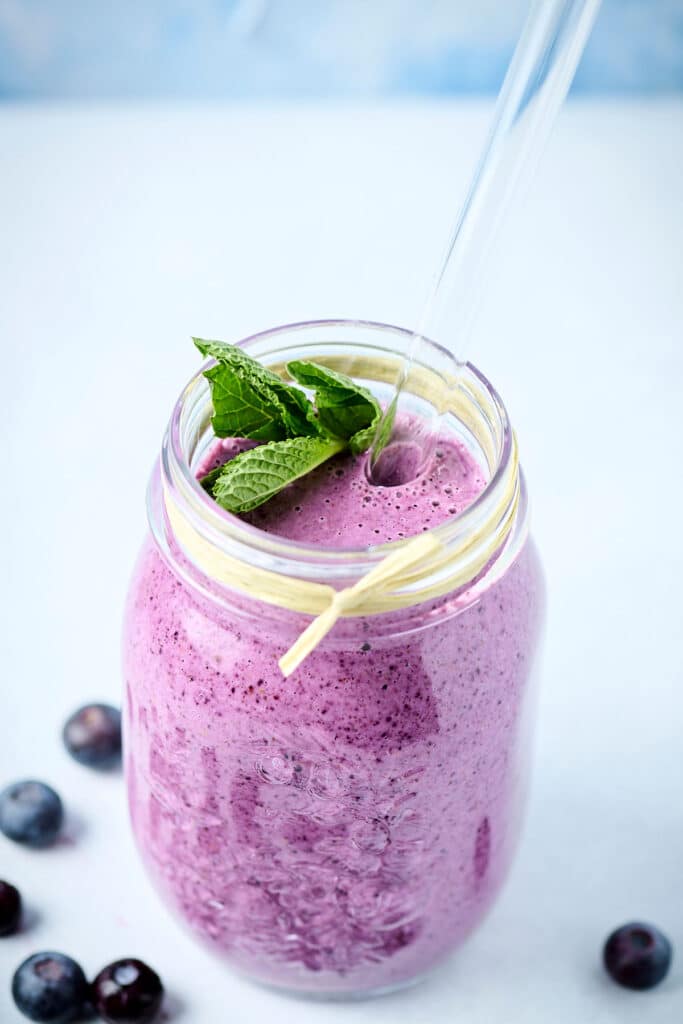
- Smoothies: smoothies can be a great option for PCOS but you’ll want to make sure you have enough protein in there! Adding some protein powder to any one of these PCOS-friendly smoothies is a great way to start your morning.
- Post-workout recovery drink – just mix your favorite protein powder with water or your choice of milk, shake and enjoy!
- A PCOS-supportive beverage like this Bone Broth Hot Chocolate or this Pineapple Cortisol Mocktail
The Bottom Line
Protein is an essential macronutrient that can regulate blood sugar levels, keep you feeling full, build lean muscle mass, and aid in weight loss.
The best way to increase your protein consumption is by using real food options that are high in protein. In certain scenarios though, protein powders can be a convenient and great way to meet your protein needs.
There isn’t a straightforward one-size-fits-all protein powder for PCOS. The one that’s best for you will depend on your goals, diet, and preferences.
If you’re looking to build lean muscle mass, whey protein is a great, cost-effective option. For those who are dairy free, or follow a plant-based diet, pea protein is another great option for building muscle.
If you’re looking to improve the health of your joints, tendons, hair, skin, and nails, collagen peptides may be the better option for you. Additionally, unflavored collagen peptides are a great way to add protein to a meal that may be otherwise lacking it, such as oatmeal.
Search for protein powders that undergo third-party testing, have high-quality ingredients, offer little to no added sugars or artificial sweeteners, and provide at least 15g of protein per serving.
Other PCOS Posts You’ll Love:
Best Protein Shakes for PCOS (Store-Bought + Recipes)
5 Best Supplements for PCOS Weight Loss
Easy PCOS Breakfast Ideas + Recipes
Disclaimer: This is for informational purposes only and not intended to be substituted for medical advice for any medical condition, including polycystic ovarian syndrome. Always consult with your healthcare provider for personalized recommendations.
4 Responses
I’m currently using Isopure (whey protein isolate) from Costco. I would like to know if this is a good option for someone with PCOS. Any thoughts or advice on this would be greatly appreciated.
Hi Viji! It could def be a good choice for some people – it’s all going to depend on the person! There are some artificial sweeteners in there that may negatively affect gut health for some people (we definitely still need more research in this area). Additionally, there’s a lot of vitamins/minerals added in…which isn’t necessarily a bad thing but if you’re taking a multivitamin, prenatal, or other supplements, there could be a lot of nutrient overlap that may be unnecessary or even counterproductive.
Hi! Im currently using Gold Standard Protein powder. Is that a good choice?
Hi Pat! If it’s the one I’m thinking of, it may have artificial sweeteners in it. The research isn’t cut and dry but these sweeteners may negatively impact gut health for some people.