Are protein bars good for PCOS? If they are OK, what are the best protein bars for PCOS? These are some common questions I get asked as a registered dietitian and PCOS specialist.
In this blog post, I’m going to break down who should consider protein bars, what to look for, and what the best protein bars for PCOS are. Let’s dive in!
Why Is Protein Important for PCOS?
PCOS (polycystic ovarian syndrome) is a lifelong hormonal condition. Common symptoms of PCOS include fatigue, weight gain or inability to lose weight, infertility issues or irregular menstrual cycles, hair loss or unwanted hair growth (also called hirsutism), acne and carb cravings. PCOS is thought to be a combination of insulin resistance, inflammation and high androgens (or male hormones such as testosterone).
Since insulin resistance is so common in PCOS, getting enough protein is imperative to maintain blood sugar balance. When consumed alongside fiber-rich carbohydrates and healthy fats, protein can keep you satiated and boost energy levels.
Protein is also the key building block to gain and support muscle mass. Muscle helps increase our metabolism, burn more calories, and support blood sugar levels. In turn, lean muscle mass can support weight loss and weight management efforts.
Protein can be either an animal or plant-based protein source, such as:
- Poultry and lean red meat such as chicken, turkey, beef, pork, or lamb
- Fish and other seafood
- Eggs
- Dairy products such as Greek yogurt and cottage cheese
- Soy such as tofu, tempeh, and edamame
- Beans, chickpeas, lentils
- Nuts such as almonds, cashews, pecans, walnuts, or even peanut butter
- Seeds such as chia seeds, flaxseeds, pumpkin seeds, or sunflower seeds
In this fast paced world we live in, people are looking for easy ways to incorporate protein on the go. Protein bars and shakes are becoming more popular as portable options. And let’s be real, we can’t just walk around with a chicken breast in our pocket or purse at all times!
Are Protein Bars Good for PCOS?
Let’s break this down. Unfortunately, there isn’t a simple yes or no as to whether protein bars are “good” for PCOS.
It seems like the sky’s the limit when it comes to protein bar options that are available to us. Some protein bars are loaded with high amounts of added sugar, minimal fiber, and low protein amounts that can lead to blood sugar spikes. While others can be a great option if you’re on-the-go and need something quick and convenient. But how do you pick the best protein bars for PCOS?
Choosing a Good Protein Bar for PCOS
If you walk down any large grocery store you will see the protein bar aisle is bursting with an endless variety of different bars. Common protein bars can be animal based, plant based, keto, gluten free, high calorie, low calorie, low carb, low sugar, etc!
Some claim to help build muscles, while others claim to support weight management. It can be overwhelming to find the right ones for those living with PCOS so let’s narrow things down!
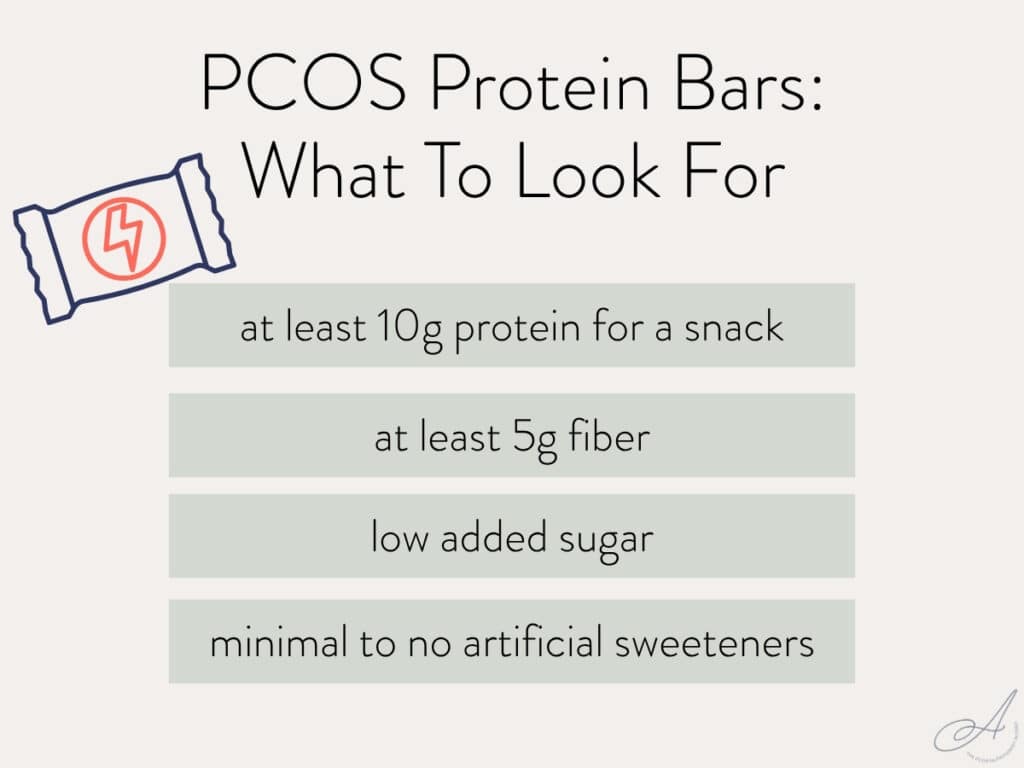
Keys things to look for when selecting PCOS-friendly protein bars are:
- How much protein: if you’re using a particular bar as a snack, you’ll want at least 10 grams of protein. For a meal replacement, look for at least 20 grams of protein.
- High quality protein source: whey protein, pea protein, or soy protein are quality sources of protein commonly found in bars.
- Contains at least 5 grams of fiber
- Minimal or no artificial sweeteners
- Minimal amounts of added sugar
- Does not contain hydrogenated oils
When we find protein bars that fit the criteria above they can be a great way to get enough protein on the go. It’s always important to remember that whole foods are generally a better way to get your nutrition. While protein bars can be both a fast and tasty way to get protein, they should not be the primary way that you reach your protein goals.
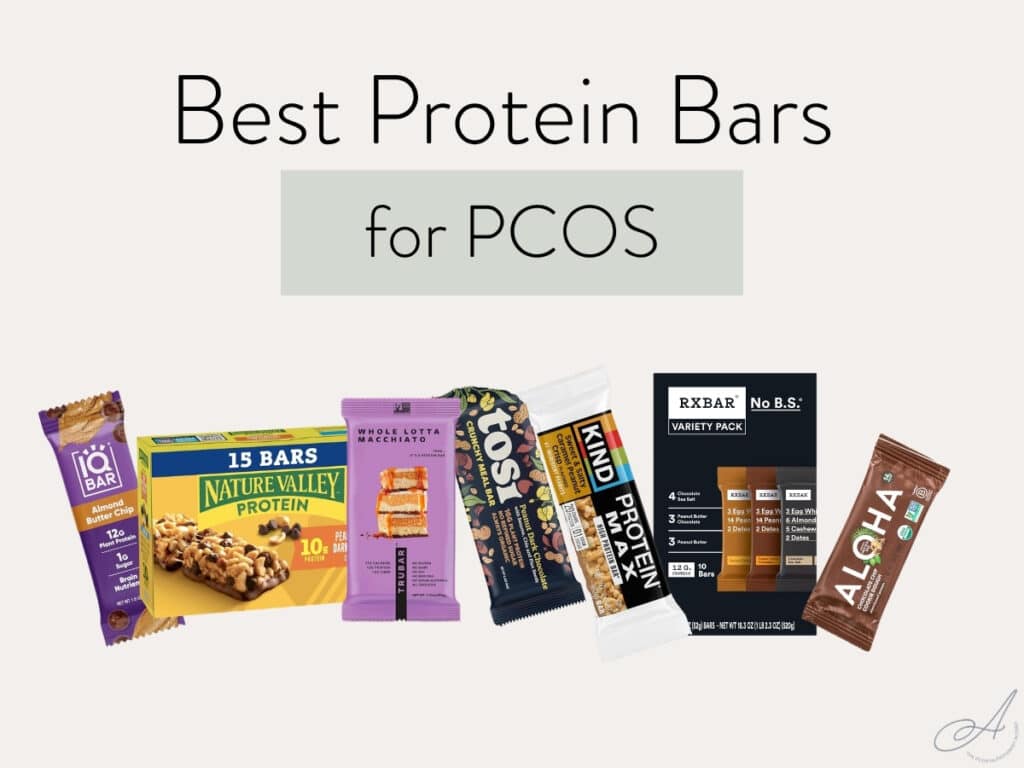
Best Protein Bars for PCOS
Here are the best protein bars for PCOS that meet the above criteria:
Worst Protein Bars for PCOS to Avoid
Unfortunately some of the most popular protein bars available are not the best selections when it comes to balancing blood sugar and reducing inflammation. Many contain high amounts of added sugars that can lead to blood sugar spikes. Those packed with artificial sweeteners may also lead to gut dysbiosis or GI issues, such as gas and loose stools.
Some of the bars that unfortunately don’t fit within the PCOS friendly protein bar guidelines are:
- Clif Builder Bars
- Special K Protein Bars
- Original Clif Bars
- Pure Protein Bars
- Think Thin Bars
- Gatorade Protein Bars
The Bottom Line
Since protein is such a powerful and necessary macronutrient for aiding with satiety and improving insulin sensitivity, protein bars can fit into a balanced diet while trying to manage PCOS symptoms.
Just remember the guidelines when selecting: at least 10 grams of protein for snacks and 20 grams for meals; at least 5 grams of fiber, limited added sugar, no hydrogenated oils, and little to no artificial sweeteners.
Protein bars are made for a quick and convenient protein punch when out and about, going for hikes, jumping between appointments and errands, or simply when time just doesn’t permit making a meal. Just remember the bottom line: they are still considered a processed food and best to be used to supplement actual whole foods!
Other PCOS Posts You’ll Love
The Best Protein Powders for PCOS
Best Protein Shakes for PCOS (Store-Bought + Recipes)