If you’re trying to get more protein in your diet, this protein cheat sheet is going to make your life a lot easier.
As a registered dietitian who specializes in PCOS, I understand the importance of protein. In this blog post, I’ll provide you with some general info on protein, how to get more protein into your daily diet, and of course a free protein cheat sheet that you can download at the end of this article.

Why Is Protein Important?
If you’re here looking for information on protein sources, I’m assuming you know that protein is important. But why is it important?
Protein is the building blocks of every aspect of our bodies. It’s involved in the creation and maintenance of every cell in your body. So making sure you’re getting enough protein is essential for maintaining overall health.
Getting enough protein at all of your meals can help to:
- Reduce Insulin Resistance. Protein helps to mitigate a blood sugar increase, which will help to improve insulin sensitivity over time. This can help to lower your risk of type 2 diabetes.
- Keep You Feeling Full. Since protein helps to keep blood sugar levels more stable, you’ll also feel more full and satiated for a longer period of time.
- Alter Hunger & Fullness Hormones. Studies show that protein can actually decrease ghrelin, our hunger hormone; while increasing peptide YY, a hormone that reduces appetite (1, 2). So essentially, protein can make you less hungry.
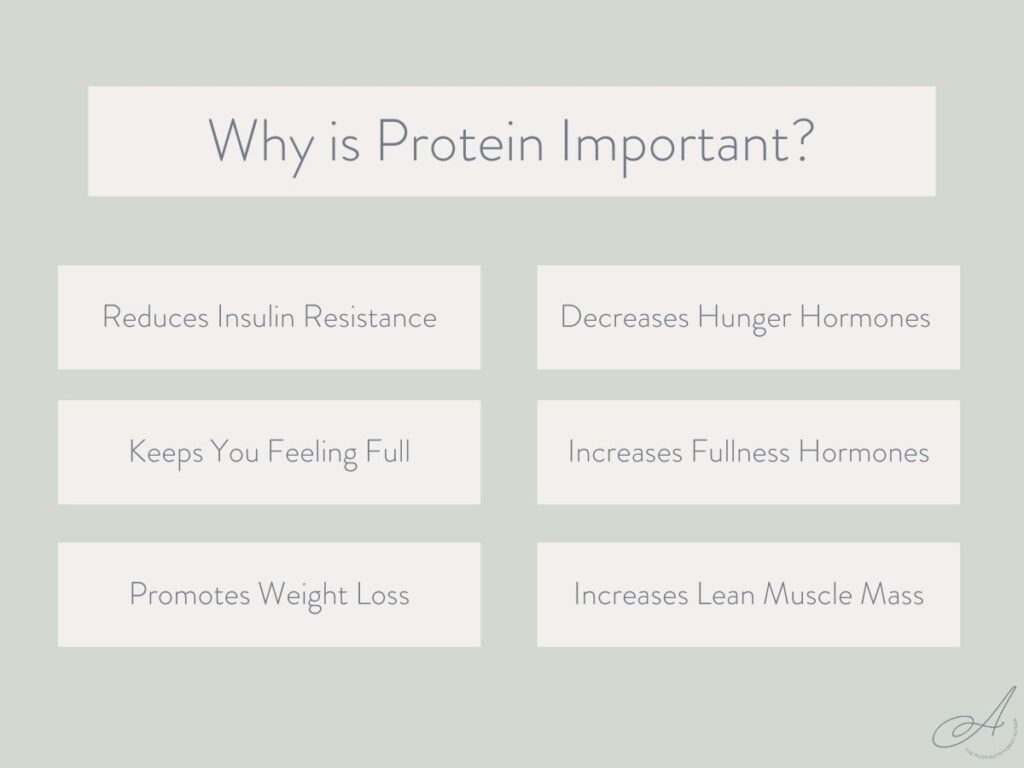
- Increase Lean Muscle Mass. We’ve all heard that protein builds muscle right? Well, that’s certainly true: it plays a big role in muscle protein synthesis. Protein helps prevent the breakdown of current muscle mass and also helps to rebuild new muscle fibers as well. Having a higher lean muscle mass can also increase your metabolic rate.
If you suspect that you have insulin resistance, check out: A Dietitian’s 7 Day Insulin Resistance Meal Plan (Free PDF).
How Much Protein Do You Need?
What’s the right amount of protein to eat? This is another common question I get as a dietitian.
Your daily protein goal will vary depending on several factors such as your height, weight, age, physical activity level, and your fitness goals. The very basic amount of protein that your body needs is 0.8 grams of protein per kilogram of body weight. This isn’t necessarily what your body needs to feel and perform optimally though. Research seems to suggest that an optimal protein goal for most people falls somewhere between 1.2 to 2 g/kg of body weight.
Regardless of your protein goals, it’s important to divide your protein out among your day relatively equally. Most healthy adults feel their best when they aim for at least 25-30 grams of protein per meal. You can experiment with how different amounts of protein make you feel.
What Are The Best Sources of Protein?
The best sources of protein are unprocessed, whole foods that are in their most natural form. These types of protein sources generally include other nutrients such as vitamins and minerals that are important for overall health.
Whether you choose animal proteins or plant proteins is a personal decision. They each have their pros and cons. I personally tend to recommend a healthy combination of both animal and plant based protein sources for those who follow an omnivore diet.
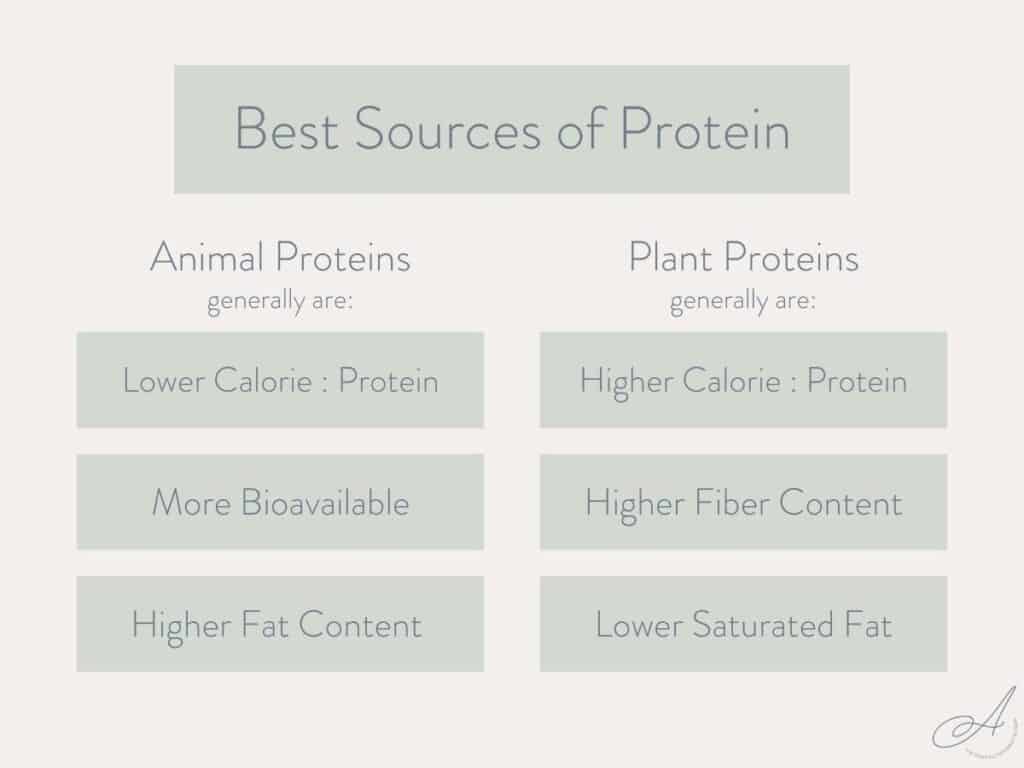
Animal proteins tend to have a higher bioavailability compared to plant proteins. Plant proteins tend to have other nutrients in them, such as complex carbohydrates and fiber, that can slow down digestibility. However, fiber is really beneficial for health.
Read more about fiber here: High Fiber Foods List (Free PDF).
Plant proteins aren’t typically referred to as high protein foods, however, this isn’t necessarily true. As a whole, plant protein sources tend to have less protein per serving than animal proteins. With some really easy changes though, it’s very possible to be intentional and meet your protein requirements while following a plant based diet.
At the end of the day, it’s important to consume protein-rich foods that align with your personal dietary preferences. Including a variety of different types of high protein foods is also important since it can provide your body with a variety of other nutrients to support your overall health and wellbeing.
Alright, let’s take a look at some of the top protein foods in several different food categories.
Meat
Animal protein sources, such as meats, are complete protein sources. This means that they contain all 9 essential amino acids that our bodies cannot produce on their own – so we must get these amino acids from food sources.
Some meats tend to have a higher fat content than others. This type of fat is saturated fat, which is not the most healthy fat source. A diet high in saturated fat is linked to a higher risk of heart disease and insulin resistance. Most people will benefit from choosing leaner cuts of meat to decrease their saturated fat intake.
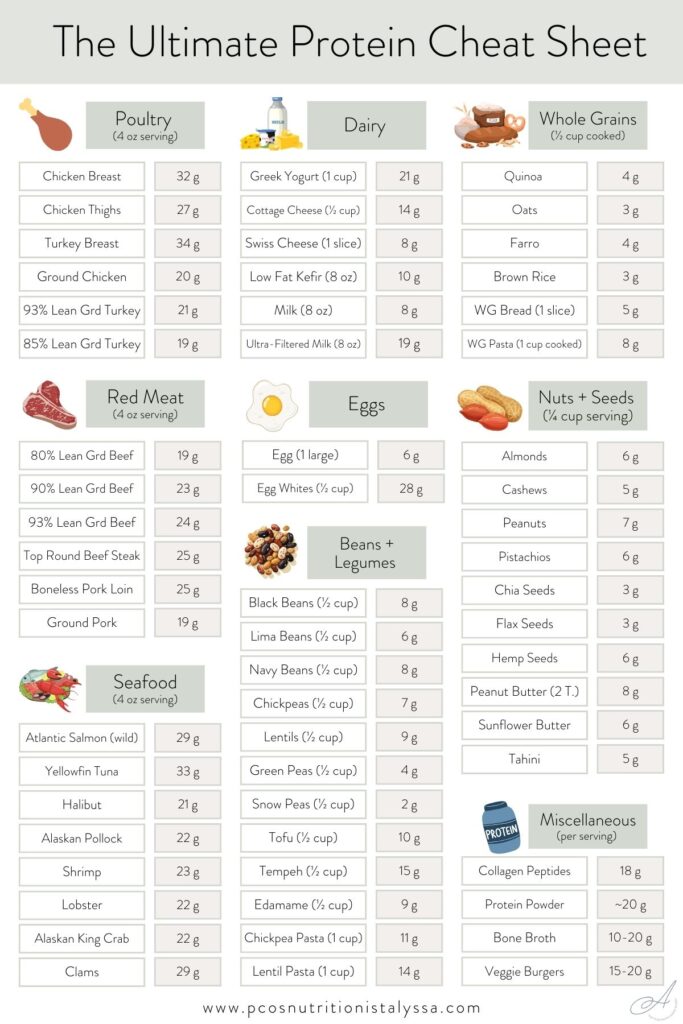
Here’s the calorie and protein content of some common meats.
Poultry
- Boneless chicken breast (4 oz): 32 grams of protein and 160 calories
- Boneless skinless chicken thigh (4 oz): 27 grams of protein and 220 calories
- Turkey breast (4 oz): 34 grams of protein and 165 calories
- Ground chicken (4oz): 20 grams protein and 160 calories
- Ground turkey 93% lean, 7% fat (4 oz): 21 grams protein and 170 calories
- Ground turkey 85% lean, 15% fat (4oz): 19 grams protein and 200 calories
- Kettle & Fire Chicken Bone Broth (1 serving): 19 grams of protein and 80 calories
- Pacific Organic Chicken Bone Broth (1 serving): 9 grams of protein and 50 calories
Red Meat
Beef:
- Ground beef 80% lean, 20% fat (4oz): 19 grams protein and 290 calories
- Ground beef 90% lean, 10% fat (4oz): 23 grams protein and 200 calories
- Ground beef 93% lean, 7% fat (4oz): 24 grams protein and 170 calories
- Top round beef steak (4 oz): 25 grams protein and 195 calories
- Bare Bones Beef Bone Broth (1 serving): 10 grams of protein and 50 calories
- Kettle & Fire Beef Bone Broth (1 serving): 19 grams of protein and 80 calories
Pork:
- Boneless pork loin (4 oz): 25 grams protein and 145 calories
- Ground pork (4oz): 19 grams protein and 300 calories
Processed Meats
Processed meats tend to be higher in calories, sodium, and saturated fats than unprocessed meats. While these foods do contain protein, they’re not the best way to meet your protein goals on a routine basis.
- Pork bacon (3 slices): 12 grams of protein and 330 calories
- Pork sausage (4” link): 8 grams protein and 210 calories
- Salami (4 oz): 24 grams of protein and 476 calories
- Turkey bacon (3 slices): 9 grams of protein and 120 calories
Seafood
Fish, shellfish, and other seafood options tend to be good sources of protein. They also tend to have healthy omega 3 fatty acids in them. These types of healthy fats have been associated with lower inflammation and better heart health.
- Wild Atlantic Salmon (4 oz): 29 grams of protein and 205 calories
- Yellowfin Tuna (4 oz): 33 grams of protein and 150 calories
- Halibut (4 oz): 21 grams of protein and 105 calories
- Tilapia (1 fillet): 23 grams of protein and 110 calories
- Alaskan Pollock (4 oz): 22 grams of protein and 100 calories
- Shrimp (4 oz): 23 grams protein and 95 calories
- Lobster (4 oz): 22 grams protein and 100 calories
- Alaskan King Crab (4 oz): 22 grams protein and 110 calories
- Clams (4 oz): 29 grams protein and 170 calories
Dairy
- Fat-free Greek yogurt (1 cup): 21 grams protein and 120 calories
- 2% cottage cheese (½ cup): 14 grams protein and 80 calories
- Swiss cheese (1 slice): 8 grams protein and 105 calories
- Low-fat kefir (8 oz): 10g protein and 110 calories
- Fat-free milk (8 oz): 8 grams protein and 80 calories
- Ultra-filtered milk (8 oz): 13 grams protein and 80 calories
Eggs
- Egg (1 large): 6 grams of protein and 70 calories
- Egg whites (½ cup): 13 grams of protein and 60 calories
Beans, Soy + Other Legumes
These foods are good sources of plant protein. They tend to have higher carbohydrate amounts than animal proteins. If these are your only protein source at a main meal, you may need to increase the portion sizes to accommodate your hunger levels.
- Black beans (½ cup): 8 grams of protein and 115 calories
- Lima beans (½ cup): 6 grams of protein and 110 calories
- Navy beans (½ cup): 8 grams of protein and 125 calories
- Red kidney beans (½ cup): 8 grams of protein and 110 calories
- Chickpeas (½ cup): 7 grams of protein and 135 calories
- Lentils (½ cup): 9 grams of protein and 115 calories
- Green peas (½ cup): 4 grams of protein and 60 calories
- Snow peas (½ cup): 2 grams of protein and 25 calories
- Tofu (½ cup): 10 grams of protein and 180 calories
- Tempeh (½ cup): 15 grams of protein and 170 calories
- Edamame beans (½ cup): 9 grams of protein and 120 calories
- Chickpea pasta (2 oz dry or 1 cup cooked): 11 grams of protein and 190 calories
- Lupini bean pasta (2 oz dry or 1 cup cooked): 12 grams of protein and 200 calories
- Red lentil pasta (2 oz dry or 1 cup cooked): 14 grams of protein and 190 calories
Whole Grains
- Quinoa (½ cup cooked): 4 grams of protein and 110 calories
- Oats (½ cup cooked): 3 grams of protein and 75 calories
- Farro (½ cup cooked): 4 grams of protein and 105 calories
- Brown rice (½ cup cooked): 3 grams of protein and 110 calories
- Millet (½ cup cooked): 3 grams of protein and 105 calories
- Spelt (½ cup cooked): 4 grams of protein and 100 calories
- Whole wheat bread (1 slice): 5 grams of protein and 120 calories
- Whole wheat pasta (2 oz dry or 1 cup cooked): 8 grams of protein and 180 calories
- Protein pasta (2 oz dry or 1 cup cooked): 10 grams of protein and 190 calories
Nuts + Nut Butters
Nuts and nut butters are smart choices for overall health. They tend to be higher calorie options because of their healthy fat content.
- Almonds (¼ cup): 6 grams of protein and 205 calories
- Brazil nuts (¼ cup): 4 grams of protein and 200 calories
- Cashews (¼ cup): 5 grams of protein and 200 calories
- Hazelnuts (¼ cup): 4 grams of protein and 200 calories
- Macadamia nuts (¼ cup): 2 grams of protein and 205 calories
- Peanuts (¼ cup): 7 grams of protein and 205 calories
- Pecans (¼ cup): 3 grams of protein and 195 calories
- Pistachios (¼ cup): 6 grams of protein and 210 calories
- Walnuts (¼ cup): 4 grams of protein and 200 calories
- Almond butter (2 tbsp): 4 grams of protein and 195 calories
- Cashew butter (2 tbsp): 4 grams of protein and 190 calories
- Peanut butter (2 tbsp): 8 grams of protein and 190 calories
Seeds + Seed Butters
Similar to nuts and nut butter, seeds are also higher in healthy fats which contributes to the significant calorie difference compared to other protein sources.
- Chia seeds (2 tbsp): 3 grams of protein and 140 calories
- Flax seeds (2 tbsp): 3 grams of protein and 110 calories
- Hemp seeds (2 tbsp): 6 grams of protein and 110 calories
- Pumpkin seeds (2 tbsp): 5 grams of protein and 180 calories
- Sunflower seeds or sunflower seed butter (2 tbsp): 6 grams of protein and 205 calories
- Tahini (2 tbsp): 5 grams of protein and 190 calories
Vegetables
Veggie sources aren’t the most protein dense food option but they can add up and help you meet your protein goals, especially if you follow a plant based diet.
- Artichokes (½ cup cooked): 2 grams of protein and 60 calories
- Asparagus (½ cup cooked): 1 grams of protein and 20 calories
- Broccoli (½ cup cooked): 1 gram of protein and 25 calories
- Brussels sprouts (½ cup cooked): 2 grams of protein and 25 calories
- Cauliflower (½ cup cooked): 1 gram of protein and 15 calories
- Corn (½ cup cooked): 2 grams of protein and 65 calories
- Kale (½ cup cooked): 2 grams of protein and 20 calories
- Mushrooms (½ cup cooked): 2 grams of protein and 15 calories
- Spinach (½ cup cooked): 3 grams of protein and 40 calories
- Sweet potatoes (½ cup cooked): 1 gram of protein and 45 calories
- Zucchini (½ cup cooked): 1 gram of protein and 10 calories
Plant Based Meat Alternatives
There are many plant-based meat alternatives on the market now. Below are a few popular choices and their nutritional content.
- Beyond Meat Burger Patties (1 patty): 19 grams of protein and 290 calories
- Gardein Plant Based Ground Be’f (¾ cup): 18 grams of protein and 120 calories
- Impossible Foods Burger Patties (1 patty): 19 grams of protein and 230 calories
- Morning Star Veggie Burgers (1 patty): 16 grams of protein and 140 calories
Protein Powders
- Collagen peptides (1 serving): 18 grams of protein and 70 calories
- Whey protein isolate (1 serving): 21 grams of protein and 120 calories
- Unflavored pea protein (1 serving): 16 grams of protein and 90 calories
- Plant based protein powder (1 serving): 20 grams of protein and 150 calories
Your Protein Cheat Sheet
Alright, what you’ve been waiting for! Click the link below to get this protein list in a convenient one-page download sent right to your email inbox.
Download your free protein cheat sheet here and bring it to the grocery store with you!
Tips To Increase Your Protein
If you need some practical tips to make sure you’re getting sufficient protein in your diet, look no further. Here’s a few of my favorite ways to sneak some protein into your day.
- Add a scoop of unflavored collagen peptides or protein powder to your oatmeal, overnight oats, smoothies, or coffee.
- Turn your desserts or veggie dips into high protein options by using a cup of plain Greek yogurt or cottage cheese as the base.
- Swap traditional white pasta for a chickpea pasta then add another protein source on top.
- Keep ready-to-eat protein sources on hand such as canned fish or chicken, canned beans, nut butters, and hard-boiled eggs to easily add to meals or snacks.
High Protein Diet Sample Menu
If you’re wondering what a high protein diet may look like in real life, I’ve got you! Here’s what a sample menu may look like to help you achieve at least 100 grams of protein per day.
Day 1 High Protein Menu (133 grams protein):
Breakfast: Cookies + Creams Overnight Oats (38 grams protein)
Lunch: Greek Chicken Quinoa Bowls (35 grams protein)
Dinner: Healthy Garlic Chicken Parmesan Chicken (47 grams of protein)
Snack: High Protein Chocolate Pudding with berries on top (13 grams of protein)

Day 2 High Protein Menu (114 grams of protein):
Breakfast: Mango Protein Smoothie (29 grams of protein)
Lunch: Beef Chili with Beans (36 grams of protein)
Dinner: Ground Turkey Taco Skillet (33 grams of protein)
Snack: Greek Yogurt Chia Pudding (16 grams of protein)
Check out more delicious recipes here!
The Bottom Line
Protein is one of the essential macronutrients to include in your daily diet. The amount of protein that you should be eating depends on several factors such as your body composition, activity level, and goals.
There are several foods that can help you to reach your protein goals each day. To feel your best, you’ll want to spread your protein out throughout your day too. It’s generally a good idea to include a variety of these high protein foods in your diet. This helps you to get different nutrients from the different foods you’re eating.
In case you missed it above, you can download your free protein cheat sheet here.
Other Posts You’ll Love:
A Dietitian’s Honest Review of ARMRA Colostrum