


Is Greek yogurt good for PCOS? This is a common question that causes a lot of confusion for many people…especially with all the conflicting information about dairy and PCOS out there.
Hi, I’m Alyssa, a registered dietitian and I also have PCOS. In this blog post, I’m going to break down the pros and cons of Greek yogurt for PCOS, the best brands, and how to incorporate it into a PCOS friendly diet.

What Is Greek Yogurt?
Greek yogurt is a type of yogurt that’s made from milk and live cultures. When Greek yogurt is made, it undergoes a straining process that removes a lot of the liquid. This results in a more concentrated yogurt than traditional yogurt.
Greek yogurt is more concentrated in nutrients than traditional yogurt. It also typically has a thicker consistency and a tangier taste.
Greek Yogurt vs Regular Yogurt
Since Greek yogurt is a strained yogurt and more concentrated, it tends to be higher in certain nutrients.
It’s often touted as the better option because of its high protein content. One cup of Greek yogurt has 22 grams of protein in it, while one cup of traditional yogurt contains only 9 grams of protein. That’s a pretty big difference!
Like traditional yogurt though, Greek yogurt can be made from nonfat milk, low fat milk, or whole milk. So the fat content can range depending on the type you choose…and it’s pretty similar to traditional yogurts.
There is a difference between Greek yogurt and regular yogurt for carbohydrates. Since all of these yogurts are made from milk, the type of carbs is going to be sugar. However, if you’re choosing a plain yogurt, there won’t be any added sugars. For overall carbohydrates (and ultimately, sugar), Greek yogurt tends to be lower than traditional yogurts.
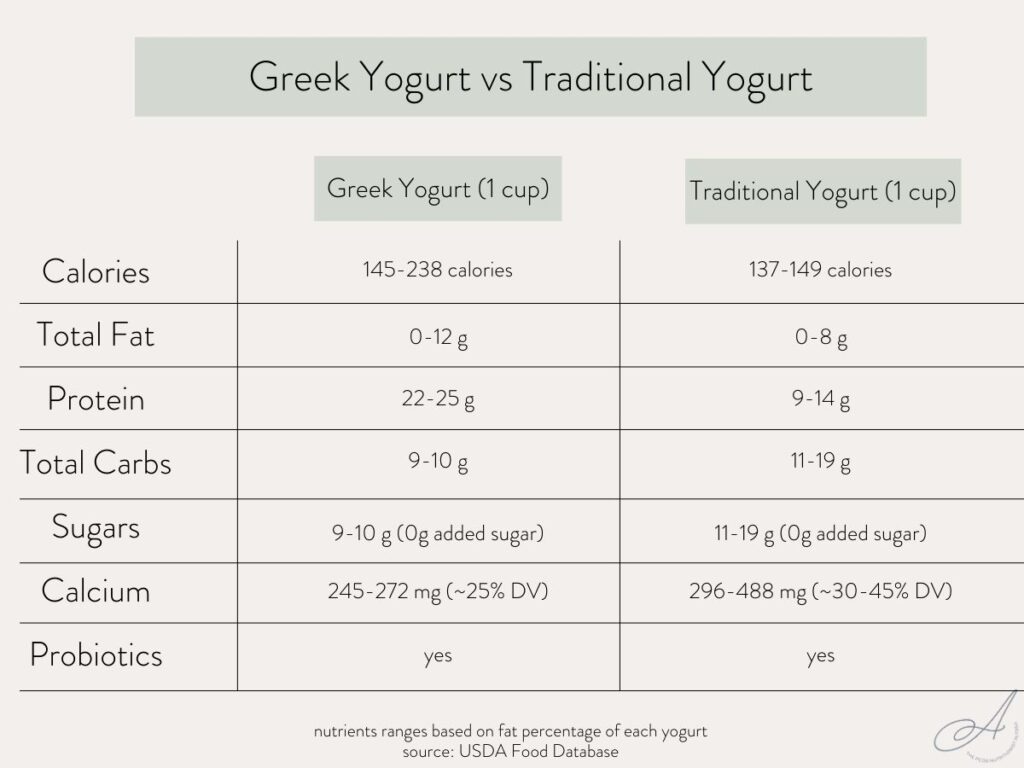
Since Greek yogurt goes through the straining process and most of the liquid and whey is removed, the lactose content is generally much lower than traditional yogurts. Many people with lactose intolerance find that they can tolerate Greek yogurt without any unpleasant symptoms.
Finally, calcium is another nutrient we think of when it comes to dairy. The calcium content in regular yogurt is higher than Greek yogurts. One cup of traditional yogurt contains anywhere from 300 to 500 mg of calcium, while the same amount of Greek yogurt contains around 250 to 275 mg of calcium.
Let’s move on and talk about how Greek yogurt can specifically benefit your PCOS symptoms.
Benefits of Greek Yogurt for PCOS
Let’s break down the benefits of Greek yogurt for PCOS.
Grab your full 7 Day PCOS Diet Plan PDF here.
Blood Sugar Control + Insulin Resistance
We know that up to 80% of women with PCOS have high insulin levels or insulin resistance. Unfortunately, about half of those will go on to develop type 2 diabetes before the age of 40 since insulin resistance is a precursor for and puts you at a higher risk of developing diabetes.
There have been numerous clinical trials done on the effects of dairy on insulin resistance, pre-diabetes, and type 2 diabetes. While the results are mixed, overall it appears that dairy intake improves insulin sensitivity and lowers the risk of developing prediabetes or type 2 diabetes in women (1).
Yogurt may be particularly beneficial because it increases GLP-1 and peptide YY concentrations which improves blood sugar levels. One study found that women who were randomly assigned to consume yogurt had lower insulin levels than those who were assigned to consume milk.
Greek yogurt in particular is high in protein. Protein is instrumental in maintaining stable blood sugar levels and lowering insulin resistance.
Inflammation
PCOS is linked to chronic low-grade inflammation. We know that anti-inflammatory foods can be a great addition to a PCOS-friendly diet to help lower this inflammation. We also know that certain unhealthy food, like processed foods, can make inflammation worse.
Many people claim that dairy causes inflammation, however, multiple systemic reviews show that milk is largely neutral or that it actually has anti-inflammatory effects (2, 3).
Of course, if you are allergic to milk or have an intolerance, consuming milk or dairy products will result in inflammation. One study did find that a higher amount of women with PCOS had lactose intolerance compared to the general population (4). However, Greek yogurt tends to be lower in lactose than traditional yogurt so most people with lactose intolerance can tolerate it.
Get a full list of anti-inflammatory foods here that can benefit PCOS and other inflammatory conditions.
Gut Health
Greek yogurt is often touted as a health food because of the probiotics, aka beneficial bacteria, inside. Science seems to support this too. A recent systematic review found that fermented dairy products such as kefir and yogurt consistently show positive health benefits. Some of these benefits include a reduced risk of breast cancer, colorectal cancer and type 2 diabetes, improved weight maintenance, and improved cardiovascular, bone health, and gut health.
These fermented dairy products contain live cultures called probiotics that can play a role in shifting the gut microbiome to improve overall health. Since women with PCOS tend to have less diverse gut microbiomes, this is a huge advantage that can really help to reduce PCOS symptoms in the long run.

Other fermented dairy products like cottage cheese and kefir can also be an excellent choice to improve your digestive health. Learn more about probiotics and how they can help PCOS here.
Testosterone Levels
High testosterone levels are often driving a lot of really unpleasant symptoms of PCOS like irregular periods, acne, hair loss, and hirsutism (aka excess hair growth). Greek yogurt may be a good addition to help decrease testosterone though.
One recent animal study found that yogurt with added inulin (aka a prebiotic fiber) decreased testosterone levels while also improving other hormone levels.
Is Greek Yogurt Good For PCOS?
Yes, Greek yogurt is good for PCOS. In fact, Greek yogurt is one of my favorite foods to recommend for PCOS. It’s nutrient packed and very versatile.
It has ample amounts of protein, while also being low in carbs and sugar. Other benefits include probiotics that improve gut health and calcium for strong bones and a healthy heart. Depending on the brand of Greek yogurt you choose, it may be fortified with vitamin D as well.
Let’s talk about what to look for when choosing a Greek yogurt for PCOS.
What To Look For In A Greek Yogurt
Alright, so now that you know that Greek yogurt is a good choice for PCOS, let’s talk about how to actually choose a good one at the grocery store.
There’s a few things I look for when I’m looking at a Greek yogurt:
- Protein content
- Fat content and whether it’s fat-free, low fat, or made with whole milk
- Sugar content, particularly added sugars
- Ingredient list, particularly for artificial sweeteners

First, I want to make sure that it actually has a good amount of protein. Most Greek yogurts will have at least 15 grams of protein per ¾ cup serving.
Second, I also want to know the fat percentage in it. We don’t have clear answers as to whether full-fat, low-fat or fat-free are best for PCOS. Currently, it seems like higher fat dairy products may be the better choice for PCOS. For most people with PCOS, I generally recommend choosing 2% fat or higher.
Another important thing I look for is the sugar content, particularly the amount of added sugars in it. Even a plain Greek yogurt is going to have natural sugar in it – those sugars aren’t really the issue. The added sugars are more concerning.
In flavored yogurts, you’ll typically find some added sugars. There’s a big difference though between a few grams of added sugar and some of the yogurts that look more like a dessert. In general, the less added sugar in a Greek yogurt, the better.
And finally, the last thing I look for is whether or not there are artificial sweeteners in the ingredients list. There’s some evidence that artificial sweeteners may negatively impact the gut microbiome.
Best Brands of Greek Yogurt for PCOS
Now, moving onto some of my favorite brands. Just a quick note though that there are many brands that have great products and I’m merely highlighting a select few. Even if your favorite Greek yogurt isn’t included here, that doesn’t mean it’s not a great choice.
Here’s some of my favorite brands of Greek yogurt for PCOS.
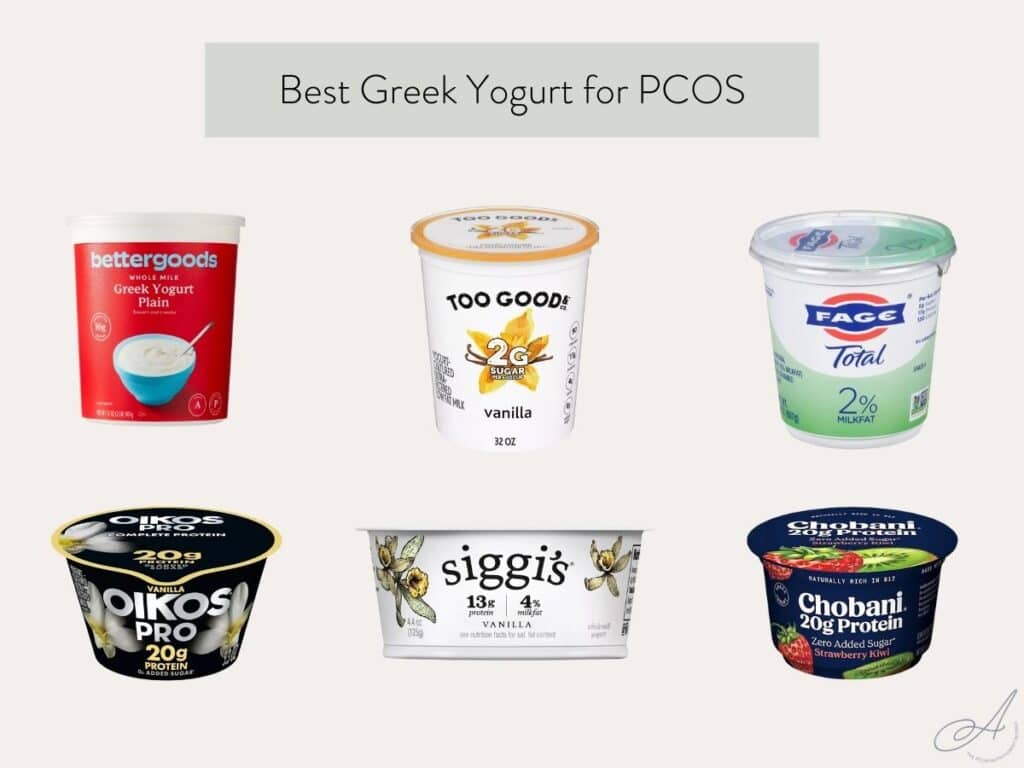
- Plain Greek yogurt (full fat): Fage 5% yogurt or 2% yogurt; or this store brand yogurt
- Plain Greek yogurt (nonfat): Chobani or this store brand yogurt
- Flavored Greek yogurt (full fat): Siggi’s or Fage
- Flavored Greek yogurt (nonfat): Siggi’s, Chobani Zero or Two Good or Oikos
The best yogurt option for you will depend on your personal preferences and your unique health situation.
Greek Yogurt Recipes for PCOS
Greek yogurt can easily be included as is to your PCOS diet. I like to pair it with some high fiber fruits and either chia seeds, ground flaxseed, or walnuts as part of a healthy breakfast. These nuts and seeds add fiber and healthy fats like omega 3 fatty acids. Another great way I like to use it is as a sour cream alternative.
For more healthy PCOS breakfast ideas, don’t miss: 30 Easy PCOS Breakfast Ideas (Dietitian Approved).
If you’re not a Greek yogurt lover though, you can also work this nutritional powerhouse into different recipes to get the health benefits.
Here’s some of my favorite PCOS friendly recipes that use Greek yogurt:

Dairy Free Yogurt for PCOS
For some people, dairy-free options are absolutely necessary. To be honest though, traditional non-dairy yogurts aren’t equal to Greek yogurt. They’re usually low in protein and sometimes high in added sugar.
There are some new higher protein options coming to the market though. One of my favorite dairy free Greek yogurts is this one by Kite Hill or this one by Siggi’s. These options are plant based but have a decent amount of protein in them compared to traditional dairy free yogurt options.
The Bottom Line
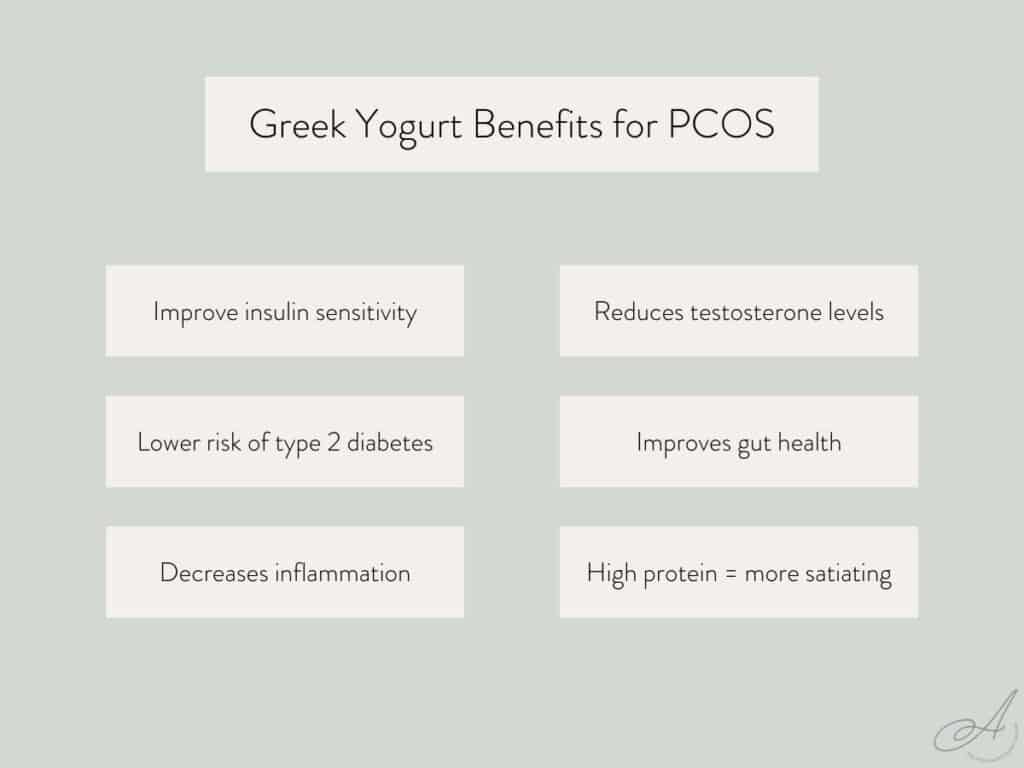
Greek yogurt is a great option for PCOS. It has a higher protein content than traditional yogurts. It’s also rich in probiotics and calcium. Greek yogurt may reduce inflammation, testosterone, high insulin levels, and the risk of type 2 diabetes. Additionally, it can improve gut health thanks to the probiotics.
When choosing a Greek yogurt, I’d recommend being mindful of the protein content, any added sugars, and what type of sweeteners they’re using if it’s a flavored yogurt. Another thing you may want to be mindful of is the fat percentage. For most people with PCOS, 2% milkfat or higher is a good option.
Other PCOS Posts You’ll Love
Best Milk for PCOS: Should You Go Dairy Free?
Can I Eat Pasta with PCOS? A Dietitian’s Tips & Recipes
15 PCOS Superfoods To Add To Your Daily Routine
Best Rice for PCOS: A Dietitian Answers
Disclaimer: this is for informational purposes only. It is not intended to substitute for or replace professional medical advice for polycystic ovary syndrome (PCOS) or any other medical condition. Always consult with your registered dietitian for personalized dietary advice.

2 Responses
I would love to learn more about how full-fat dairy may be more beneficial for those with PCOS than low-fat and fat-free alternatives.
Hi Barb! Thank you for your comment – unfortunately, the research isn’t super clear yet. Full-fat dairy seems to be most beneficial for improving fertility outcomes. Ultimately, it seems to come down to an individualized approach for dairy fat percentage. I have more on different research on dairy here: Best Milk for PCOS. Hope this helps!