


Are Alani energy drinks healthy? I was asked this question recently and I honestly didn’t have an answer off the top of my head. Now, ads for these colorful energy drinks are popping up everywhere I look.
As a registered dietitian, I needed to know the answer. In this blog post, I’m taking a closer look at the Alani Nu energy drink ingredients, what the research says, and then I’ll give you my honest opinion on whether these Alani energy drinks are healthy.
What Are Alani Energy Drinks?
Alani Nu Energy Drinks are made by the US-based company Alani Nu. This company also produces a wide range of dietary supplements such as prenatal vitamins, super greens, collagen peptides, pre-workout, creatine, and BCAAs, among others.
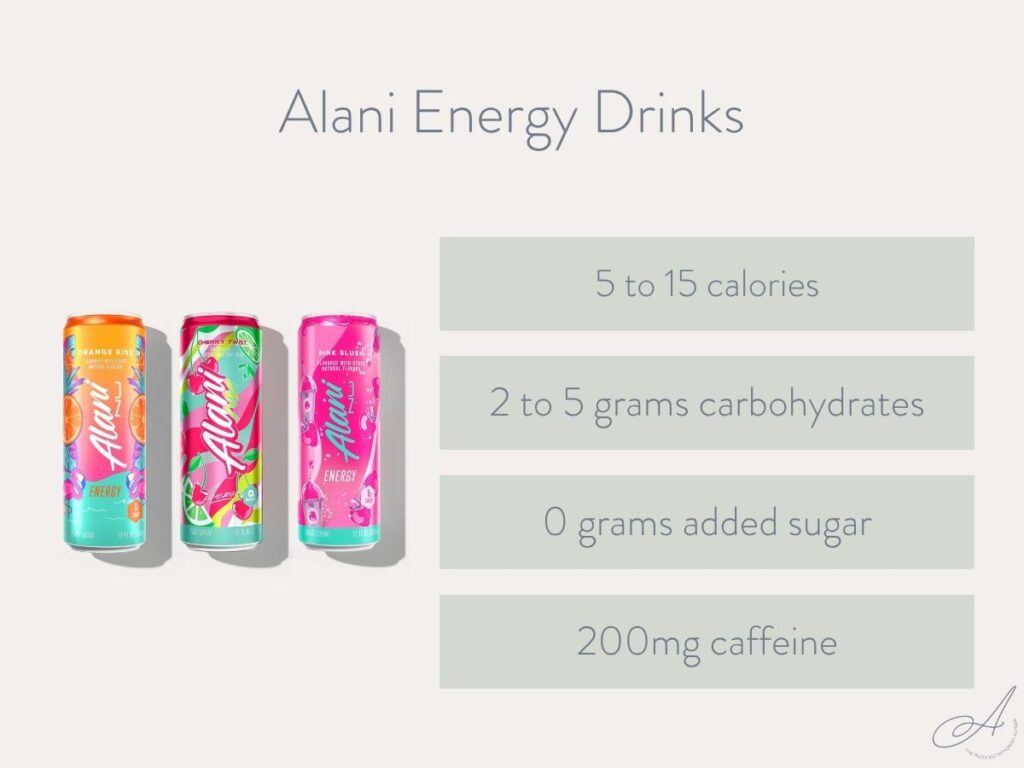
According to the website, each Alani energy drink has 15 calories or less, 0 grams of sugar, 200 mg of caffeine, and B vitamins.
You can purchase Alani Nu energy drinks at several major retailers and grocery stores such as Walmart, Amazon, and Target. There’s several flavors of Alani Nu energy drinks that you can choose from such as pink slush, blue slush, watermelon wave, Hawaiian shaved ice, cherry slush, juicy peach, and orange kiss flavors.
Let’s talk about what’s actually in these drinks and whether they’re healthy.
What’s In Alani Energy Drinks?
Alright, let’s get down to what’s actually in these Alani Nu drinks. Each can contains 12 fluid ounces, 5 to 15 calories, 2 to 5 grams of total carbohydrates, and zero sugar.
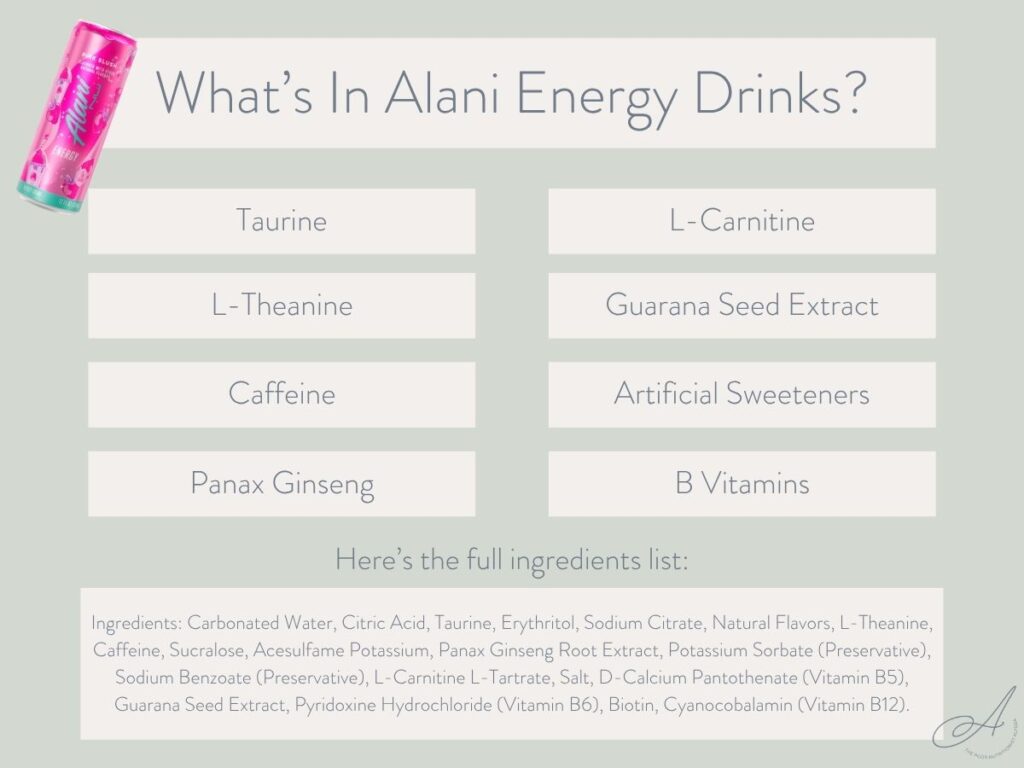
Among the ingredients list, there’s several notable ingredients added into these energy drinks, such as:
- Taurine: improves focus and balances out the caffeine effects
- L-theanine: enhances alertness and balances out caffeine effects by reducing jitters and anxiety
- Caffeine: stimulates the central nervous system and provides a burst of energy
- Panax ginseng: commonly used to improve fatigue and energy levels
- L-carnitine: plays an important role in energy production in our bodies
- Guarana seed extract: contains natural caffeine to provide an energy boost
- Artificial sweeteners (sucralose and acesulfame potassium): used to sweeten these drinks without having to rely on traditional sugar
- Salt: likely added for taste and to enhance hydration
- B vitamins: commonly added to energy drinks to increase energy levels
Let’s talk about these ingredients in more detail.
Taurine
This is a popular addition to most energy drinks. In fact, if you look at the ingredients lists of most energy drinks, you’ll find taurine.
Taurine is a type of amino acid that our bodies can make on its own. It’s added to most energy drinks to improve focus and sometimes to balance out the caffeine effects. It’s believed to help
prevent negative effects of caffeine such as jitters.
The amount of taurine that’s found in energy drinks isn’t usually enough to provide adequate standalone benefits, but it can work synergistically with other ingredients in the drink. The amount of taurine that’s usually found in energy drinks is usually safe for most people.
L-Theanine
This is another amino acid that is being added to more food and beverages in recent years. L-theanine is naturally found in green tea, black tea, and some mushrooms. It’s known to support the nervous system and promotes calmness, sleep, and relaxation.
Additionally, L-theanine may help:
- Reduce stress and anxiety
- Lower cortisol levels
- Improve mental alertness and focus
- Increase immunity
- Lower inflammation
The L-theanine dosage used in research studies was typically 200 to 400 mg daily. Unfortunately, Alani energy drinks do not disclose the amount of L-theanine that’s in their drinks so I’m unsure if it’s enough to actually make a substantial impact on your health.
Caffeine
Caffeine is known for its ability to stimulate the central nervous system, making us feel more awake and energized. Alani Nu lists caffeine as a standalone ingredient so it can probably be assumed that it’s a synthetic caffeine, which is identical to naturally occurring caffeine. Using synthetic caffeine is pretty common among energy drink brands.
Alani Nu highlights that their energy drinks contain 200 milligrams of caffeine. What exactly does this mean though? For context, one 8-oz cup of your average brewed coffee contains about 95 milligrams of caffeine, while an 8-oz cup of cold brew coffee typically contains 150-200 mg of caffeine.
It’s usually recommended to limit your total daily caffeine intake to less than 400 mg of caffeine per day. If you’re adding caffeinated energy drinks on top of other caffeinated beverages, it can quickly add up to a very high caffeine content. High levels of caffeine can lead to adverse effects such as anxiety, jitteriness, sleep disturbances, digestive issues, increased heart rate and heart palpitations.
Panax Ginseng
Panax ginseng is one of several different types of ginseng. You may also see it interchangeably called Asian ginseng too. It’s commonly used to improve fatigue and energy levels. Ginseng is commonly classified as an adaptogen and some people report that it may also improve your body’s stress response. The research to support these claims is inconclusive though.
For short term use, Panax ginseng appears to be safe to take orally for up to 6 months. Long term safety isn’t established yet though. The amount of ginseng in this energy drink is likely low and not enough to cause any sort of concern. Regardless, professionals advise against the use of Panax ginseng for children, and women who are pregnant or breastfeeding (1).
L-Carnitine
L-carnitine is an amino acid derivative, or a compound that your body makes from two different amino acids: lysine and methionine. It’s also found in certain foods such as red meat, fish, poultry, and dairy (2).
L-carnitine plays a key role in energy production. It’s also known to support fat metabolism, so it has become particularly popular for weight loss and belly fat reduction. Research has also explored whether L-carnitine supplements may help with chronic fatigue, although the results have been inconsistent.
Alani Nu doesn’t disclose how much L-carnitine is in their drinks, so it’s not really known if there’s enough to make a huge difference. L-carnitine is generally considered safe in moderate doses, such as what’s probably found in energy drinks.
Guarana Seed Extract
This is another common ingredient found in energy drinks. Guarana seed extract is a natural caffeine source, which can boost energy levels and enhance alertness. Since guarana seed extract contains a high amount of naturally occurring caffeine, it can also cause typical caffeine side effects such as jitters, heart palpitations, anxiety, and stomach irritation.
Acesulfame Potassium and Sucralose
Alani Nu touts the fact that they have zero grams of added sugar. As a dietitian, I’m all for lowering added sugar in your diet – but I’m also always curious as to what type of sweetener is used to get a palatable taste.
Alani Nu uses the artificial sweeteners acesulfame potassium (aka acesulfame K) and sucralose in most of their drinks. Artificial sweeteners are calorie-free and sugar-free. For most people, they do not impact blood sugar levels like sugar does. Some emerging research suggests that artificial sweeteners may impact some individuals’ blood sugar levels – so this is something to be aware of if you’re one of the ones sensitive to them.
The biggest catch is that there is some preliminary research to suggest that artificial sweeteners may impact the gut microbiome. This means that it may negatively change your gut bacteria. Most of the research studies that have found this were done in animals, so human research studies are needed before any definitive conclusions can be made.
So what does that mean? Maybe nothing if you’re someone who only consumes artificial sweeteners occasionally. If you’re someone who consumes a large amount of artificial sweeteners regularly (think diet sodas, sugar-free drinks and foods, etc), this may be something to be more cautious about.
B Vitamins
The last notable ingredient we’ll touch on is B vitamins. Since B vitamins are known for their ability to boost energy levels, it’s no surprise that they’re usually added to energy drinks, including Alani Nu energy drinks.
Alani energy drinks contains these B vitamins:
- Niacinamide (vitamin B3)
- Pyridoxine HCl (vitamin B6)
- Pantothenic Acid (vitamin B5)
- Cyanocobalamin (vitamin B12)
B vitamins play many important roles in the body, but they don’t directly give you an energy boost. Instead, they help your body break down carbohydrates, proteins, and fats from food to produce usable energy.
Since B vitamins are water-soluble, your body doesn’t store them. Contrary to popular belief, taking more than you need won’t necessarily give you extra health benefits. If you’re low in one or more B vitamins, a supplement or even an energy drink like this may help, but any excess that your body doesn’t need will simply be eliminated in your urine.
Are Alani Energy Drinks Healthy?
Alani energy drinks contain the necessary ingredients to provide a significant boost in energy. When you consider other alternatives, I’d consider them one of the better options compared to traditional energy drinks. For comparison, traditional Red Bull contains 110 calories and 26 grams of added sugar. One can of Alani Nu contains 5 to 15 calories and no added sugar.
Unlike some other popular drinks, Alani Nu doesn’t make a ton of outlandish health claims outside of its scope of being an energy drink. Outside of that energy burst, there are some B vitamins and other nutrients such as L-theanine and L-carnitine in here. While these ingredients are likely added for their ability to enhance energy levels and mitigate the negative effects of caffeine, some people may interpret their addition as a health benefit. However, if you eat a well balanced diet or take a multivitamin, you probably don’t need these extra ingredients from a health standpoint. These ingredients also wouldn’t replace the need for a healthy diet and lifestyle factors to maintain your overall health.
So while I wouldn’t necessarily say these energy drinks are healthy in the same way that I’d say a banana or broccoli are good for you, I suppose they’re a better option if you’re looking for a low calorie drink that provides a boost of energy.
The next question to ask though: are Alani Nu energy drinks bad for you?
Are Alani Energy Drinks Bad For You?
For most healthy adults, there’s probably little risk to drinking Alani Nu energy drinks in moderation.
There is about 200 mg of sodium in each can, which is something to be aware of if you need to limit or avoid high amounts of sodium. For most healthy adults, the dietary guidelines recommend limiting your sodium intake to less than 2300 mg per day. People with certain medical conditions such as high blood pressure, kidney disease, or congestive heart failure, may need to limit their sodium intake even further.
You should also be aware that it does contain 200 milligrams of caffeine, which is the equivalent of about 2 cups of brewed coffee or 1 really strong cup of cold brew coffee.
On each can, you’ll find a warning that pregnant women and breastfeeding women should not consume this drink. Additionally, if you have any sort of medical condition or are sensitive to caffeine, I’d probably steer clear and talk to your medical provider.
For the occasional boost of energy, I think these drinks are fine for the average healthy adult. If you find yourself relying on these types of drinks for energy often though, you may need to reconsider what your current diet and lifestyle habits look like.
The Bottom Line
Alani Nu energy drinks contain a mix of various ingredients that claim to boost your energy levels. It includes notable ingredients like taurine, L-theanine, caffeine, Panax ginseng, L-carnitine, guarana seed extract, artificial sweeteners, salt, and B vitamins.
If you’re looking for a quick boost of energy, Alani Nu energy drinks contain about 200 milligrams of caffeine which is the equivalent of about two cups of coffee. While there’s other ingredients that may help balance out the jittery effects of caffeine, this still may be too much caffeine for some people to comfortably handle.
A couple of potential downsides to these drinks are that it contains 200 mg of salt per can, which may be concerning if you need to be cautious of your sodium intake. Alani Nu uses artificial sweeteners to sweeten their energy drinks. These help to keep the calories and carbohydrate content low, which may be a benefit for some people. However, some people do not react well to artificial sweeteners, so this may be a con if you’re one of those people.
I wouldn’t say Alani Nu energy drinks are healthy in the same sense that an apple is healthy. If you are looking for a low calorie drink that will boost your energy levels though, this may be a good option for you compared to many other energy drinks that often have a high calorie and sugar content.
For most healthy adults, these drinks are likely safe if consumed in moderation. Children and women who are pregnant or breastfeeding should not consume these drinks. If you have any sort of medical condition, especially those with heart conditions, it’s a good idea to speak to your doctor before trying these.
Other Product Reviews You’ll Love
Are Bloom Energy Drinks Good For You?
A Dietitian’s Honest Review of ARMRA Colostrum
Nello Super Calm Drink Mix: Too Good To Be True?
A Dietitian’s Review of Unicity Balance: Scam or Not?
Disclaimer: this is for informational purposes only. It does not substitute for or replace professional medical advice. Always consult with your healthcare provider for any concerns you may have.
4 Responses
My 17 year old brother was rushed to the hospital after drink 2 per day for like a week. He’s fairly healthy and into sports and he had heart complications because of these drinks. These Alani energy drinks are people’s worst nightmare. DON’ T TAKE THEM!
What is your evidence for associating your brother’s issues to consumption of Alani soda ?? – it sounds like a leap of assumption.
I LOVE these Alani drinks. They’re Full of FLAVOR and I drink one daily not to supersede the caffeine BOOST. I think in moderation they are ok or at least I like them. To each his/her own when making healthy choices but we are not all the same. But always make healthy, safe choices and drink in moderation.
Great energy drinks. No BS claims by the company, great flavors, the energy delivers in a way that feels natural and safe. If I drink a Redbull or especially Monster, or most other brands, I feel like I drank something I shouldn’t have. My body feels crazy and while I feel energetic, I feel like my brain is in a fog. None of this happens when I drink Alani. It’s definitely become my go-to for when I’m feeling a little sluggish.