Is drinking apple cider vinegar for PCOS worth it?
As a PCOS dietitian, I get asked a lot of questions about the benefits of apple cider vinegar for PCOS and whether the hype is true.
In this blog post, I’m going to walk you through what the research says, the pros and cons of apple cider vinegar for PCOS, how much is recommended, and the best way to include it in your diet.
What is Apple Cider Vinegar?
Apple cider vinegar is a liquid that’s made from fermented, crushed apples. It’s most popularly used to make salad dressings, marinades, food preservatives, pickling fruits and vegetables, and chutneys.
Apple cider vinegar (ACV) is commonly found in two different types. The more popular one for health purposes is usually unfiltered, unpasteurized, and organic. This type of organic ACV contains what’s called the “mother”. The mother is strands of proteins, enzymes and beneficial gut bacteria that give the vinegar a murky appearance.
Health Benefits of Apple Cider Vinegar for PCOS
Polycystic ovary syndrome (aka PCOS) is a common hormonal condition that affects close to one in five women worldwide. Unfortunately, the medical treatment options available to PCOS patients remain limited, leaving many women seeking more natural remedies for their PCOS symptoms.
Let’s talk about ways that apple cider vinegar may serve as a natural remedy for some common symptoms of PCOS.
Improves Insulin Sensitivity
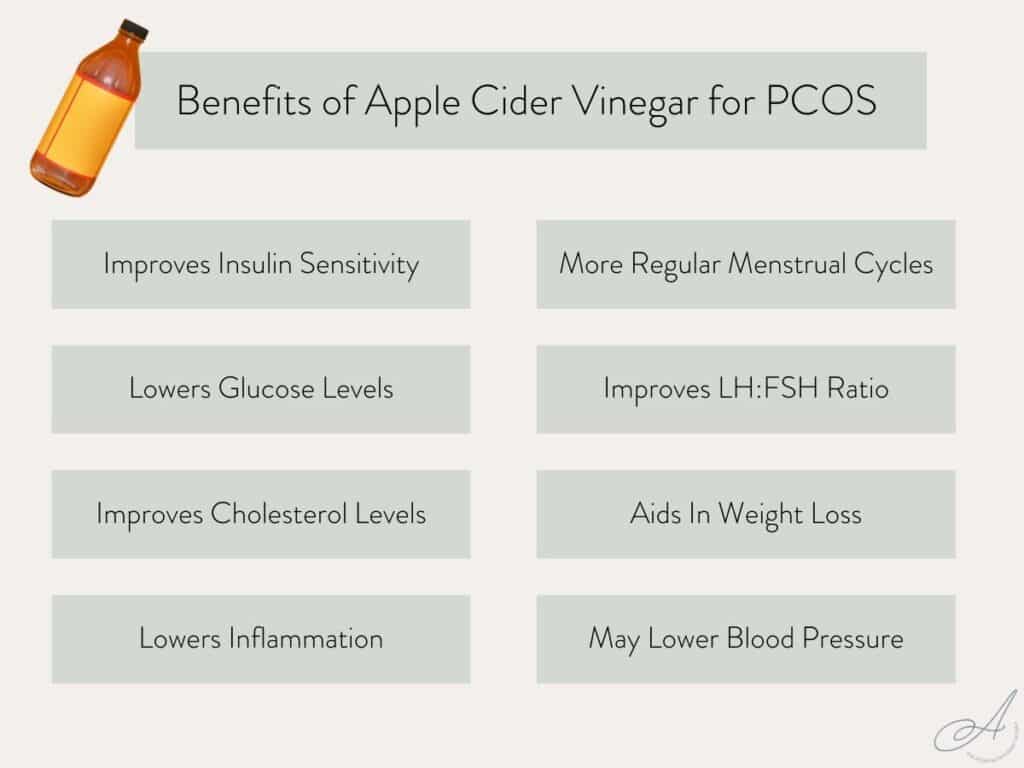
Up to 80% of those with PCOS also have insulin resistance (1). Insulin resistance is when your body doesn’t respond effectively to the hormone insulin, which is responsible for regulating blood sugar levels.
If you’re insulin resistant, your body can still bring your blood sugar levels back to a normal range after eating, it just takes more insulin to get that job done.
If left unmanaged, insulin resistance can eventually develop into pre-diabetes or type 2 diabetes. Unfortunately, almost half of those with PCOS will be diagnosed with type 2 diabetes before the age of 40 (2).
The good news is that there are many steps you can take to achieve blood sugar control and improve insulin sensitivity.
Read more about what insulin resistance is here and how to manage it with food here: Insulin Resistance Meal Plan PDF.
Apple cider vinegar may also be something that can decrease high blood sugar levels and insulin levels. There haven’t been many studies done on ACV and PCOS specifically, however, one animal study found that ACV significantly improved glucose levels. Another PCOS animal study found that a combination of ACV and Metformin significantly improved blood glucose levels and insulin resistance (3, 4).
While these studies that were specific for PCOS were actually done on animals, there has been a bit of research that supports that ACV has these potential benefits in humans too.
A meta-analysis and systematic review found that apple cider vinegar could lower blood sugar levels and improve the body’s insulin sensitivity in adults (5, 6).
Another very small study done in people with PCOS found that ACV could lower insulin resistance (7). More research is needed on ACV and PCOS specifically, but these results are pretty promising.
Regulates Menstrual Cycles & Sex Hormones
Apple cider vinegar may also be able to improve another common symptom of PCOS: irregular periods.
One small study found that women with PCOS who drank 1 tablespoon of ACV with a glass of water after dinner had more regular menstrual cycles. An improved LH to FSH ratio was also observed, which can improve ovulation rates (7).
Irregular menstrual cycles, or anovulatory cycles, are the most common reason why those with PCOS struggle with infertility. More research is needed since the previously mentioned study had a very small sample size, but this was a promising study that deserves further exploration.
Improves Cholesterol Levels
High cholesterol levels, or dyslipidemia, is another comorbidity that’s commonly seen in those with PCOS. In fact, up to 70% of those with PCOS may struggle with dyslipidemia.
Several studies have found that apple cider vinegar improves lipid levels, particularly total cholesterol and triglyceride levels (3, 4, 5).
Helps with Weight Loss
Weight gain is a very common symptom of PCOS, affecting up to 80% of those with PCOS. If weight management or weight loss are your goals, apple cider vinegar may be able to help.
When taken on a daily basis, apple cider vinegar aids in reducing body weight, waist circumference, and visceral fat (8).
If you’re struggling to lose weight with PCOS, check out this article: How To Lose Weight With PCOS.
Anti-Inflammatory Components
Chronic inflammation is always something that should be on your mind if you have PCOS since PCOS is known to be an inflammatory condition. Inflammation can contribute to weight gain, high androgen levels, and infertility.
Apple cider vinegar contains a variety of flavonoids, such as gallic acid, catechin, caffeic acid, and ferulic acid. Flavonoids are a type of polyphenol that have anti-inflammatory properties.
Research has found that ACV can help to lower inflammation and oxidative stress, which may be beneficial for those with PCOS (3, 4)
Click here for a downloadable Anti-Inflammatory Foods List PDF.
Lowers Blood Pressure
There are only a few studies that have investigated the potential health benefits of ACV on blood pressure. Studies offer conflicting results, with some finding a decrease in systolic or diastolic blood pressure, while other studies found no change in blood pressure.
One hypothesis as to why ACV may lower blood pressure is that it does help to reduce body weight, which usually results in lower blood pressure (9). An older hypothesis is that the acetic acid in ACV increases calcium absorption, which helps to lower blood pressure levels (10).
Digestive Health
Apple cider vinegar may be helpful for some people to improve their digestion and gut health. Some people claim that ACV improves their reflux symptoms, although the scientific evidence hasn’t really been able to prove this. In fact, some people claim that ACV makes their reflux even worse.
Some people also believe that ACV can improve the gut microbiome. The idea is that ACV contains probiotics, aka healthy bacteria, that can diversify your gut microbiota. While the theory may make sense, there isn’t really any research to support it.
If you’re interested in trialing ACV for these reasons, just be mindful of how your body reacts to it.
Side Effects of Apple Cider Vinegar
Although we’ve been talking about some of the amazing health benefits of ACV, it’s important to remember that ACV is very acidic. Regular consumption of apple cider vinegar can have some downsides.
One common concern is that apple cider vinegar can cause tooth enamel erosion. Your tooth enamel protects your teeth and without it, you can be at an increased risk of pain, tooth decay and other dental issues.

While some people report that ACV helps their reflux, many people also report that ACV makes their reflux and other digestive issues worse. Additionally, ACV may damage the lining of your digestive tract over time, including esophageal ulcers and injury.
Apple cider vinegar can also slow down gastric emptying so it’s generally not recommended for those who have gastroparesis.
Additionally, too much apple cider vinegar could also cause low potassium levels, which can impact cardiac and muscle function.
It’s important to always seek the advice of your physician prior to starting routine apple cider vinegar supplementation.
Should You Drink Apple Cider Vinegar If You Have PCOS?
For most people, apple cider vinegar is relatively harmless when consumed in moderation and appropriately.
For those of us with PCOS, there may be some benefits for overall health. Research has found that it may be helpful for improving insulin sensitivity, cholesterol levels, inflammation, menstrual cycles, and weight management.
Apple cider vinegar is not a magic solution though. What I mean by that is that you can’t just rely on ACV to be your PCOS management plan. ACV may be a tool in your toolbox, but you need to have other PCOS self-care foundations in place, such as:
- A PCOS friendly balanced diet
- Regular exercise
- Good sleep hygiene
- Stress management practices
Grab your copy of The PCOS Meal Plan! It’s a 3 week meal plan that gives you recipes for 3 meals and 1 snack each day (plus weekly grocery lists, meal prep tips, and some of my favorite brand suggestions!).
Alright, if you’re thinking that adding apple cider vinegar to your daily routine is a good idea, let’s talk about how you should include it.
How Much Apple Cider Vinegar For PCOS Is Enough?
If you decide you’d like to try apple cider vinegar for PCOS, there’s a few things to keep in mind.
One tablespoon of apple cider vinegar is the recommended amount to take each day. Most expert advice doesn’t recommend taking more than two tablespoons of apple cider vinegar daily.
This is the apple cider vinegar I recommend and love. It’s easy to find, affordable, and contains “the mother”.
To avoid potential damage to your tooth enamel, you should dilute the apple cider vinegar in water and then swish your mouth out with water after consuming your diluted ACV.
The right time to drink your diluted ACV is at a meal or immediately after a meal. It’s not advised to take ACV on an empty stomach.

How To Include Apple Cider Vinegar in Your PCOS Diet
If drinking this sour-tasting liquid isn’t really your idea of a delicious addition to your diet, don’t worry. There are many ways you can include ACV in your diet that are virtually seamless.
Here’s a few ways you can add ACV into your PCOS diet:
- Salad Dressing or Marinade. Add an apple cider vinaigrette to your lunchtime salad like this Fall Salad with Apple Maple Vinaigrette. You could also use it as a marinade for chicken, seafood, or vegetables.
- Grain Bowl or Bean Salad. Apple cider vinegar or a vinaigrette can be a great addition to a grain bowl, such as an Autumn Harvest Grain Bowl or a traditional bean salad.
- High Protein Dip. Substitute apple cider vinegar and Greek yogurt into your traditional tzatziki recipe for a higher protein dip that has multiple benefits for PCOS.
- Mixed into hot tea for more PCOS benefits. It mixes well into cinnamon tea, green tea, or ginger tea. Add a little honey to add a little sweetness to balance out the vinegar.

Additionally, you could just mix apple cider vinegar into warm or cold water and drink it that way.
The Bottom Line
Apple cider vinegar is a common vinegar found in most households that may hold some impressive health benefits for PCOS.
While research is limited, preliminary research suggests that ACV can help to lower blood sugar levels, insulin resistance, inflammation, cholesterol levels, body weight and BMI. It can also improve menstrual regularity and common hormonal imbalances seen with PCOS.
Since apple cider vinegar is very acidic, it can cause tooth enamel erosion and irritation to the esophagus and stomach lining. It may also cause delayed gastric emptying and low potassium levels in some people.
If you are going to try apple cider vinegar for PCOS symptom management, the recommended dose is 1 to 2 tablespoons per day. It’s recommended to dilute ACV before consuming and to not drink it on an empty stomach.
Apple cider vinegar may help to improve some symptoms of PCOS but it does not replace the need for a healthy diet and lifestyle changes that support hormonal balance.
Other Posts You’ll Love
Can I Eat Pasta with PCOS? A Dietitian’s Tips & Recipe
Ovasitol for PCOS: Is It Worth The Hype?
Best Supplements for PCOS Weight Loss
Disclaimer: this blog post is for informational purposes only. It is not intended to substitute for or replace professional medical advice for polycystic ovarian syndrome or any other medical condition. Always consult with a qualified health provider before starting any type of dietary supplement, including apple vinegar.