If you’re wondering what the best multivitamin for PCOS is, you’re in the right place. I honestly get this question a lot!
If you’re new here, hi! I’m Alyssa, a registered dietitian who also has PCOS. My goal is to make PCOS less overwhelming for you by giving you straightforward, research-backed approaches to manage your symptoms.
In this blog post, I’m going to discuss whether you need to or should take a multivitamin if you have PCOS. Then I’ll outline my top brand picks for the best multivitamin for PCOS if you do decide that you need one.
This post may contain affiliate links. This means that if you click on a link and make a purchase, I may receive a small commission at no additional cost to you.
Should You Take A Multivitamin for PCOS?
First things first, do you need to take a multivitamin if you have polycystic ovary syndrome aka PCOS? The answer is obviously going to depend from person to person but my first instinct is that a multivitamin can’t hurt PCOS.
Here’s a few reasons why you may want to consider taking a multivitamin if you have PCOS.
Nutritional Adequacy of Your PCOS Diet
Your diet should be the main way you get your nutrition. A PCOS diet should include a wide variety of fruits, vegetables, whole grains, lean protein sources, fatty fish, legumes, and healthy fats on a routine basis.
While a healthy diet can help manage PCOS symptoms, even the best of us can have a difficult time getting all of the foods and nutrients we need to get on a daily basis.
That’s where a multivitamin can be key. A multivitamin can provide important vitamins and minerals that help to fill in some of the nutrient gaps that are missing from our diet.
Just to be clear though, a multivitamin can’t replace a healthy diet. Taking a multivitamin supplement is not a pass to forget about your eating habits.
PCOS Pathophysiology
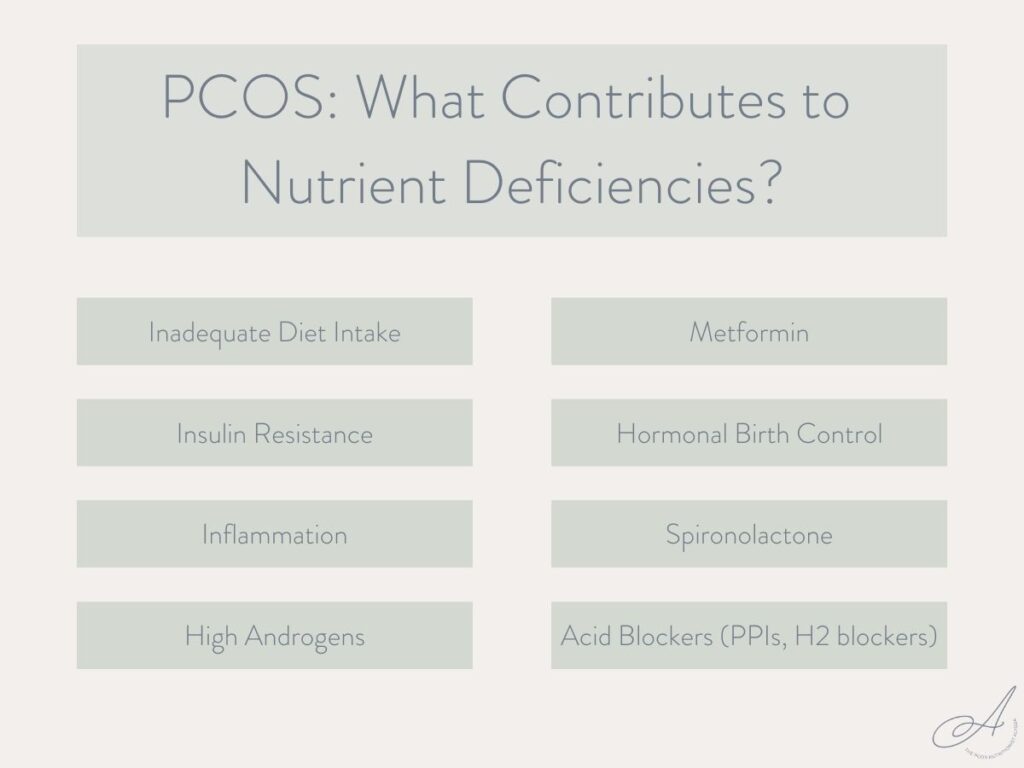
While the exact cause of PCOS is unknown, this endocrine disorder is associated with insulin resistance, chronic inflammation, and high androgen levels (aka male hormones such as high testosterone levels). These factors can be contributing to many of the lousy symptoms of PCOS you’re probably experiencing such as irregular periods, infertility, weight gain, carb cravings, hirsutism (aka excess hair growth), hair loss, and fatigue.
Unfortunately, PCOS is also associated with an increased risk of metabolic syndrome, type 2 diabetes, gestational diabetes, high blood pressure, cardiovascular disease, and fatty liver.
Based on research, we know that certain nutrients can be really helpful at targeting the root cause of PCOS and lowering the risk of some of these metabolic conditions.
For example, antioxidants such as vitamin C, vitamin E, and zinc, play important roles in reducing oxidative stress and inflammation.
We also know that certain vitamin deficiencies, such as vitamin B12 and vitamin D deficiency, can contribute to decreased insulin sensitivity and higher blood sugar levels.
Finally, if you’re struggling with symptoms like hair loss or hirsutism, zinc and essential fatty acids (such as omega 3 fatty acids) can help lower your testosterone levels.
So getting a wide variety of nutrients is really important for PCOS and your overall health.
Common PCOS Nutrient Deficiencies
While it’s not very well understood why this happens, some nutrient deficiencies seem to be more common among those who have PCOS.
Women with PCOS tend to have low magnesium and zinc levels compared to the general population (1, 2, 3). Having adequate levels of these nutrients can have a positive effect on insulin resistance, inflammation, and androgen levels.
Vitamin D deficiency is also extremely common in PCOS. In fact, up to 85% of women with PCOS have low levels of vitamin D. Wild, right?! Your doctor can easily check your vitamin D levels with a simple blood test to see if you’re deficient. This can help your doctor determine if you may need extra vitamin D supplementation than what’s typically found in a multivitamin.
Iron deficiency anemia may be more common too in some people, especially if you’re struggling with heavy or prolonged periods.
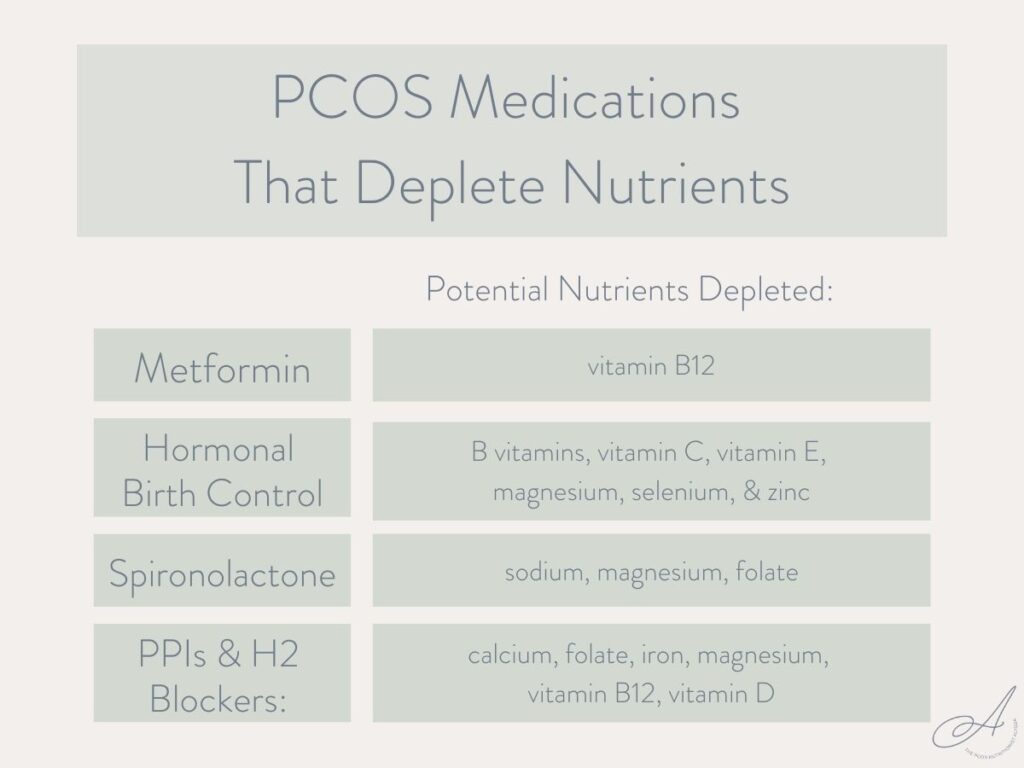
Additionally, many of the common medications that are prescribed for PCOS can contribute to vitamin deficiencies. Here’s a few of the more common ones:
- Metformin: can cause a vitamin B12 deficiency (4)
- Hormonal birth control: can lead to deficiencies in folic acid and other B vitamins, vitamin C, vitamin E, magnesium, selenium, and zinc (5)
- Acid blockers such as PPIs and H2 blockers: can deplete calcium, iron, magnesium, vitamin B12, folate, and vitamin D
- Spironolactone: may cause decrease sodium, magnesium, and folate (or folic acid)
So to answer the original question: should you take a multivitamin for PCOS? It may be helpful to take a multivitamin if you have PCOS. A multivitamin is the best way to get a variety of vitamins and minerals that can help fill in nutritional gaps and deficiencies that may be more common for those of us with PCOS.
Ok, now let’s dive into what to look for when choosing a multivitamin.
What To Look For In A PCOS Multivitamin
There’s several different options available in today’s market. Seriously, just take a stroll in your local grocery store or pharmacy – this is the best way to get overwhelmed with all of the options and their clever marketing tactics.
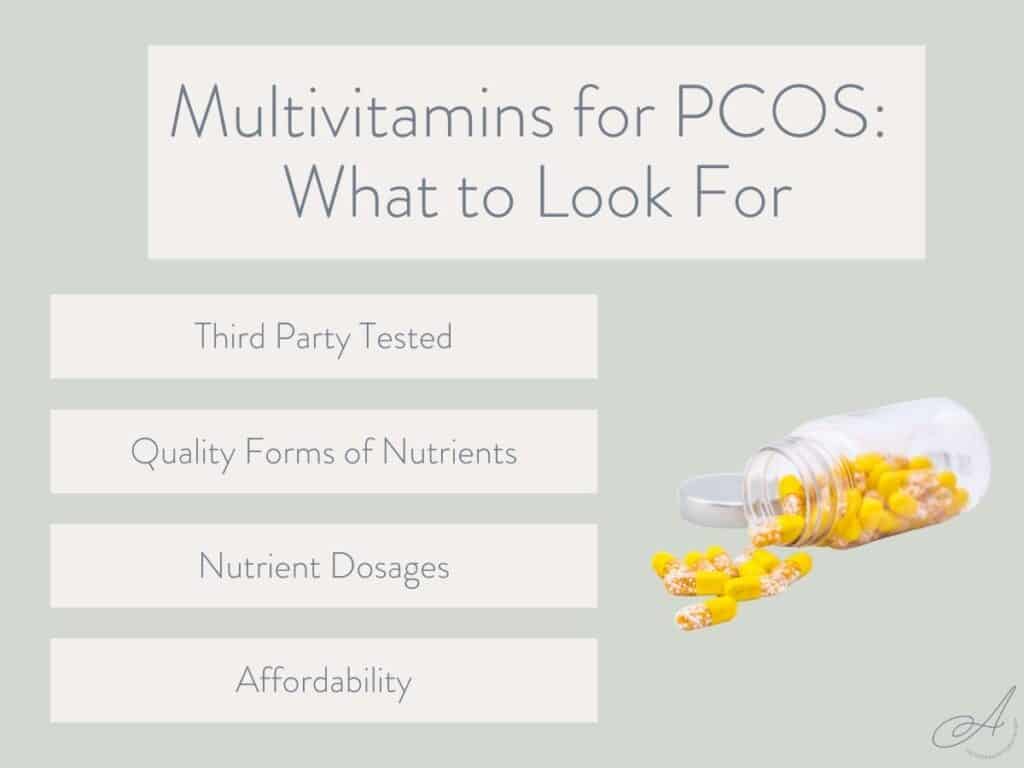
Here’s a few things that you’ll want to look for in a multivitamin:
- Third Party Testing. Dietary supplements aren’t regulated by the Food & Drug Administration (FDA) in the same way that prescription medications are. It’s not uncommon for a dietary supplement to not actually have the ingredients or nutrients in it that it claims to have. The best supplements are going to be third party tested. This means that a supplement company has a third party lab test their products for quality and purity – and to essentially prove that what they’re advertising on the label is what’s actually inside the supplement.
- Quality Forms of Nutrients. This can be tricky if you don’t have adequate training like a registered dietitian or a pharmacist does. Unfortunately, there’s too much to go through here for one blog post. One of the first things I look for though is methylated B vitamins, specifically methylated folate and vitamin B12. Rest assured, all of the multivitamin brands I list below meet these requirements.
- Dosage of Specific Nutrients. Certain nutrients that you may need more of with PCOS, such as vitamin D and fish oils, may not be present in adequate amounts in a multivitamin. So this is just something to be aware of when choosing supplements.
- Affordability. A multivitamin is typically something that people take long-term. You don’t need to go broke with the most expensive multivitamin available. Expensive doesn’t necessarily equate to better. Remember, a multivitamin’s job is to fill in the nutritional gaps…not be your only source of nutrition (that’s what food’s for!).
Alright, let’s talk about some of my favorite multivitamin brands and supplements for PCOS.
What Is The Best Multivitamin for PCOS?
While there are many different multivitamins that can be great choices for PCOS. These are some of my favorite go-to options though if you’re looking for a bit more guidance on which to choose.
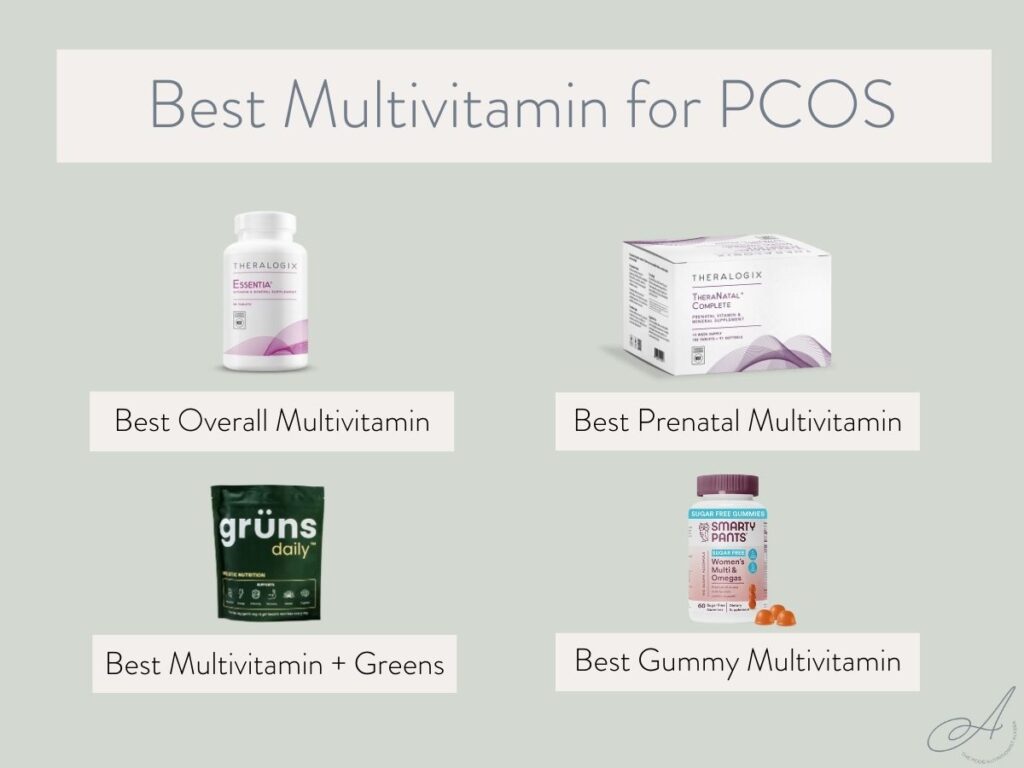
Overall Best Multivitamin for PCOS
The overall best multivitamin for PCOS is Essentia Multivitamin For Women – This women’s multivitamin is my top choice for a general multivitamin for PCOS. It has a good range of essential vitamins and minerals, including 18 mg of iron and methylated B vitamins. Trust me, you don’t need one of the fancy and expensive multivitamins that are labeled as a solution for PCOS specifically. Essentia Multivitamin for Women is easy to take, with the daily serving size being just 1 tablet per day. It’s also a very affordable option. Using this link, a 90 day supply will cost approximately $25 USD.
Best Prenatal Multivitamin for PCOS
The best prenatal multivitamin for PCOS is Theranatal Complete Prenatal Vitamin. I recommend a high quality prenatal vitamin for pregnant women, or those who are trying to conceive now or in the next 3-6 months. For those trying to conceive, a prenatal multivitamin can improve egg quality, which can improve fertility and increase pregnancy rates. Prenatal vitamins have higher levels of important vitamins to support a healthy pregnancy, such as folic acid or folate, choline, iron, iodine, DHA, and vitamin D.
Theralogix’s Theranatal Complete Prenatals contains impressive amounts of high quality choline, iron, iodine, DHA, and vitamin D compared to other prenatal vitamins. It’s also the most well-rounded, affordable prenatal vitamin option I’ve found on the market. Using this link, a 90 day supply will cost approximately $75 USD.
Read more about 5 Prenatal Vitamins for PCOS here.
Best Gummy Multivitamin for PCOS
The best gummy multivitamin for PCOS is Smarty Pants Women’s Multivitamin Gummies. Gummy vitamins don’t contain the same bang for your buck in terms of nutrients for cost. That said, I know that some people need gummy options if they can’t swallow pills for whatever reason.
These gummy multivitamins are a decent option for PCOS. They’re third party tested and contain quality forms of nutrients. It’s important to note that these gummies don’t contain as many nutrients as the other multivitamins, including iron.
Best Multivitamin plus Greens Powder for PCOS
Grüns Daily Gummies are my pick for a multivitamin with extras. The Grüns Daily Gummies are essentially a combination of a multivitamin and greens powder…in a convenient single-serve packet of 8 gummy bears.
It contains adequate amounts of a wide variety of vitamins and minerals, along with prebiotics for gut health, and adaptogens for stress relief. One serving also has 6 grams of fiber for better blood sugar stability, gut health, and satiety. Using this link, gives you a discount on Grüns Daily Gummies.
Read my full review of the Grüns Daily Gummies here.

FAQs
What multivitamin is best for PCOS?
The best multivitamin for PCOS is Theralogix’s Essentia Multivitamin for Women. It’s an affordable option that provides a variety of beneficial nutrients to help women with PCOS fill in their nutritional gaps.
What vitamins should I take for PCOS skin?
PCOS skin conditions, such as acne, are caused by inflammation and high androgen levels such as high testosterone levels. A zinc supplement or an inositol supplement may be good options to consider to help improve your skin.
What vitamins does PCOS deplete?
Women with PCOS are more likely to have low levels of folate, magnesium, vitamin B12, vitamin D, and zinc.
Additionally, certain medications that are commonly prescribed for PCOS can also contribute to nutritional deficiencies.
What are the benefits of a multivitamin for PCOS?
A multivitamin for PCOS can have beneficial effects on symptoms and can prevent nutritional deficiencies. A PCOS multivitamin can help to fill in nutrient gaps that may occur.
Are there any vitamins to take that can reduce androgen levels for PCOS?
Several different vitamins can reduce androgen levels for PCOS. Inositol (such as Ovasitol), berberine, fish oil, vitamin D, and zinc are a few different supplements that can lower androgen levels for PCOS.
The Bottom Line
Nutrient deficiencies are a common issue for some people with PCOS. The hormonal imbalances, certain medications, and your diet may contribute to deficiencies also.
A multivitamin provides a variety of vitamins, minerals, and sometimes other ingredients. It can be a great place to start if you want to cover your bases and prevent potential nutrient deficiencies.
The best multivitamin for PCOS is Essentia Multivitamin for Women. It provides ample amounts of nutrients in highly absorbable forms at an affordable price.
Disclaimer: this is for informational purposes only. It does not substitute for or replace professional medical advice. Always consult with your healthcare provider for personalized recommendations before starting or stopping any dietary supplement.
Other Posts You’ll Love
Best Supplements for PCOS Weight Loss
Happy Hormones PCOS Multivitamin: A Dietitian’s Review