Have you ever been told that it will be harder to get pregnant with PCOS? Or perhaps your doctor told you to just come back when you wanted to get pregnant indicating you’ll need medications to fall pregnant?
As a registered dietitian who has PCOS, I’ve gone both the medication route to get pregnant and I’ve also gotten pregnant naturally. The end result: two healthy and beautiful children.
In this blog post, I’m going to discuss how to get pregnant with PCOS naturally. We’ll dive into diet tips, lifestyle changes, and cycle tracking – which will increase your chances of conceiving naturally.
Can You Get Pregnant With PCOS?
In short, yes, you can get pregnant with PCOS. I know you may have heard that you can’t, but many people with PCOS are able to get pregnant naturally and have a healthy pregnancy. Let’s talk about why you may have heard otherwise though.
What Is PCOS?
Polycystic ovarian syndrome (aka PCOS) affects approximately 6-12% of women of reproductive age in the United States (1).
Common symptoms of PCOS include:
- Irregular periods
- Infertility
- Weight gain
- Hair Loss
- Acne
- Hirsutism (aka unwanted and excessive hair growth)
- Fatigue
- Mood swings
PCOS is the number one cause of anovulatory infertility worldwide and approximately 70 to 80% of those with PCOS will struggle with infertility unfortunately (2). That’s a lot of people dealing with infertility! This likely explains why it’s common to talk about fertility issues in the PCOS space.
Let’s dive into what causes PCOS infertility.
How PCOS Affects Ovulation and Hormones
Many PCOS patients experience irregular menstrual cycles. It’s one of the most common reasons why someone may seek medical help and ultimately receive a diagnosis of PCOS.
If your periods are irregular, you may not be experiencing regular ovulation or there may even be a total lack of ovulation. Why is this important though?
Your menstrual cycle is divided into four different phases:
- Menstruation: This is when the uterine lining sheds, resulting in your period.
- Follicular phase: Starting on the first day of your period, this phase involves the growth of follicles in the ovaries, one of which will mature into an egg.
- Ovulation: Around the middle of the cycle, a mature egg is released from the ovary and travels into the fallopian tubes. The egg could potentially be fertilized if sperm is present. This is your most fertile time, but it’s important to note that ovulation is only one day.
- Luteal phase: After ovulation, progesterone levels rise. Progesterone thickens the uterine lining to support a potential pregnancy. If fertilization didn’t occur this cycle, hormone levels drop and your period (aka menstruation) begins again.

Women with PCOS often have hormonal imbalances such as insulin resistance, chronically high LH levels, and high androgen levels (aka male hormones like testosterone), among others.
Insulin resistance is present in up to 80% of those with PCOS (3). High insulin levels cause the ovaries to increase testosterone production. Since your hormones are an intricate and delicate web that rely on each other, this can alter other hormone levels. This creates the perfect storm to impede regular ovulation.
Think of ovulation as the star of the show. If ovulation doesn’t happen, you do not enter the luteal phase and cannot have a true period. This can lead to those irregular periods that are usually seen with PCOS.
The bottom line is that PCOS can cause hormone imbalances that impede ovulation, and you cannot get pregnant without ovulation.
Can You Get Pregnant with PCOS without a Period?
Yes and no. It’s not possible to have a true period if you have not ovulated. Since many women with PCOS have irregular ovulation and irregular periods, it is possible to conceive right before your period is about to show up.
Imagine this scenario: your friend without PCOS gets their period like clockwork every 28 days. That means that in a calendar year, they probably have ovulated 12 to 13 times. That’s 12 to 13 potential chances to get pregnant.
Now think about this scenario: you have PCOS and haven’t had a period in over a year. I imagine you’re kind of thinking “I don’t get my period”. In theory, it’s impossible to get pregnant without a period…because you’re not ovulating.
But, imagine that your period is about to show up in a couple weeks – you obviously don’t know this yet though because your period isn’t here. A couple weeks before your period shows up though, you’re going to ovulate. Every time you ovulate, there is a potential chance that you could become pregnant if sperm is present to fertilize the egg that’s released.
In this scenario, the egg that’s released could be fertilized and you could become pregnant even though you haven’t had your period in over a year. It’s just that your period was a couple weeks away from showing up, but you had intercourse and sperm fertilized the egg resulting in a positive pregnancy test.
While you may have had less chances to get pregnant in a calendar year compared to your friend without PCOS, you still could get pregnant that one time that you did ovulate. It’s usually just harder to anticipate when ovulation will occur in this scenario since it’s so infrequent.
Common Fertility Challenges with PCOS
Now that you know a bit more about menstrual cycles, let’s talk about a few common fertility challenges that happen with PCOS.
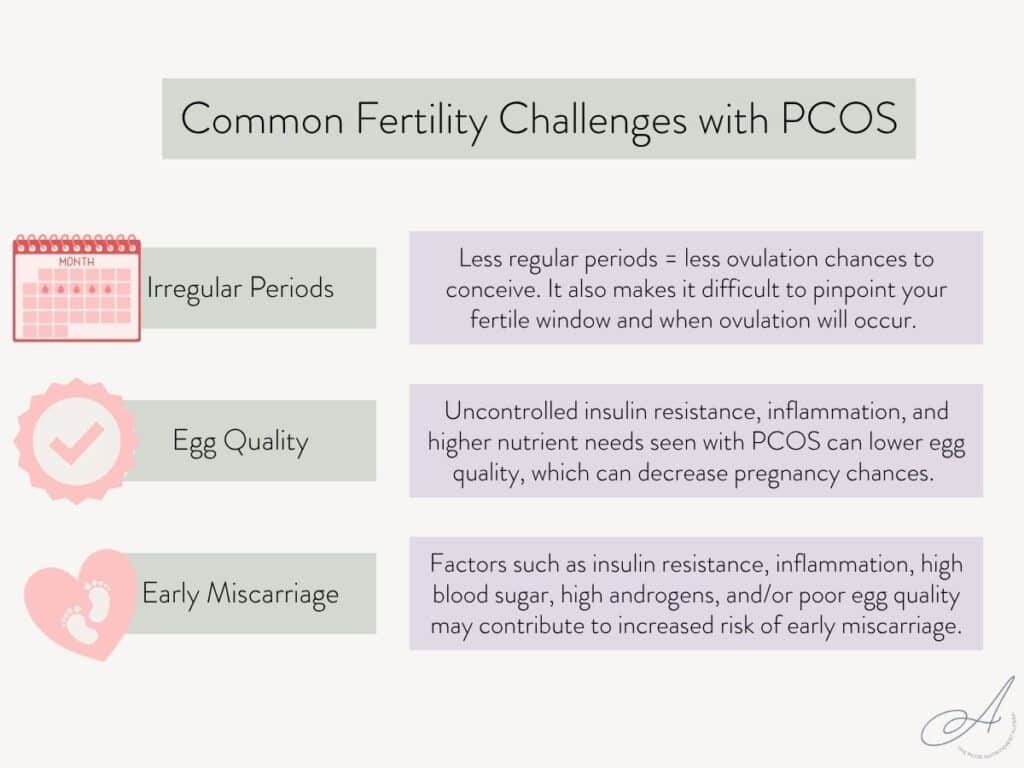
- Irregular Periods. We talked about this a bit above. When you don’t know when your period is going to show up, it’s hard to pinpoint when ovulation is going to happen. This makes it difficult to time intercourse appropriately to actually increase your chances of pregnancy.
- Egg Quality. Insulin resistance and chronic inflammation are two factors that are usually present with PCOS. These can ultimately lower egg quality, which can decrease conception chances and implantation chances. Poor egg quality can also increase early miscarriage risk.
- Early Miscarriage. Unfortunately, those with PCOS may be at a higher risk of early miscarriage. Factors such as insulin resistance, inflammation, and high androgen levels may all contribute to this.
Let’s discuss some common medical interventions that are used to help people get pregnant with PCOS.
Medical Interventions To Get Pregnant With PCOS
While there aren’t a ton of medical interventions for PCOS in general, there are several fertility treatments that can help someone get pregnant with PCOS.
Here’s a few common ones:
- Medications such as Metformin, clomiphene citrate (aka Clomid) or letrozole (aka Femara) are commonly used for ovulation induction.
- Fertility treatments such as intrauterine insemination (aka IUI) or in vitro fertilization (aka IVF).
My first daughter was conceived with the use of Clomid and I have zero regrets about going that route. I don’t think there should be any shame in utilizing medications or fertility treatments if that’s the right choice for you. If you want to explore the possibility of how to get pregnant with PCOS naturally, the next section will dive into that!
How To Get Pregnant with PCOS Naturally
Now that you know more about ovulation, menstrual cycles, and how PCOS impacts these two things, let’s talk about how you can get pregnant with PCOS naturally.
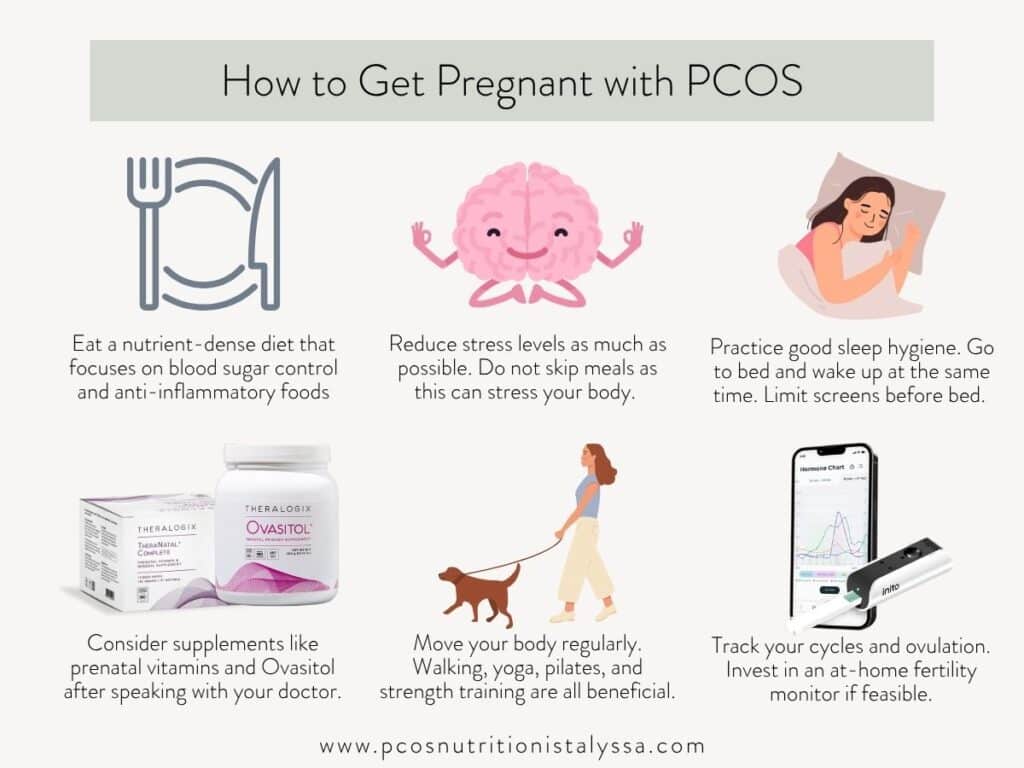
When it comes to achieving natural pregnancy with PCOS, there are three things that are really helpful:
- Having regular periods. If you’re not having regular periods, you’re not ovulating regularly, which can make conceiving more tricky.
- Improving egg quality. Good egg quality can lead to better pregnancy outcomes.
- Tracking your cycles. Using at-home fertility monitoring, such as with an Inito device, can help you identify your fertile window and confirm ovulation.
That may seem daunting, but let’s break it down into a few actionable steps and categories.
PCOS Diet To Get Pregnant Naturally
The foods we eat can play a vital role in hormone levels, including insulin levels and androgen production.
A balanced diet for PCOS can improve insulin sensitivity and lower inflammation. This can lead to more regular periods, better egg quality, and a lower risk of miscarriage.
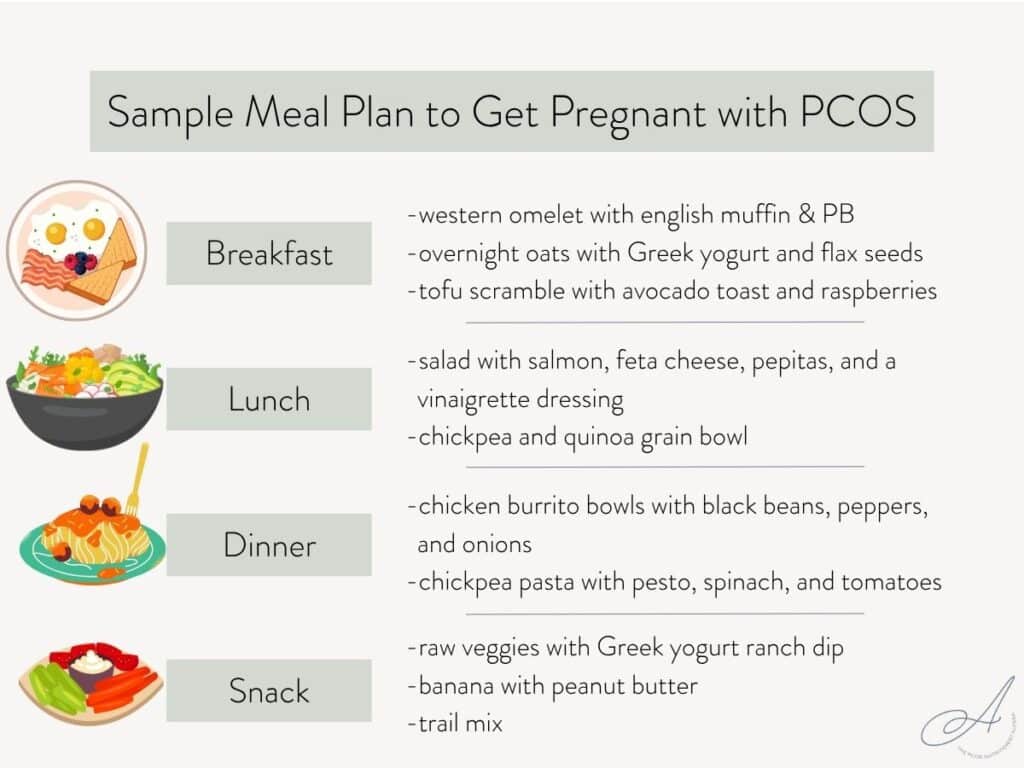
Here are a few dietary approaches that can help.
- Combine complex carbohydrates with protein and healthy fats at meals. This keeps blood sugar levels more stable and will improve insulin sensitivity over time.
- Eat regular meals throughout the day. Avoid skipping meals or going too long without eating since this can cause erratic blood sugar levels and cravings.
- Add in anti-inflammatory foods as often as possible. Foods such as fruits, vegetables, whole grains, fatty fish, beans, legumes, nuts, seeds, and olive oils all contain potent antioxidants that can lower inflammation.
- Increase your intake of nutrients that are essential for fertility such as folate, omega 3 fatty acids, vitamin D, and zinc.
Tip: get your vitamin D levels checked to make sure you’re not vitamin D deficient!
For way more info on how to actually put this diet information into action, click here for a PCOS Diet Plan to Get Pregnant that you can download to support your fertility journey!
Fertility Boosting Recipes
If you want a little more help in pulling this together into delicious recipes to support your fertility, I’ve got you covered.
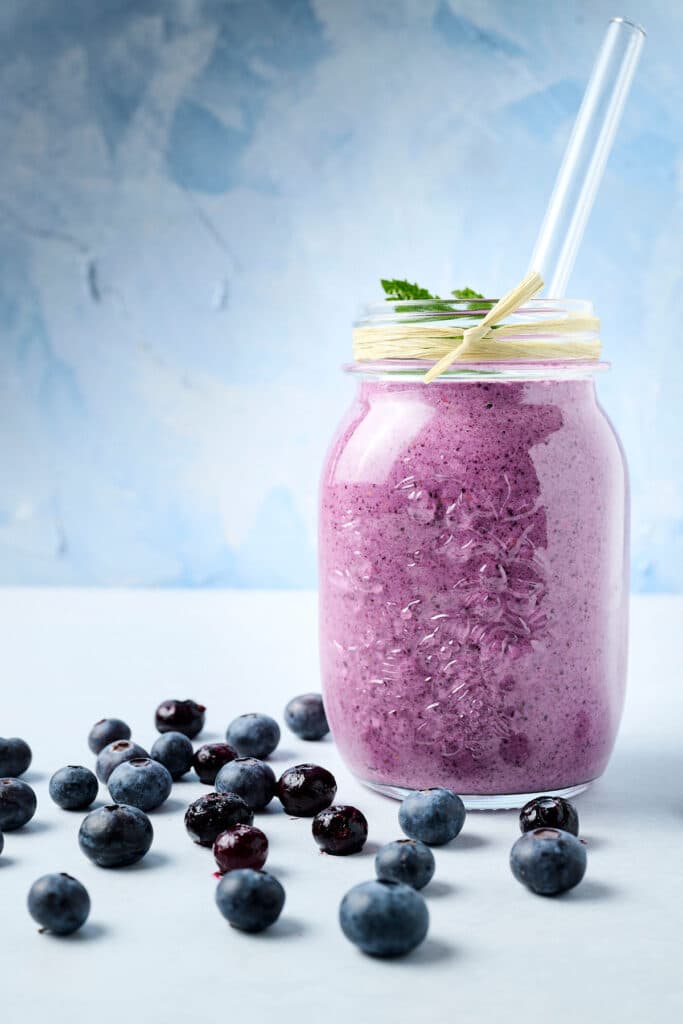
Here’s a few of my favorite fertility-friendly recipes:
Southwest Chicken (Crockpot Recipe)
For more PCOS friendly recipes, click here.
Lifestyle Modifications to Achieve Pregnancy
Healthy lifestyle changes can take you far when it comes to hormone health and increasing your chances of pregnancy.
Regular exercise such as walking, strength training, or yoga can improve your metabolic health, lower insulin resistance, and decrease testosterone levels. It may also help you maintain a healthy weight, which may improve pregnancy chances.
Good sleep hygiene and stress management are two other factors that are imperative for improving hormone levels and increasing your chances of getting pregnant naturally.
Check out this post: PCOS Self Care: 10 Natural Ways to Manage Your Health.
Track Your Cycles
Remember when we talked about how those with PCOS usually have irregular periods? And how that usually means that it’s hard to predict when ovulation will happen?
Well, tracking your cycles, and knowing when you’re about to ovulate, can increase your pregnancy chances significantly. There’s several options that offer the ability to track your cycles at home.
Here’s a few options:
- Ovulation Predictor Kits (aka OPKs). OPKs are the most affordable option, with a box of 50 ovulation strips costing under $20. These aren’t always the most reliable for PCOS though, especially if you have chronically high LH levels or multiple LH surges in your cycle. OPKs also don’t confirm whether or not you ovulated. Read more about using OPKs with PCOS here.
- Basal body temperature (aka BBT) tracking. Tracking your basal body temperature is one way to confirm if ovulation has occurred. This can be helpful information to know but it doesn’t paint a full picture. If you’re trying to get pregnant, it also doesn’t tell you when ovulation is about to happen – just that ovulation did actually occur. This can cause you to miss your fertile window. You can read about my experience with Tempdrop, a wearable BBT device, and when I think it’s a good option (spoiler: it’s not my favorite if you’re trying to conceive).
- Fertility monitors. At-home fertility monitors such as Inito or Mira are also available. I’ve done a couple comparisons using both an Inito device and a Mira device simultaneously. Read my full Inito vs Mira comparison post here.
At-Home Fertility Monitors
If you’re considering investing in an at-home fertility monitor and you have an iPhone, I think choosing Inito is a no-brainer. It takes just 10 minutes and a urine sample to help you identify your 6 day fertile window and also confirm that you’ve ovulated.
It measures 4 different fertility hormones:
- FSH: tracks follicle growth
- Estrogen: usually rises 3-4 days before ovulation and 1-3 days before LH levels rise
- LH: surges 24-36 hours before ovulation
- PdG: rises after ovulation (note: PdG is a urine metabolite of progesterone, not progesterone itself)
This is particularly useful for people with irregular cycles and PCOS. It gives you a clear picture of what’s going on with your menstrual cycles. If reading charts isn’t your thing, no worries! The Inito app will interpret your hormone trends and give you clear prompts when you’re experiencing high fertility and peak fertility days.
Inito’s insights allow you to time intercourse appropriately when your 6 day fertile window is identified. Since sperm can survive for up to 5-7 days, knowing your fertile window the moment it starts can significantly increase your chances of pregnancy.
If you’re interested in trying Inito, use this link or enter code ALYSSA15 at checkout. It’s even HSA/FSA eligible!
PCOS Supplements To Boost Fertility
Dietary supplements are very popular in the PCOS community. If you’re interested in trying supplements, the good news is that there are a couple of supplements that have some really impressive results and research behind them.
If pregnancy is your goal, these are the supplements I’d recommend considering.
Prenatal Vitamins
This one is actually non-negotiable in my opinion. Prenatal vitamins help to fill in nutrient gaps and provide essential nutrients to support reproductive health and a healthy pregnancy.
Be sure to check out my favorite prenatal vitamins for PCOS here.
Inositol
This is the most well-studied and probably my favorite dietary supplement for PCOS. Research has found that it performs similarly to Metformin for improving PCOS symptoms – but without the digestive side effects that Metformin carries.
For PCOS, inositol can:
- Lower insulin levels and blood sugar levels
- Decrease inflammation
- Improve egg quality
- Regulate periods
- Improve thyroid function
- Lower cholesterol levels
- Decrease gestational diabetes risk
- Lower cravings
- Support weight loss
- Lower testosterone levels
Inositol is also considered safe for pregnancy and breastfeeding. It can lower the risk of gestational diabetes when it’s taken during pregnancy – a huge win for those with PCOS.
My favorite brand of inositol is Ovasitol by Theralogix because it contains a blend of two different types of inositol: myo-inositol and d-chiro inositol in the same ratio that’s found in our bodies. I personally took Ovasitol during my second pregnancy and noticed significantly better glucose levels compared to my first pregnancy without Ovasitol.
If you decide to try Ovasitol, you can use this link or enter PRC: 202702 at checkout for a 15% discount within the United States. For those in Canada, use the code ALYSSA for a discount on the Canadian website.
Read more about the 12 Benefits of Inositol for PCOS here.
Disclaimer: always talk to your healthcare provider before starting or stopping any dietary supplements.
The Bottom Line
Polycystic ovary syndrome (PCOS) is a common hormonal condition and the most common cause of infertility. Hormonal imbalances can delay or impede ovulation, leading to irregular periods. Since ovulation is oftentimes more sporadic with PCOS, it can be difficult to pinpoint when ovulation is about to occur.
Diet and lifestyle changes that focus on blood sugar control and lowering inflammation can be key to regulating periods and promoting more regular ovulation. Dietary supplements such as prenatal vitamins and inositol can help to regulate periods, improve egg quality, and lower the risk of gestational diabetes.
Additionally, at-home fertility monitors such as Inito can be instrumental in identifying your fertile window and confirming ovulation, which can help you to get pregnant with PCOS naturally and more quickly than just “guessing” when you may be ovulating.
Get your free copy of the Ultimate Fertility Guide sent right to your inbox as a PDF.
Other PCOS Posts You’ll Love:
Carnivore Diet for PCOS: Miracle Cure or Big Mistake?
Seed Cycling for PCOS: Does it Actually Work?
30 PCOS Breakfast Ideas + Recipes
Disclaimer: this is for informational purposes only. It does not substitute for or replace professional medical advice for PCOS or any other medical condition. Always consult with your healthcare provider for personalized medical advice.