Is there a magical PCOS acne diet cure out there? Remember when you were told that you’d outgrow your teenage acne? If you still struggle with PCOS and acne as an adult, you’re not alone.
As a registered dietitian, I get asked about the link between PCOS acne and diet a lot! In this blog post, I’m going to discuss what causes PCOS acne, what foods to eat and which foods to avoid, and potential PCOS supplements for acne management.

Does PCOS Cause Acne?
In short, yes, PCOS can cause acne. In fact, up to 36% of adults with PCOS experience acne (1).
Polycystic ovarian syndrome (PCOS) is a common disorder that causes hormonal imbalances. It affects approximately 6-12% of women of reproductive age in the United States (2). Besides acne, other common symptoms of PCOS include irregular periods, infertility, weight gain, food cravings, hirsutism (excess hair growth such as facial or body hair), hair loss, and fatigue.
In order to understand how to reverse your PCOS-related acne, you need to determine why it’s happening. Let’s dive into what that could be.
What Causes PCOS Acne?
It would be so much easier if I could say that one specific thing is causing your PCOS acne. Unfortunately, the reality is that if you have PCOS and acne, it could be caused by a variety of different factors.
If you’ve ever noticed that different people with PCOS can have very different symptoms, that’s because PCOS is a syndrome. There are several known driving factors of PCOS symptoms…this means that there are several known potential driving factors for your PCOS acne.
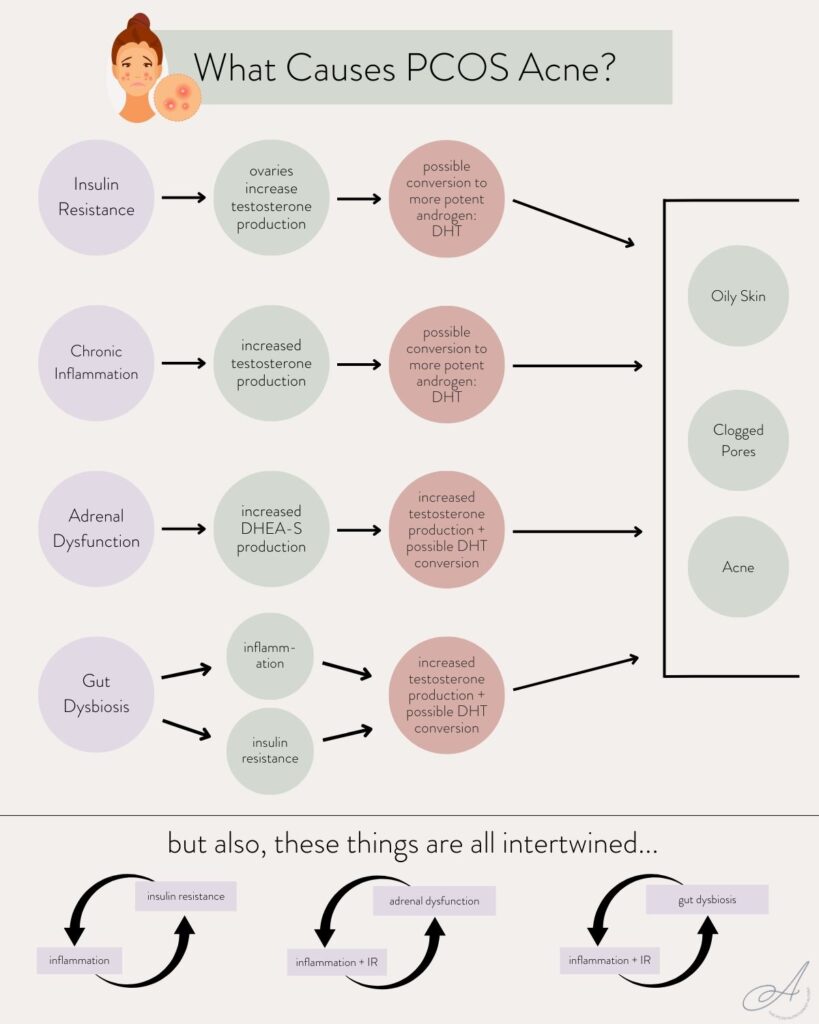
PCOS Acne Root Causes:
- Insulin Resistance. Up to 80% of those with PCOS have some degree of insulin resistance. High insulin levels can cause your ovaries to produce higher amounts of testosterone, which can cause oily skin, clogged pores, and acne.
- Inflammation. Chronic low-grade inflammation has emerged as one of the key contributors in the development of PCOS (3). Inflammation can increase the production of androgens (aka male hormones like testosterone). There’s also a vicious cycle that can happen with insulin resistance and inflammation: as inflammation gets worse, it makes insulin resistance worse…and vice versa.
- Adrenal Dysfunction. You may have heard of this referred to as a type of PCOS called “adrenal PCOS”. Your adrenal glands sit on top of your kidneys and produce some androgen hormones: dehydroepiandrosterone (DHEA) and its sulfate form (DHEA-S). One study found that about 33% of women with PCOS had elevated DHEA-S, which was also associated with higher testosterone levels and a higher prevalence of acne (4, 5). Testosterone can also be converted into a more potent androgen called dihydrotestosterone (DHT) which can trigger oily skin and acne.
- Gut Dysbiosis. Research shows that those with PCOS have a less favorable gut microbiome compared to those without PCOS. This can lead to increases in insulin resistance, inflammation, and androgens…all of which can ultimately trigger acne.
Alright, now that you know a few reasons that can be driving your acne, let’s talk about some PCOS acne diet modifications you can make.
What To Eat for PCOS Acne
While there are different potential reasons you’re experiencing acne, all of these driving factors are interlinked together. Essentially, you don’t want to focus so much on one potential driving factor that you ignore the other potential reasons. That may sound overwhelming, but let’s break it down.
To simultaneously address all of these potential reasons that you’re experiencing acne, you’ll want to:
- Improve insulin sensitivity
- Decrease inflammation
- Improve your gut health
Let’s dive into how you can accomplish this.
Improve Insulin Sensitivity
One of the foundations of improving your PCOS symptoms, including acne, is to improve insulin sensitivity and lower insulin resistance. This starts with blood sugar control and preventing the regular occurrence of erratically high blood sugar levels and low blood sugar levels.
How to lower insulin resistance through your PCOS diet:
- Avoid skipping meals. Skipping meals can cause low blood sugar levels. This can lead to carb cravings, binge eating, or your liver producing glucose to increase your blood sugar levels (a compensatory process called glycogenolysis).
- Combine high fiber foods (or low glycemic index carbs) with lean protein and healthy fats at all of your meals (more on this below!).
- Include balanced snacks in your eating pattern if you tend to go long periods of time between meals.
For more info on snacks, check out this post: 30 Healthy PCOS Snack Ideas.
At your meal times, it’s imperative to include balanced meals that include all three macronutrients:
- High Fiber Carbs: fruits, vegetables (starchy and non-starchy vegetables), beans, chickpeas, lentils, edamame, and whole grains such as oats, quinoa, whole grain bread, and brown rice
- Protein: chicken, turkey, lean meat, fish, seafood, Greek yogurt, cottage cheese, eggs, tofu, tempeh, and edamame
- Healthy Fats: olive oil, avocado, nuts, seeds
For downloadable PDF lists, click here for a high fiber foods list or a high protein cheat sheet.
Lower Inflammation
Since we know that both PCOS and acne are inflammatory conditions and are linked to chronic inflammation, you’ll want to take steps to target inflammation in your diet. This means including anti-inflammatory foods that are rich in antioxidants that can fight oxidative stress and free radicals.
If you’re starting to address insulin sensitivity by following some of the diet guidance in the previous section, you’re probably already working some anti-inflammatory foods into your diet.

Here’s some examples of anti-inflammatory foods to include more frequently:
- Fruits. Especially berries, kiwis, cherries, apples, avocado, bananas, pomegranate, and peaches.
- Vegetables. Especially broccoli, cauliflower, cabbage, tomatoes, sweet potato, bell peppers, and leafy greens like spinach and kale.
- Fatty Fish. Especially salmon, mackerel, sardines, trout, and herring.
- Nuts and Seeds. Especially walnuts, cashews, chia seeds, flaxseeds, and hemp hearts.
- Heart Healthy Oils. Especially olive oil and avocado oil.
- Certain Teas. Green tea, matcha, and spearmint tea.
Click here to get a full, downloadable PDF list of anti-inflammatory foods to help you on your journey!
Improve Gut Health
Another aspect of your PCOS acne diet is to work on optimizing your digestive health. Research continues to come out showing us just how important gut health is and how it’s related to overall health.
A suboptimal gut microbiome can cause digestive issues like bloating and gas, but it can also increase your risk of other health conditions such as metabolic syndrome, type 2 diabetes, heart disease, and high blood pressure.
Including prebiotic-rich foods and probiotic-rich foods can help improve the balance of your gut microbiome:
- Prebiotics: apples, bananas, asparagus, Jerusalem artichokes, onions, garlic, leeks, oats, beans.
- Probiotic Rich Foods: kefir, Greek yogurt, cottage cheese, sauerkraut, kimchi, kombucha, tempeh, miso
Here’s a few delicious recipes that incorporate gut healthy ingredients:
High Protein Chocolate Pudding

Foods to Avoid for PCOS Acne
If you have PCOS acne, or PCOS in general, there are some foods that you may want to shy away from eating on a routine basis. This doesn’t mean that you should never eat them – afterall, overly restrictive diets usually backfire.
There are some foods that are known to cause more inflammation when consumed regularly, or in excess. This can ultimately make your PCOS symptoms, including acne, worse.
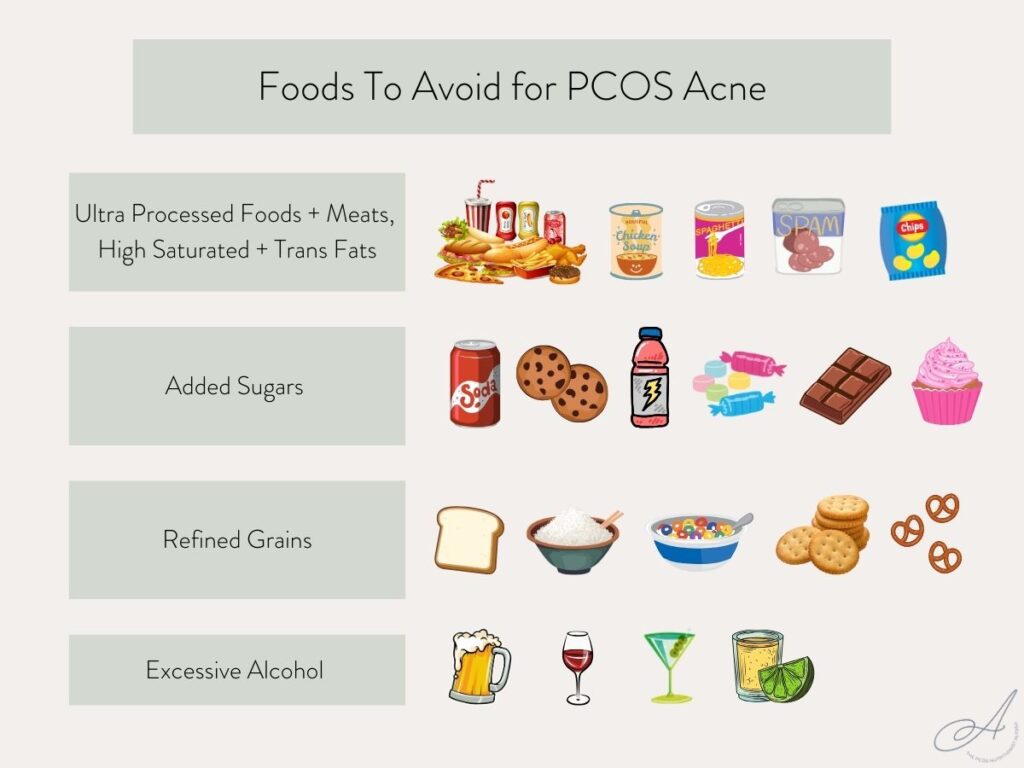
Foods that you should limit or avoid if you have PCOS acne:
- Ultra-processed foods – canned soup, frozen dinners, pies, pizza, cake, french fries, fast food
- Processed meats – such as sausage, bacon, salami, bologna
- Added sugars – such as candy, ice cream, cookies, pastries, sugary drinks such as soda or other sweetened beverages
- Saturated & trans fats – such as butter, lard, coconut oil, and fatty, red meat
- Excessive alcohol consumption
Along with the foods listed above, you’ll also want to avoid or eliminate any foods that you’re sensitive or intolerant to.
PCOS Acne: Can I Eat Dairy?
There’s a lot of misinformation in the PCOS community regarding dairy. Many people claim that dairy causes inflammation, however, multiple systematic reviews show that milk is largely neutral or that it actually has anti-inflammatory effects (6, 7). Of course, if you are allergic to milk or have an intolerance, consuming milk or dairy products will result in inflammation.
Although, the conversation around dairy is complicated. Acne may be the PCOS symptom exception when it comes to dairy intake. A recent meta-analysis found that dairy intake has been associated with increased acne, regardless of whether it is milk, yogurt, or cheese (8). One notable study that examined milk intake in women found that higher milk intake, particularly skim milk, was linked with an increased risk of acne (9). The American Academy of Dermatology Association acknowledges that a high glycemic index diet and frequent consumption of milk (but not yogurt or cheese) is linked to more acne (10).
Another interesting consideration is lactose intolerance. One study did find that a higher amount of women with PCOS had lactose intolerance compared to the general population (11). If you have lactose intolerance and continue to consume dairy products that contain lactose, you may be causing more inflammation that could be making your acne worse.
If you have lactose intolerance, you’re allergic to a specific sugar (lactose) in milk. There are still several dairy products that most people with lactose intolerance can still enjoy, such as:
- Naturally lactose-free cheese such as cheddar and swiss cheese
- Fermented dairy products such as Greek yogurt and kefir
- Lactose-free products
Basically, there really isn’t a clear cut answer here on dairy and acne. It largely will come down to you as an individual. If you’re struggling with acne and are unsure if you have an intolerance or sensitivity to dairy, you may want to consider a dairy-free diet trial for a few weeks to see if your acne improves. Of course, I would recommend considering this only after you’ve implemented other PCOS diet changes that address insulin resistance and inflammation.
PCOS Acne Diet Plan
If you’re wondering how to put this all into play, here’s an example! This is a one day PCOS acne diet plan. All of the meals listed here are balanced and dairy-free (in case dairy is a trigger for your acne).
Breakfast – Ground Turkey Sweet Potato Hash
Lunch – Greek Chicken Quinoa Bowls (omit feta cheese if you’re dairy-free)
Dinner – Sheet Pan Cashew Chicken
Snacks – Apples with peanut butter, roasted chickpeas, trail mix, or veggies with roasted garlic dip
If you’re looking for more info on a balanced diet approach for PCOS, don’t miss this resource: A Dietitian’s 7 Day PCOS Diet Plan PDF.
Lifestyle Changes for PCOS Acne
In addition to making changes to your diet, lifestyle changes can make a difference in your PCOS acne. Factors such as movement, sleep, and stress can play a big role in your hormone levels.
Regular exercise can improve insulin resistance and lower high androgen levels. Walking, strength training, yoga, pilates, cardio, and HIIT are all beneficial types of exercise you may want to consider including in your routine.
Sleep and stress are two things we often take for granted as a society. We don’t sleep well and we’re stressed to the max. These can work against your hormone health and perpetuate PCOS symptoms like acne. Improving your sleep hygiene and stress management techniques can greatly improve your overall hormone health.
For stress management help, check out: PCOS Meditation: 7 Benefits + Tips for Beginners.
PCOS Supplement for Acne
Medications like metformin, birth control pills, and spironolactone can all improve acne by decreasing androgen levels. Since high androgen levels (like high testosterone levels) are a big driving factor of PCOS acne, it’s obvious why these medications are often prescribed.
While prescription medications can be very valuable for improving acne, some people prefer other options such as supplements. Thankfully, research shows that some supplements may help acne.
Certain dietary supplements that may improve acne:
- Inositol: lowers insulin resistance, inflammation and androgen levels such as testosterone. A combo of myo-inositol and d-chiro inositol is recommended. Read more about inositol and PCOS here.
- Fish Oil (Omega 3 Fatty Acids): reduces inflammation, testosterone, and DHT levels. It may also help to improve insulin sensitivity.
- NAC: a powerful antioxidant that can lower insulin resistance, inflammation and testosterone levels.
- Probiotics: these may improve gut health by diversifying the gut microbiome. They’re also associated with improved insulin sensitivity and androgen levels as well. Read more about probiotics and PCOS here.
- Zinc: a nutrient with anti-inflammatory properties, it’s known for its anti-androgen effects. It may be particularly helpful to lower testosterone and DHT levels. Note: long term zinc supplementation may cause a copper deficiency.
If you’re interested in exploring supplements for PCOS, check out my Fullscript online supplement dispensary. Once you create a free account, you’ll have access to view my curated lists of recommended supplements that support different areas of PCOS (such as insulin resistance, high androgens or fertility – to name just a few). You’ll receive 20% off all dietary supplements through Fullscript. This usually makes them less expensive than Amazon or directly through the manufacturers’ websites.
The Bottom Line
PCOS acne is driven by multiple factors, including insulin resistance, inflammation, adrenal dysfunction, and gut dysbiosis. Addressing these root causes through diet can help manage acne symptoms.
A balanced diet that includes complex carbs, lean protein, and healthy fats can improve insulin sensitivity, while anti-inflammatory foods such as berries, leafy greens, and fatty fish can help reduce inflammation. Supporting gut health with prebiotic and probiotic-rich foods may also play a role in improving acne.
In addition to dietary changes, lifestyle factors like regular exercise, stress management, and quality sleep can further support hormonal balance and skin health. Certain supplements, including inositol, fish oil, NAC, probiotics, and zinc, may also be beneficial. Check out my favorite ones in my curated PCOS supplement lists and get 20% off by creating a free account in my Fullscript supplement dispensary.
While no single diet can “cure” PCOS acne, a holistic approach that includes nutrition, lifestyle adjustments, and targeted supplements can significantly improve symptoms over time.
Disclaimer: this is for informational purposes online. It is not intended to substitute for or replace professional medical advice. Always consult with your healthcare provider for individualized recommendations for polycystic ovary syndrome (PCOS) or any other medical condition.