Dealing with unwanted hair growth can be one of the most frustrating symptoms of PCOS. If you’re looking for natural ways to manage it, you’re not alone. While there’s no quick fix, there are diet, lifestyle and supplement strategies that can support hormone balance and help reduce excess hair growth over time.
As a registered dietitian who also has PCOS, I get the frustration with this confidence-killing symptom. Let me help you wade through what works and what doesn’t to help you manage PCOS hair growth naturally.
What Is PCOS Hair Growth?
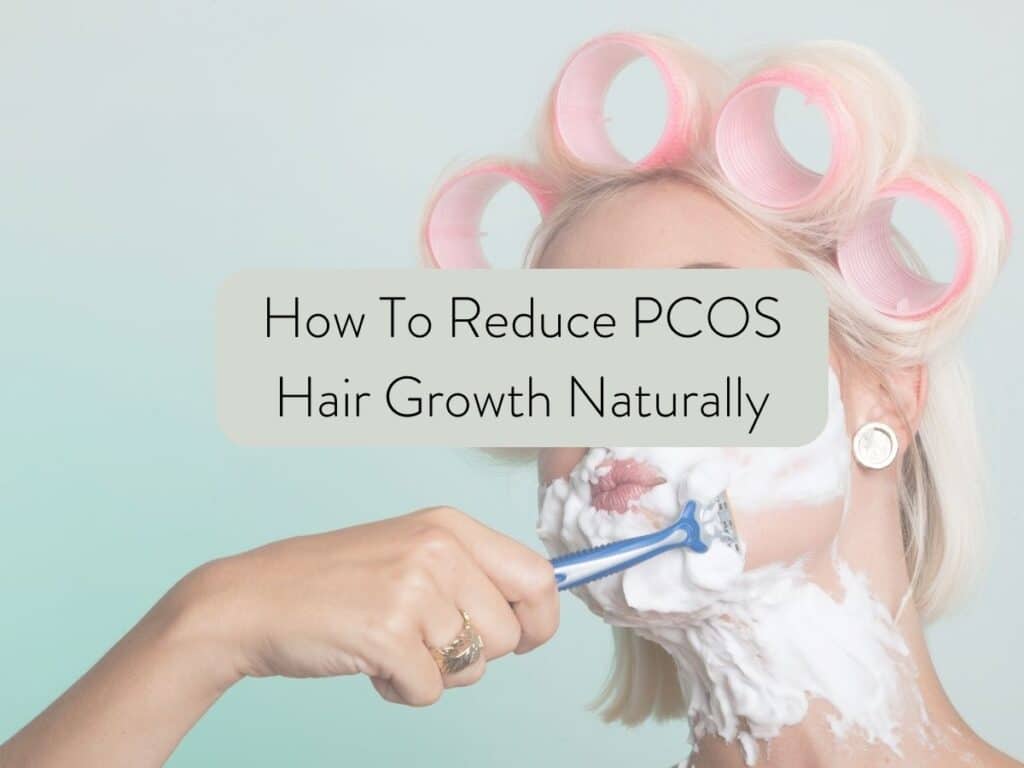
PCOS hair growth, aka hirsutism, is the unwanted and excessive growth of hair. This type of hair growth can happen on the face or body. This isn’t just that vellus hair (aka peach fuzz) that normally grows on the body. This is going to be thick, dark hair growth that happens on parts of your body that males usually experience. Think: facial hair, hair around the areolas, happy trail, or thick hair on your inner thighs.
Hirsutism is one of the PCOS symptoms that people complain about the most in my experience. In addition to being incredibly frustrating, it can damage your confidence and strain your mental health. Some people spend exorbitant amounts of money to try to rid themselves of this PCOS hair growth.
Let’s talk about what is actually causing hirsutism or PCOS hair growth.
What Causes PCOS Hair Growth?
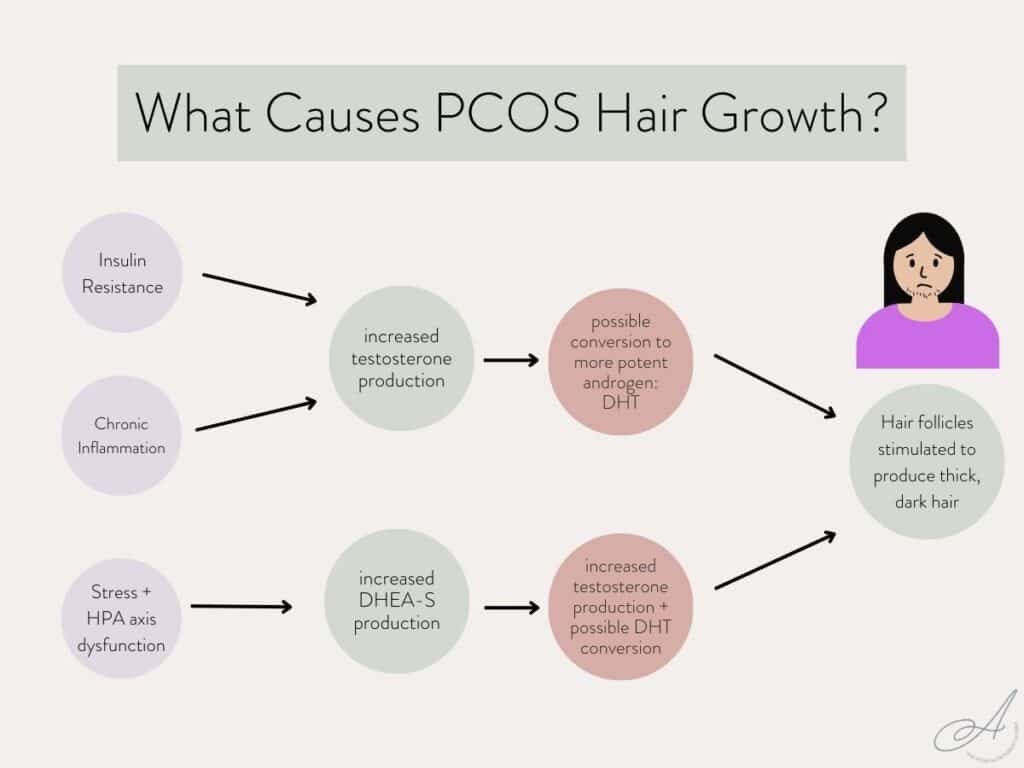
High androgen levels are typically the underlying cause of body and facial hair growth. Androgens are a group of hormones that contribute to male characteristics. Testosterone is one example of these male hormones. Females naturally produce some androgens in varying amounts. With PCOS though, there’s an excess of androgens. This can cause some unpleasant symptoms of PCOS such as irregular periods, acne, PCOS-related hair loss, and excess hair growth.
But, why do your androgen levels get so high? High androgen levels can sometimes be caused by insulin resistance. When insulin levels are high, it causes the ovaries to produce higher amounts of testosterone, which can trigger PCOS hair growth. Chronic inflammation, which is usually seen in PCOS, can also increase testosterone levels.
Now that you know what causes this pesky PCOS symptom, let’s talk about how to lower androgens and stop PCOS hair growth naturally.
How To Stop PCOS Hair Growth Naturally
There are several steps you can implement to stop PCOS hair growth naturally. From diet to lifestyle changes to supplements, let’s dive into some of these steps to slow and reverse hair growth.
Dietary Changes To Stop PCOS Hair Growth
The foods we eat can play a vital role in hormone levels, including androgen production.
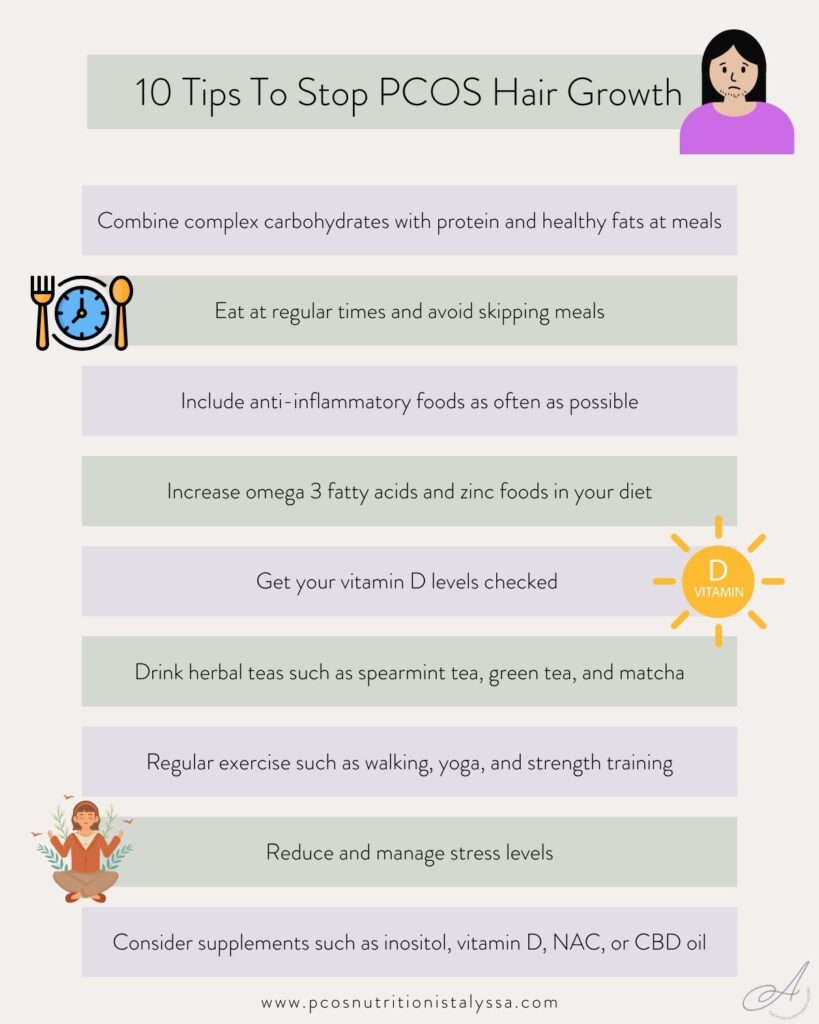
A balanced diet for PCOS can improve insulin sensitivity and lower inflammation, which in turn can lower androgen levels. Here’s a few things you can do to slow PCOS hair growth:
- Combine complex carbohydrates with protein and healthy fats at meals. This keeps blood sugar levels more stable and will improve insulin sensitivity over time. By lowering insulin resistance, you can subsequently lower testosterone levels too.
- Eat regular meals throughout the day. Avoid skipping meals or going too long without eating since this can cause erratic blood sugar levels and cravings.
- Add in anti-inflammatory foods as often as possible. Foods such as fruits, vegetables, whole grains, fatty fish, beans, legumes, nuts, seeds, and olive oils all contain potent antioxidants that can lower inflammation.
Click here for a full anti-inflammatory foods list PDF that you can download!
Nutrients That Stop PCOS Hair Growth
In addition to the general nutrition guidelines above, there are certain nutrients that can help to lower androgens in your body, which can help to stop PCOS hair growth. Here’s some nutrients to include more of.
- Include more foods rich in omega 3 fatty acids. Foods like walnuts, chia seeds, flax seeds, hemp seeds, and fatty fish like salmon, herring, and trout are great sources of omega 3 fatty acids. Omega 3s can lower testosterone levels in those with PCOS (1).
- Increase your intake of zinc. Zinc has been shown to lower both insulin levels and testosterone levels in PCOS (2). Foods such as oysters, crab, beef, pork, fortified cereals, oats, pumpkin seeds, and cashews are good sources of zinc.
- Optimize your vitamin D levels. Up to 75% of those with PCOS are vitamin D deficient, which is linked to higher testosterone levels (3). Increase your vitamin D intake with fortified dairy, eggs, salmon, sunlight, or vitamin D supplements if needed.
Check out these recipes that include some of these amazing nutrients:
Miso Ginger Salmon (an anti-inflammatory powerhouse meal!)
Overnight Oats With Flax Seeds
High Protein + Fiber Pizza Crust
Make-Ahead High Protein Baked Oats

Herbal Teas That Stop PCOS Hair Growth
In addition to the nutrients listed above that can help to lower testosterone levels, there have been research studies that found herbal teas may be a natural remedy to stop PCOS hair growth.
- Spearmint Tea. There have been a couple of research studies that have found drinking two cups of spearmint tea daily can significantly reduce total testosterone and free testosterone levels. Additionally, these people with PCOS also reported a significant decrease in hirsutism, aka unwanted hair growth (4, 5). Pretty cool, right?! These are my favorite loose leaf spearmint tea and spearmint tea bag options.
- Green Tea. A recent meta-analysis showed that green tea extract led to reductions in body weight, free testosterone levels, fasting blood sugar levels & insulin levels. While the research was done with green tea extract, you’ll likely still reap some benefits from sipping green tea.
- Matcha. This is a highly concentrated form of green tea with a higher nutrient profile. Read about all the benefits of matcha for PCOS here.
Lifestyle Changes to Stop PCOS Hair Growth
In addition to making changes to your diet, there are some lifestyle modifications that may reduce unwanted hair growth.
- Regular exercise. Increasing or maintaining your exercise routine can be extremely beneficial for lowering insulin resistance, inflammation, and androgen levels like testosterone. This can subsequently improve facial hair growth or body hair growth. Walking, yoga, and strength training may be particularly advantageous forms of exercise to combat hirsutism (6).
- Stress management. Managing and reducing stress levels is key to improving hormonal balance. When we experience chronic stress, it alters our stress response and stress hormones like cortisol, which can worsen insulin resistance. Additionally, if you’re chronically stressed and experiencing HPA axis dysregulation, you could experience an increase in DHEA-S levels. Through a series of steps, DHEA-S can eventually be converted to dihydrotestosterone (DHT). DHT is a very potent androgen that stimulates hair follicles to grow thicker, darker, and coarser hair. Meditation may be a good option to help lower stress levels – check this post for info on how to get started with meditation for PCOS.
- Essential oils. While essential oils aren’t often talked about when discussing PCOS management, there are several oils that may be an effective way to reduce androgen levels and hirsutism. White cedar oil and spearmint oil are two essential oils that have anti-androgen properties. Read more about 10 Essential Oils for PCOS and how to use them here.
Now that we’ve talked about several natural ways that you can stop PCOS hair growth naturally with dietary changes and lifestyle modifications, let’s move on to discuss a few PCOS supplements that could also help.
PCOS Supplements To Combat Hair Growth
While there are diet and lifestyle changes that can certainly help with managing PCOS hair growth, sometimes dietary supplements may be helpful to give you a boost too.
Here’s a few supplements that have been shown to help reduce androgens, like testosterone:
Medical Treatment Options
When natural remedies fail or don’t provide adequate results, there are medical treatments that may help stop PCOS hair growth.
- Medications. Your doctor may prescribe certain medications. Birth control pills, Metformin, and spironolactone are all common medications that can slow down the hair growth cycle.
- Laser hair removal. This method uses a concentrated light (laser) to target the pigment melanin in the hair follicles, damaging it to slow or stop growth. Laser hair removal generally yields the best results for people with lighter skin tones and darker hair follicles. For some people, results may be permanent; for many people, routine touch-ups every couple of years may be necessary.
- Electrolysis. This method uses a tiny needle to apply an electric current directly into the hair follicle to destroy it. This usually results in more permanent results.
The Bottom Line
Many people with PCOS experience hirsutism, or unwanted and abnormal hair growth, as a symptom of their PCOS. It’s caused by high androgen levels such as DHEA-S, testosterone, or DHT.
There are several approaches that you can take to slow or stop PCOS hair growth naturally. A diet that focuses on blood sugar regulation and anti-inflammatory foods, essential nutrients that can lower androgens, and herbal teas such as spearmint tea, green tea, or matcha can be helpful. Additionally, lowering stress, getting regular exercise, using certain essential oils, and PCOS supplements may also help to lower androgens that contribute to PCOS hair growth.
If you want help managing your PCOS hair growth with a PCOS friendly diet, get your copy of the 3 week PCOS Meal Plan!
Other PCOS Posts You’ll Love
PCOS Acne Diet: What To Eat + What To Avoid
How I Reversed My PCOS Hair Loss Naturally
PCOS + Fatigue: What’s the Connection?
7 Tips To Curb Your PCOS Cravings
Disclaimer: this is for informational purposes only. It does not substitute for or replace professional medical advice for polycystic ovary syndrome (PCOS) or any other medical conditions. Always consult with your healthcare provider for personalized recommendations regarding diet changes and dietary supplements.