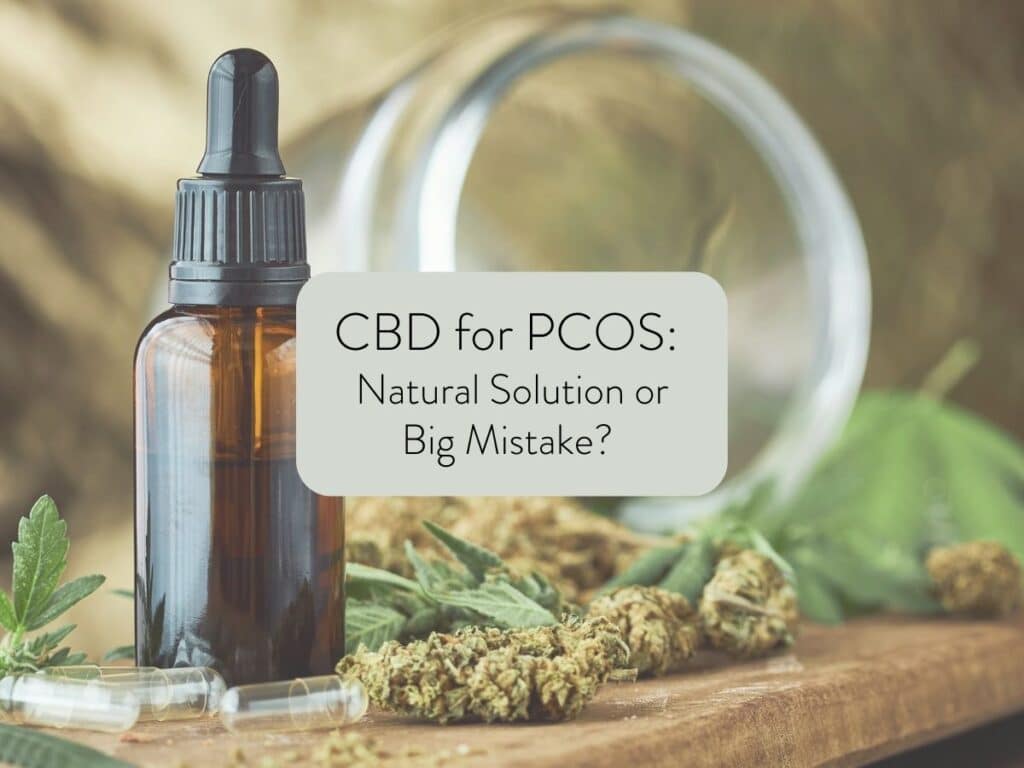
CBD has become a popular natural remedy in the wellness world in recent years. Naturally, CBD for PCOS has also become an emerging area of interest.
As a registered dietitian with PCOS, I’m always interested to know more about potential approaches that can improve PCOS symptoms. In this blog post, I’ll dive into what CBD is, potential benefits and downsides of CBD for PCOS, how much you should take, and some CBD products that I like for PCOS.
What is CBD?
Cannabidiol (CBD) is a naturally occurring compound that’s derived from the cannabis plant. It’s one of over 100 known cannabinoids. One cannabinoid that you may have heard of is THC (tetrahydrocannabinol). THC is the psychoactive substance in marijuana that gives you a “high” feeling. It can also cause an increased appetite and the “munchies”.
CBD does not cause a high like THC does. CBD is primarily extracted from hemp, a variety of cannabis that has very low THC levels. Hemp plants are a cousin of the marijuana plants.
CBD interacts with our body’s endocannabinoid system, which plays a role in regulating various functions such as mood, sleep, pain, cognition, appetite, metabolism, and inflammation. Instead of binding directly to the cannabinoid receptors like THC does, CBD simply influences the endocannabinoid system to help maintain balance within the body.
A couple of older studies have suggested that a dysfunctional endocannabinoid system can contribute to certain symptoms of PCOS such as irregular menstrual cycles and insulin resistance (1, 2). More on this to come below!
There are generally three types of CBD available:
- Full-Spectrum CBD: a CBD product that contains several naturally occurring cannabis plant extracts, such as terpenes and other cannabinoids. It may include up to 0.3% THC.
- Broad-Spectrum CBD: a CBD product that also contains several cannabis plant extracts but is typically THC-free.
- CBD Isolate: a pure CBD product with no other cannabinoids or plant compounds.
CBD is usually available in different forms such as oils, tinctures, gummies, edibles, capsules, or topical lotions or creams.

Alright, now that we have a brief understanding of what CBD is, let’s talk about the potential benefits of CBD for PCOS.
What are the benefits of CBD for PCOS?
Polycystic ovary syndrome (PCOS) affects 8-13% of women of reproductive age worldwide. Some of the most common symptoms of PCOS include irregular periods, infertility, weight gain, carb cravings, acne, hair loss, hirsutism (excess facial and body hair growth), and fatigue.
A healthy PCOS friendly diet and lifestyle changes can make a significant difference in mitigating your symptoms and improving your quality of life. Still, many people are still looking for other treatment options such as the use of CBD.
While PCOS is a common hormonal disorder, the scientific studies on CBD and PCOS specifically is limited. Let’s talk about a few recent studies that did look into this connection.
A very small animal study found that using low dose THC in PCOS-induced rats may improve several parameters of PCOS. This study found that PCOS animals treated with low dose THC for 4 weeks had lower:
- Body weight
- Blood glucose levels (aka blood sugar levels)
- HOMA-IR (a calculation used to evaluate insulin resistance)
- Testosterone levels
- Total cholesterol and LDL cholesterol levels
- Inflammation markers
Pretty impressive right? Now, bear in mind here that this study used THC, not CBD. Humans also are not rats. So we cannot directly compare the results that were found here to regular CBD use in humans. Remember, CBD does not contain THC.
Another recent paper explored the idea of using cannabinoids and PPAR ligands as a potential treatment approach for PCOS, particularly in regards to fertility and weight management.
Ultimately, more research on CBD for PCOS specifically is certainly needed though. If we’re looking at clinical studies on the potential benefits of CBD for specific symptoms that are more common with PCOS, there’s more research to be sifted through.
CBD for Insulin Resistance
Insulin resistance is present in up to 80% of those with PCOS. Research on CBD has found that it can lower glucose and insulin levels (3).
Another research study found that CBD positively influenced certain hormone levels. CBD lowered resistin, a hormone that’s released by adipose tissue and plays a role in insulin sensitivity, inflammation, and metabolism. The same study also saw an increase in glucose-dependent insulinotropic peptide, which is secreted by the small intestine and promotes a healthy insulin response.
CBD for Inflammation + Pain
Chronic inflammation is linked to the development of PCOS. That’s why it’s imperative to include anti-inflammatory foods into your diet.
Many people use CBD to manage chronic pain. A recent systematic review supports that CBD can improve pain symptoms due to its pain reliever and anti-inflammatory properties.
While pain is not a symptom of PCOS, true ovarian cysts can often occur simultaneously with PCOS. These true ovarian cysts can cause significant pain. Additionally, PMS is more common in those with PCOS. CBD may offer some pain relief for those who struggle with these types of cysts or menstrual cramps and PMS.

CBD for Cholesterol Levels
Approximately 50-75% of those with PCOS also struggle with dyslipidemia, or abnormal cholesterol levels. Those with PCOS tend to have elevated total cholesterol, LDL cholesterol, and triglycerides, while having low HDL levels. According to preliminary research, CBD appears to lower total cholesterol and LDL levels, while improving HDL levels.
CBD for Sleep
According to clinical studies, the benefits of CBD on improving sleep remain mixed and inconclusive. Many resources that cite benefits rely on self-reported data and anecdotal evidence rather than clinical studies (4). Still, many people do report that they fall asleep faster and sleep better with CBD use.
CBD for Anxiety
One of the most popular reasons that someone may consider CBD is for anxiety and stress relief. Those with PCOS are at higher risk for having generalized anxiety disorder compared to the general population. CBD offers a lot of promise as a treatment modality for lowering anxiety symptoms (5, 6).
Alright, now that we talked about some potential benefits of CBD for PCOS, let’s talk about some potential downsides that CBD carries.
What are the Downsides of CBD for PCOS?
Of course, everything in life comes with certain risks. There are some potential downsides to CBD that you should definitely consider.
Potential side effects of CBD:
- Drowsiness or fatigue
- Interactions with certain prescription medications
- Changes in appetite
- Digestive upset
- Liver enzyme changes
- Mood changes
- Dry mouth

In addition to these downsides, another big potential con of CBD for those with PCOS is that it may negatively affect fertility. There’s very little research on CBD and fertility to date. Although, the connection between marijuana use and reproductive health is more understood. It’s not recommended to engage in cannabis use (specifically marijuana or hashish) while trying to conceive or while pregnant (7). Additionally, it may also negatively impact your partner’s sperm quality.
Another thing to consider is that CBD products are not FDA-regulated so quality and purity vary widely. Not all brands are created equally so it’s important to choose products that are third-party tested for safety and quality.
Best CBD for PCOS
Now that you know all about the potential benefits and downsides of CBD, you may be thinking about trying it. Think of CBD like a dietary supplement though – meaning, you should absolutely be checking with your health care provider before starting CBD.
If you’ve gotten the go ahead from your healthcare provider, now it’s time to consider what the best CBD for PCOS is. When it comes to CBD, you’ll want to look for quality companies that undergo voluntary third party testing for their products. This ensures that what they’re advertising is in their product, is actually what’s in there.
If you’re new to CBD, start low and slow to see how you react. A typical dose to start with is 5-10mg CBD – which is usually ¼ to ½ of a dropper. Monitor for effects and increase the dose a few days later as needed. Many people find that somewhere in the 20-40mg per day range is ideal but what works for you may be different.
PCOS Friendly CBD Recommendation
The CBD products that I recommend for PCOS are Sunday Scaries. They’re a US-based and US-sourced company that produces high quality CBD and THC products. I like them because they undergo third party testing and you can also view their lab reports online – which is really cool and honestly pretty rare for a company to do!
They offer the following products that I love for PCOS:
- CBD Oil Tincture: This is my top pick overall. It contains 17mg full-spectrum CBD per drop that’s quickly absorbed and great for everyday stress and anxiety relief. It also has 2160IU vitamin D3 and 33mcg vitamin B12, two nutrients that can improve some symptoms of PCOS. There’s no THC in this CBD oil.
- CBD Gummies: if you prefer a gummy option versus the oil tincture, this is the gummy equivalent. It contains 10mg of full-spectrum CBD per gummy. It also has a tiny boost of 400IU vitamin D3 and 6mcg vitamin B12 per gummy. There’s no THC in these gummies.
- CBD Gummies for Focus: 10mg full-spectrum CBD per gummy plus the powerful antioxidant vitamin C. Vitamin C helps to lower inflammation and is helpful for progesterone production. There’s no THC in these gummies.
- CBD gummies with THC included:
- Extra Strength CBD Gummies: 25mg of full-spectrum CBD plus 1mg THC.
- Delta-9 Gummies: 25mg full-spectrum CBD plus 5mg Delta-9 THC.

Explore all of the Sunday Scaries CBD Products available for PCOS.
The Bottom Line
PCOS is a common medical condition that affects 8-13% of women worldwide. Women with PCOS often struggle with weight gain, cravings, irregular periods, infertility, acne, hair loss, and infertility. Additionally, those with PCOS are at an increased risk for chronic health conditions such as type 2 diabetes, metabolic syndrome, and heart disease.
CBD is a naturally occurring compound that’s derived from hemp plants. Unlike THC found in marijuana, CBD does not provide the psychoactive effects or the “high” feeling. Research on CBD use in PCOS and women’s health is limited. Some preliminary research shows that it may improve blood sugar regulation, insulin sensitivity, the inflammatory response, cholesterol levels, pain, sleep, and anxiety levels.
CBD should not be started without first consulting with your doctor. Potential side effects include drowsiness, medication interactions, digestive issues, mood changes, and liver enzyme changes. Additionally, the effects of CBD on the reproductive system isn’t fully understood yet and it may negatively impact fertility.
My top recommendation for PCOS friendly CBD is this CBD oil tincture — this company also offers great options for CBD gummies and THC combos.
More PCOS Topics You’ll Love
Best Supplements for PCOS Weight Loss
Ovasitol vs Ovasitol Plus: Which is Better?
Disclaimer: this is for informational purposes only. It is not intended to substitute for or replace professional medical advice for polycystic ovarian syndrome (PCOS) or any other medical conditions. Always talk to your healthcare practitioner before starting or stopping any dietary supplement, including CBD products.