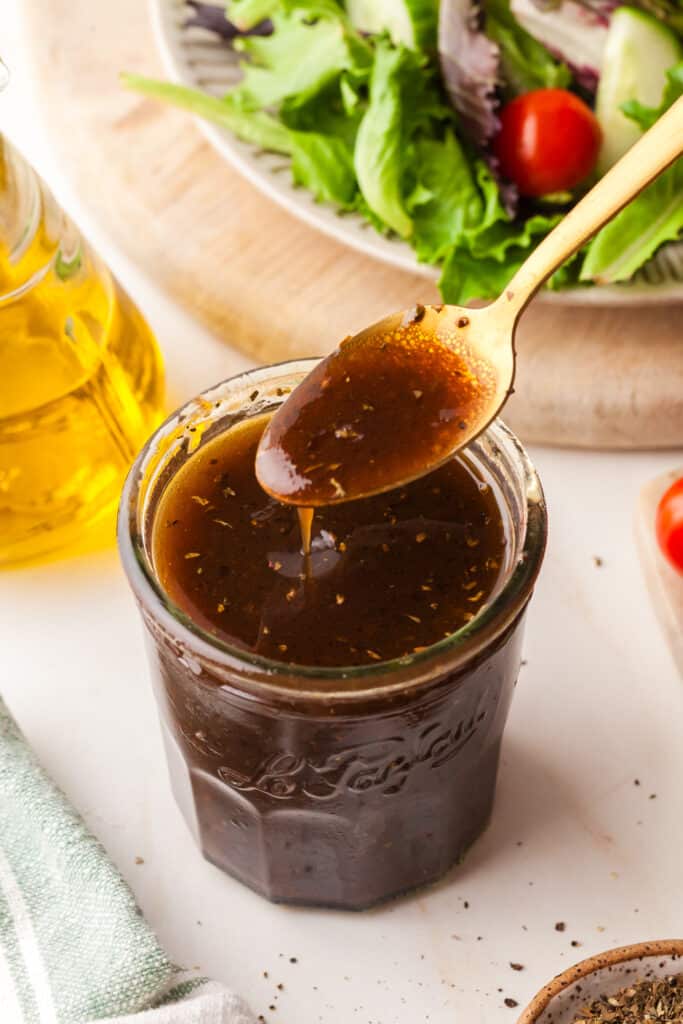
This Maple Balsamic Dressing is the perfect addition to any of your favorite salads, roasted vegetables, or even drizzled on top of protein sources, like salmon. The healthy fat from olive oil and the other nutritious ingredients make this one of the best PCOS friendly salad dressing recipes.
Why You’ll Love It
- Easy Meal Prep: make this salad dressing ahead of time to add to your favorite salads or roasted vegetables. This recipe can also be easily doubled to cut back on time.
- Anti-inflammatory: filled with healthy fat from olive oil, this dressing has a lot of anti-inflammatory properties to reduce inflammation and improve overall health.
- Prebiotics: the garlic in this recipe helps improve gut microbiome diversity to help reduce inflammation and improve digestion.
- Simple Ingredients: this recipe uses easy to find and fresh ingredients making it an easy alternative to store-bought dressings.
- PCOS friendly: This dressing provides enough healthy fats to complete any meal. The healthy fats in this recipe helps to manage PCOS symptoms by supporting blood sugar levels, improving insulin sensitivity, and lowering inflammation.
Ingredients
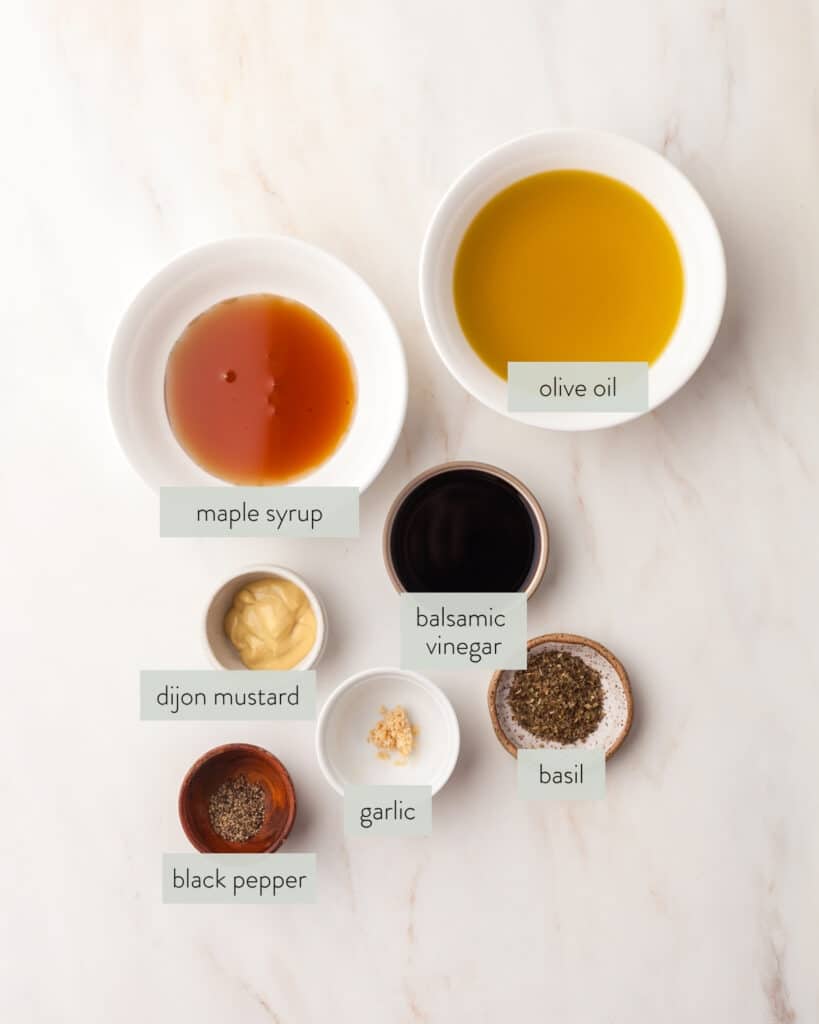
These simple ingredients are easy to find in your local grocery store.
- Olive Oil: one of the most nutritious ingredients in this recipe, olive oil provides a healthy dose of unsaturated fats which helps reduce inflammation. Avocado oil is another healthy fat option that could be substituted.
- Pure Maple Syrup: offers a healthier option for sweetness than refined sugars. Pure Maple Syrup also has minerals like manganese, zinc and calcium which help support immune function.
- Balsamic Vinegar: high in antioxidants and acetic acid to help combat inflammation, regulate blood sugar, and aid in digestion. Apple cider vinegar, red wine vinegar, or a simple squeeze of lemon juice can also be substituted in this recipe. Fun fact: vinegar can help to lower insulin resistance!
- Dijon Mustard: a low calorie flavor bomb that also offers antioxidants like selenium and manganese which help protect cells from inflammation.
- Garlic: filled with prebiotics to help improve gut microbiome and aid with digestion. You can use minced garlic or you can use dried garlic powder for this recipe.
- Dried basil: offers a punch of flavor to this recipe as well as some antioxidants to help reduce inflammation.
How To Make It
Step One: Gather ingredients and equipment
Use a clean liquid measuring cup to measure liquid ingredients before pouring into a glass bowl or glass jar with lid. Alternatively, you can use a salad dressing bottle.
Step Two: Combine Ingredients.
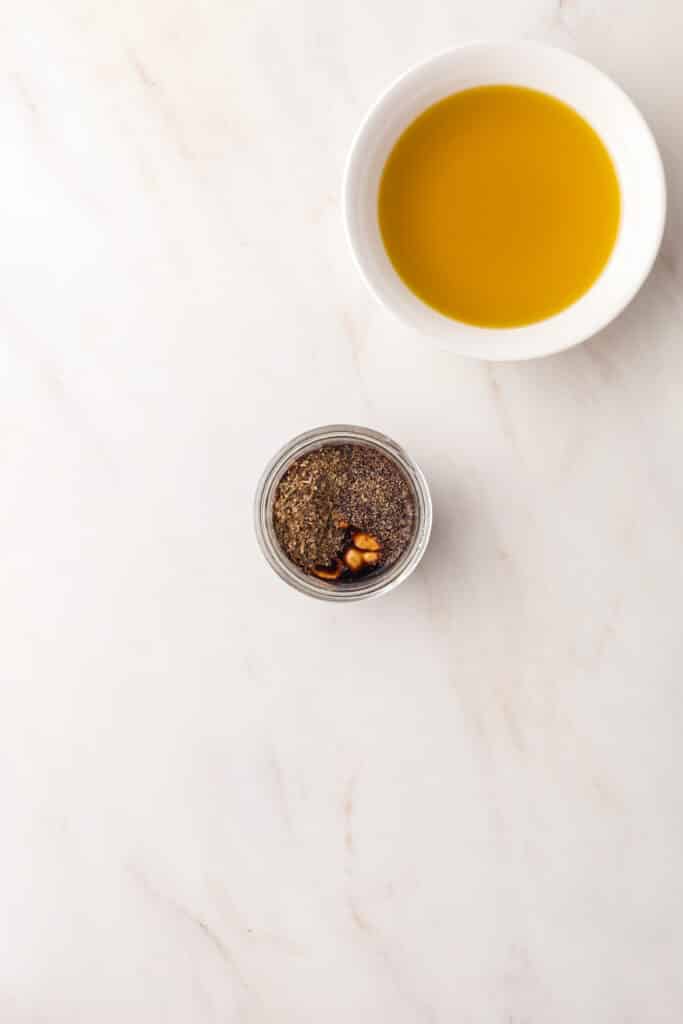
In a glass jar or bowl combine maple syrup, balsamic vinegar, dijon mustard, garlic, dried basil and black pepper. Whisk ingredients together, or shake lightly if using a jar with a lid.
Step Three: Add Olive Oil.
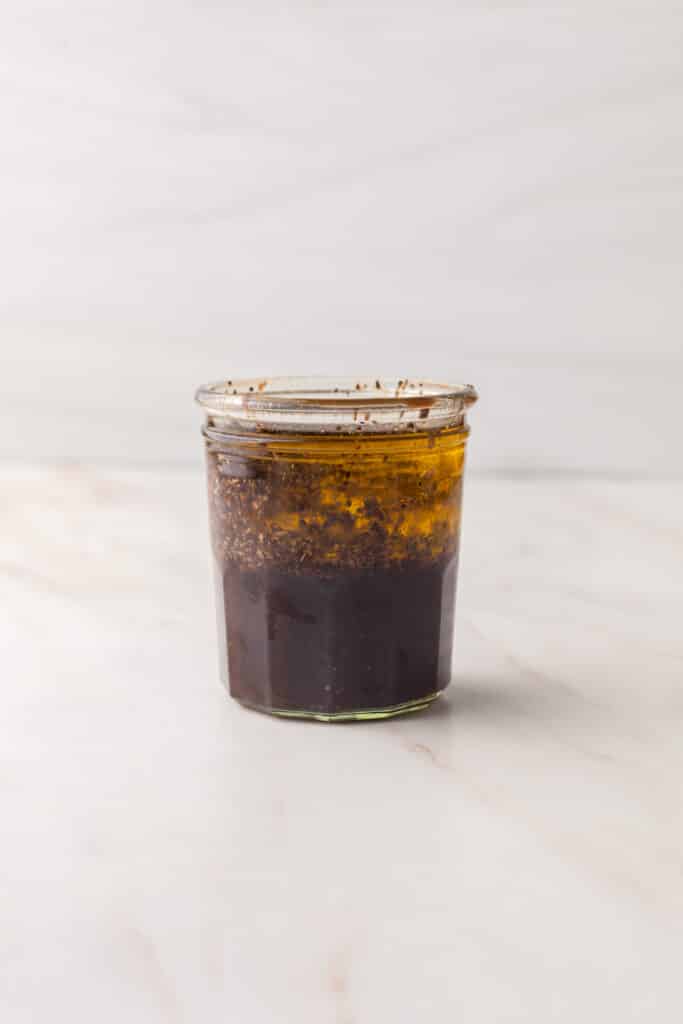
Slowly drizzle in olive oil while continuing to whisk or shake gently. If using a bowl, transfer to a glass jar with an airtight lid, or a salad dressing bottle.
Step Four: Serve.
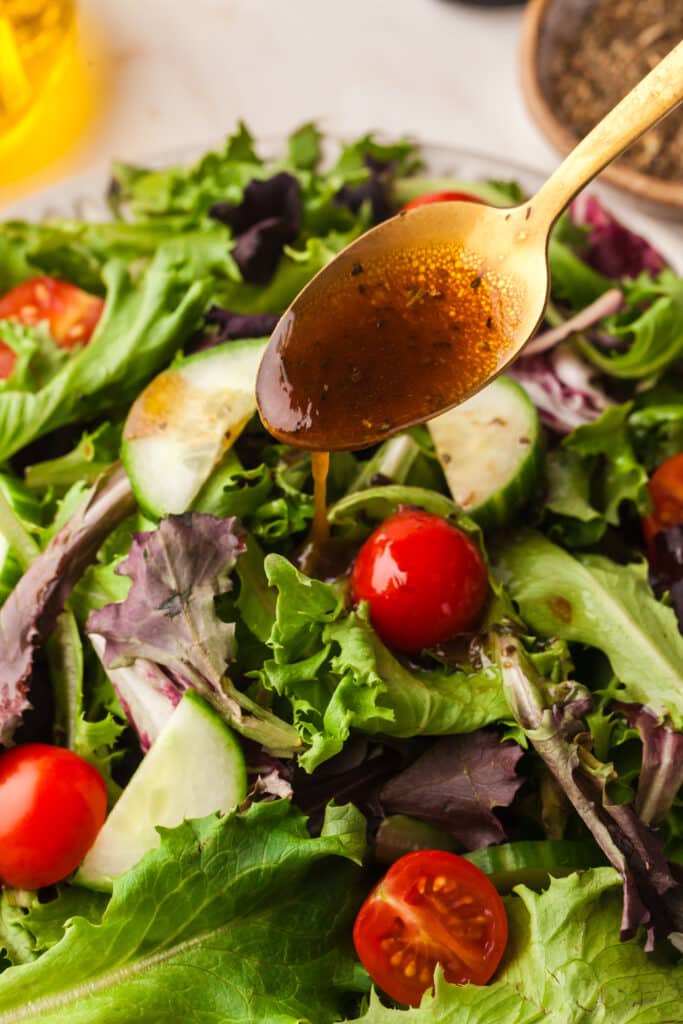
Drizzle dressing over a salad, roasted vegetables or protein source like salmon.
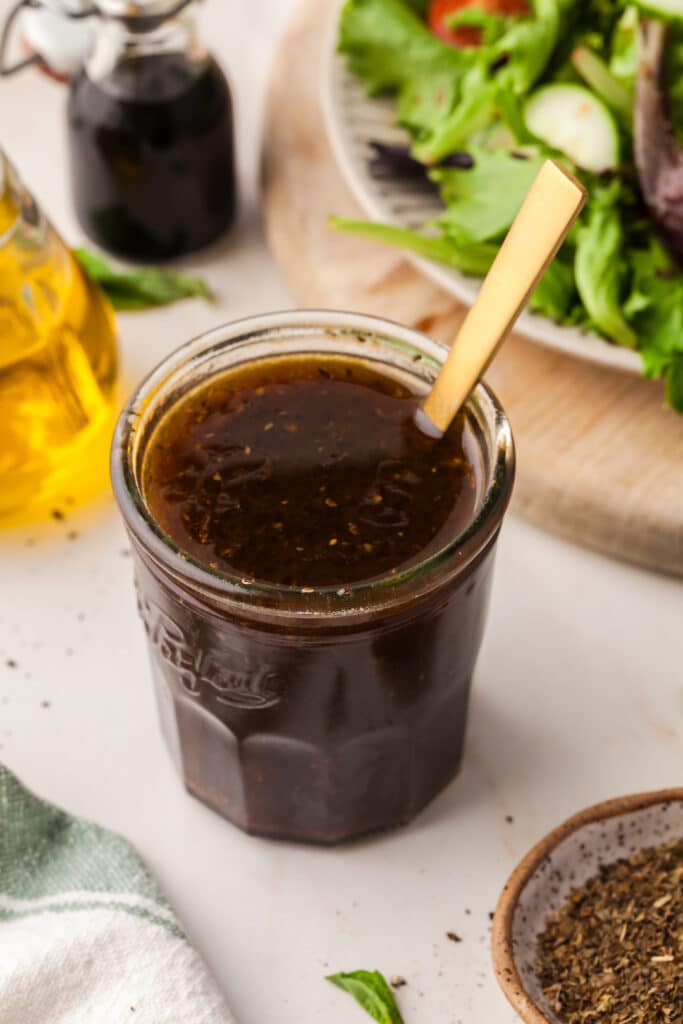
Tips, Variations and Substitutes
- Make in bulk: this recipe can be easily doubled to be kept in the fridge for future use.
- Swap herbs: you can use dried italian seasoning, dried oregano or dried thyme. Tip: I do not recommend using fresh herbs in this recipe as it can change the texture. Dried herbs offer a more compact flavor punch.
- Sweetener alternative: If you do not have access to maple syrup you could swap with either agave or honey.
- Room temperature or warmed: this recipe is excellent on salads, as well as served over roasted vegetables. Tip: this salad dressing is best when brought back to room temperature before serving to allow oil to reimburse throughout the dressing.
How To Store It
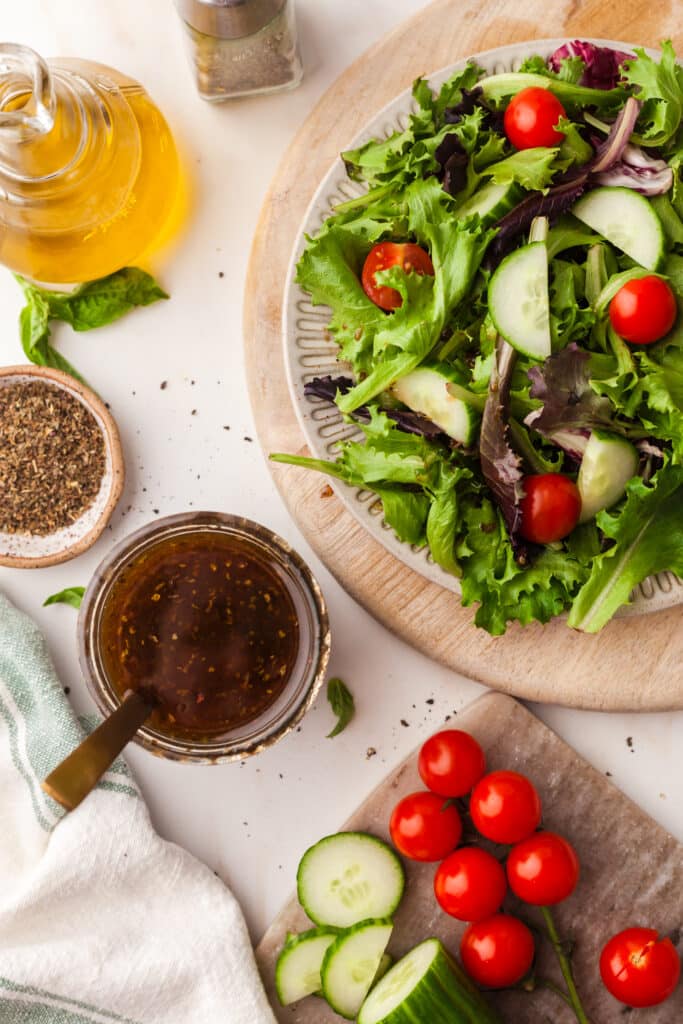
Store leftovers in an air tight glass jar or salad dressing bottle for up to 2 weeks in the refrigerator. If using dried garlic this can be left out at room temperature for 1-2 days. If using minced garlic it is best to keep this dressing in the refrigerator.
To bring back to room temperature before serving, simply remove from the refrigerator roughly 30 minutes before serving.
How To Serve It
This PCOS friendly Maple Balsamic Dressing provides powerful flavor to a variety of dishes. This dressing can be served on a salad, drizzled on top of roasted veggies, or used to add flavor to a protein source.
- As part of a main dish. Serve this over any of these nutrient-dense salads:
- Fresh greens, citrus fruits or apples, feta or goat cheese, walnuts or pumpkins seeds, and top with a salmon fillet or chicken breasts.
- Kale Salad with Butternut Squash
- Shaved Brussels Sprouts Salad
- As part of a side dish. Drizzle this dressing over roasted vegetables like brussels sprouts, carrots, or beets.
- To jazz up protein. This dressing adds so much flavor to salmon, chicken and even tofu. Just drizzle on top and enjoy.
- To dip it. Use this dressing as a flavorful way to dip some whole grain bread alongside a tasty soup like High Protein Tomato Soup.
Other Salad Dressing Recipes You’ll Love
If you make this Maple Balsamic PCOS-Friendly Salad Dressing Recipe, please consider leaving a star rating and review at the end of this blog post. This is incredibly helpful to me and it helps other readers to know what to expect!
Maple Balsamic Salad Dressing (PCOS Friendly)
Ingredients
- 1 cup olive oil extra virgin
- ⅓ cup maple syrup
- ¼ cup balsamic vinegar
- 1 tbsp dijon mustard
- 1 clove garlic minced
- 1 tsp dried basil
- ½ tsp black pepper
Instructions
- In a glass jar or salad dressing shaker, add all ingredients except for olive oil. Whisk or shake lightly to combine.
- Drizzle in olive oil and continue to whisk or shake lightly until mixed.