


Are there any healthy chips for PMOS? Because let’s be real: sometimes you just want chips…and if you have PMOS, you’ve probably wondered whether chips are completely off the table (no pun intended).
As a registered dietitian who specializes in PMOS (polyendocrine metabolic ovarian syndrome), formerly called PCOS (polycystic ovary syndrome), I get this question all the time!
The good news: chips are fine! You just need to know what to look for. In this blog, I’m going to break down what to look for on the label, my favorite store-bought PMOS friendly chips, and a few homemade PMOS friendly chip recipes.
Why Chips Can Be Tricky with PMOS
Most conventional chips are made with potatoes, some type of oil (usually soybean, corn, canola, or sunflower oil), and salt. They tend to be low in fiber and protein, and higher in carbs and fat.
The listed serving size tends to be rather smaller compared to the amount of chips the average American will typically consume in one sitting. For someone with PMOS and insulin resistance, this is a combination that can increase blood sugar levels and leave you hungry 20 minutes later…and ultimately making your PCOS symptoms worse.
Thankfully, the chip world has come a long way. There are now plenty of better options made with different ingredients and enough fiber and protein to actually keep you satisfied. The key is knowing what to look for on the label.
How to Read a Chip Label for PMOS
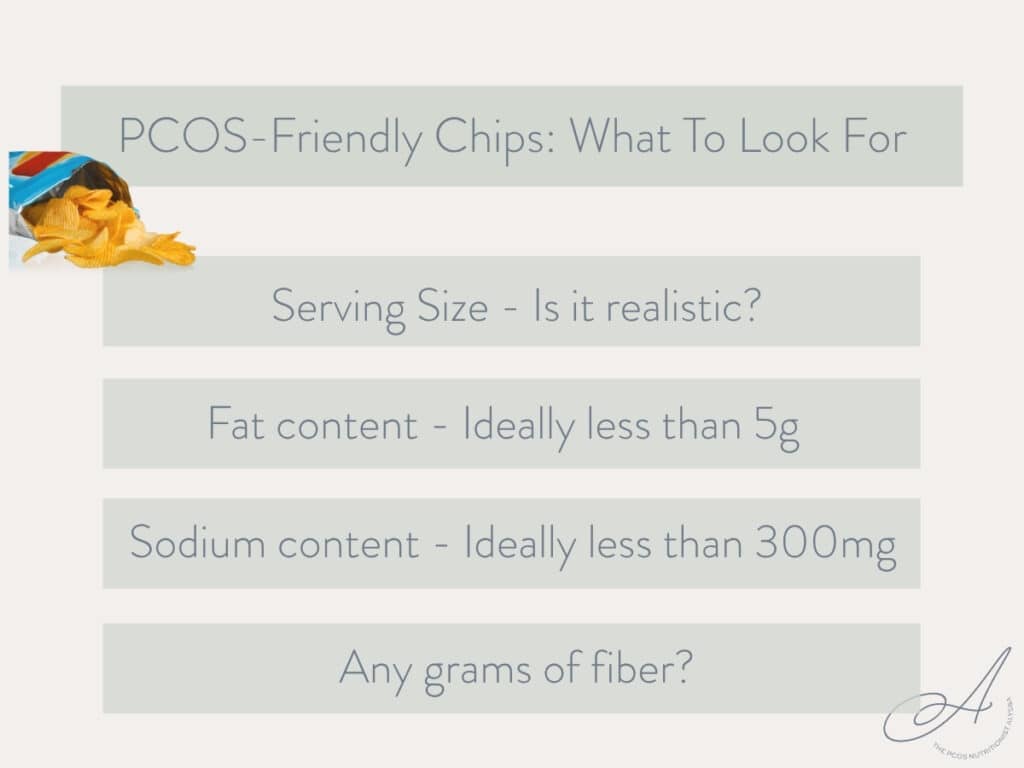
When looking at a label for chips, some of the top items to look for are:
- Serving size: What is the serving size identified for this chip, and let’s be realistic: will you actually stick to just one serving?
- What is the fat content and where is the fat coming from? Is it mostly saturated fats? A good goal when looking for chips is to keep the total grams of fat less than 5 grams, and ideally less than 1 gram coming from saturated fats. Too much saturated fat can promote further inflammation.
- How much sodium per serving? First ask yourself: “what else am I consuming alongside the chips as well that might have a significant amount of sodium?” Ideally when selecting chips they have less than 200 to 300 milligrams of sodium per serving. But if you aren’t consuming anything else with a lot of sodium in that particular meal or snack there is a little more wiggle room.
- Is there any fiber? If not, can you enjoy them alongside something else that is high in fiber to help improve insulin sensitivity? A good goal for a meal is to include 5-8 grams of fiber, and 3 or more grams of fiber for a snack.
Best Store-Bought Chips for PMOS
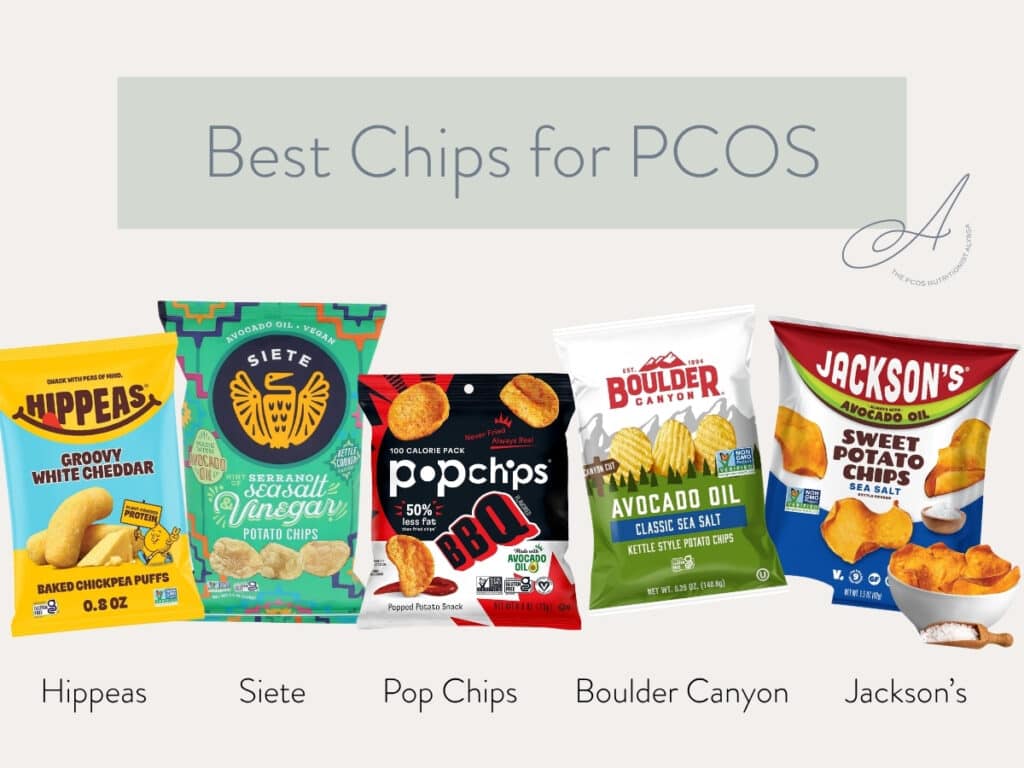
- Siete: these are grain free and gluten free options made from 100% avocado oil.
- Hippeas: made with chickpea flour, Hippeas offer more protein and fiber than most traditional potato chips.
- PopChips: these chips are baked and therefore have less fat than typical chips.
- Boulder Canyon: made with either olive, coconut or avocado oil; these chips are made from real potatoes and offer more potassium than usual processed potato chips. They are also free of any artificial flavors.
- Jackson’s Kettle Chips: these are made from sweet potatoes which offer more antioxidants and health benefits than traditional white potatoes and are baked with avocado or coconut oil.
Make Your Own PMOS-Friendly Chips at Home
Homemade chips allow you more control over the ingredients and preparation methods. You choose the oil, the seasoning, the salt level. And most of these are surprisingly easy.
Baked Zucchini Chips
Slice zucchini paper-thin (using a mandoline slicer helps). Toss lightly with olive oil and sea salt, and bake at 200°F for about 2–2.5 hours until crispy. Low in carbs, high in water content, and genuinely crunchy when done right. Season with garlic powder, cheese, or nutritional yeast for extra flavor.
Roasted Chickpeas
Preheat to 375°F. Drain and dry a can of chickpeas. Toss with avocado oil, smoked paprika, garlic powder, and salt. Roast for 25–30 minutes. You get protein, fiber, and a satisfying crunch all in one. Eat them fresh — they soften over time, so make a small batch.
Kale Chips
Massage torn kale leaves with a small amount of avocado oil. Spread the leave out onto a baking sheet and bake at 300°F for 20–25 minutes. They go from chewy to crispy fast, so watch them closely. Sprinkle them with nutritional yeast and salt for a “cheesy” vibe.
The Golden Rule: Always Pair Your Chips
No matter which chips you choose, pairing them with a protein or healthy fat makes a real difference for PMOS. It slows the blood sugar response and makes your snack more filling.
Some easy combos:
- Chips + guacamole
- Chips + hummus
- Chips + a handful of nuts on the side
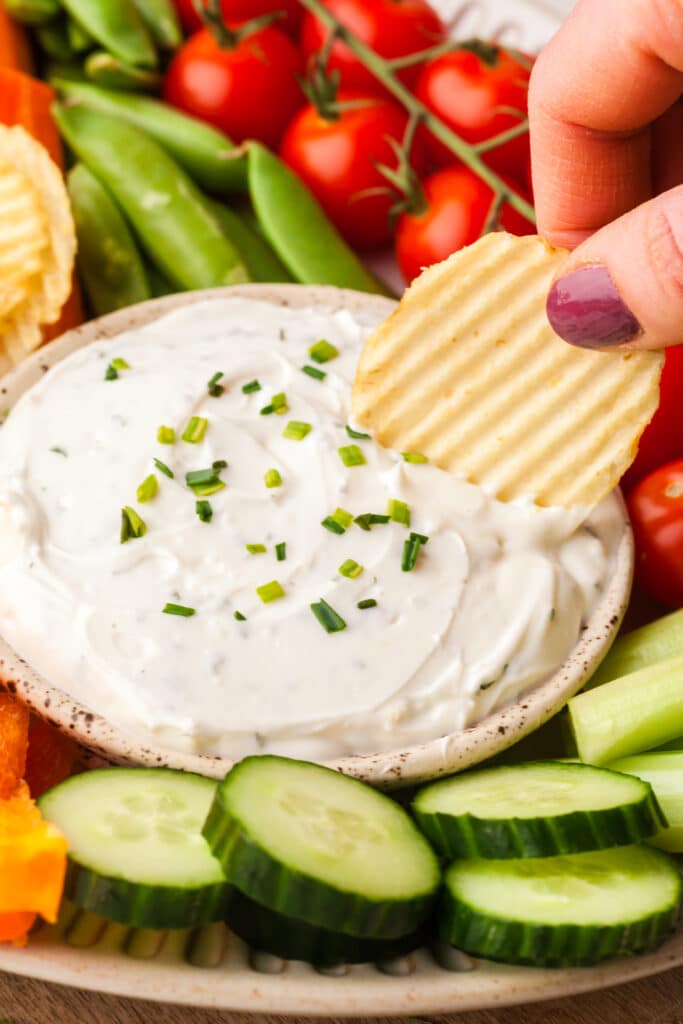
- Chips + cottage cheese dip or Greek yogurt dip
Try these quick and easy PMOS friendly dips:
- High Protein Ranch Dip
- Cottage Cheese Buffalo Chicken Dip – great for dipping tortilla chips!
- Roast Garlic White Bean Dip
A single portion of chips with a protein-rich dip can be a good snack for your PCOS journey. No guilt necessary.
The Bottom Line
Just like many other food products at the grocery store these days, there are endless brands and varieties of potato chips available to purchase. Understanding what brands to look for, or what ingredients to lean towards or steer away from, can help in guiding your decisions on which chips to purchase. When included with the proper partner of protein or fiber, chips can help complement a meal or snack while providing a satisfying crunch!